




Tapeless Zipper Vs Traditional Zipper: What’s the Difference?

Related Posts
How Should Brands Evaluate Zipper Performance for High-End Outdoor Clothing?
November 17, 2026
Notape pitches lighter repairable zippers
November 16, 2026
130 Years Later, Cars Were Reinvented by Electrification. What About the Zipper?
October 12, 2026
Waterproof Zipper without Coating Supplier | NOTAPE™ No Coating Zipper Technology
September 26, 2026
What is the Difference Between a Tapeless Zipper and a Traditional Zipper?
At first glance, all zippers may look the same. They open, they close, and they keep a garment together.
I’m going to teach you everything you need to know about zippers, whether you are buying one zipper at your local fabric store to work on a project or you’re trying to sort out your production.
What is a Traditional Zipper?
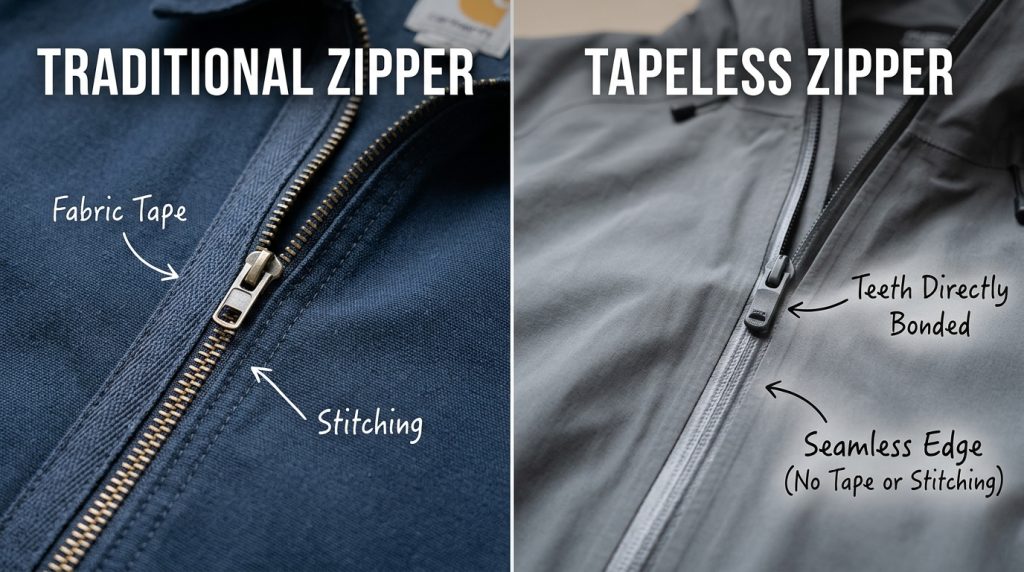
A traditional zipper is built on textile tape. The zipper teeth are fixed onto two strips of tape. These strips are then sewn into the garment.
What is a Tapeless Zipper?
A tapeless zipper removes the textile tape completely. The zipper teeth integrate directly with the garment fabric. With NOTAPE™, the zipper is formed as one with the fabric using patented equipment. It is not attached with traditional sewing methods.
Traditional Zippers Explained
Closed-End Zippers
The first category you want to think about is whether you want a separating zipper or a closing zipper. A closed-end zipper is gonna have a stopper at the bottom that stops you from the zipper opening all the way through, and these are best for pants, skirts, anything that the zipper is not gonna go all the way through the garment. You know, those fleece pullovers with the little zipper that goes just down to the chest, those sorts of things.
Invisible zippers are another kind of closed-end zipper, but they, they don’t have a metal stopper. They are just closed up with glue, and part of that, I think, is for cost efficiency. Part of that is they want it as thin and light and unobtrusive as possible.
Separating and Two-Way Zippers
Then you have separating zippers, and they’re good for jackets and coats where you need them to come apart so you can open the jacket. A subcategory of the separating zipper is the two-way zipper. So two-way zippers have two heads, one at the bottom, one at the top, and you can open them from the top or the bottom.
Zipper Teeth
Zipper teeth are, you know, these little things that click together to form your zipper, and you can get them in lots of different materials. These are kind of your regular nylon coil or polyester coil zippers, and they’re called such because they kind of look like a coil of nylon just wrapping around the edge of the zipper tape. And then you have your invisible zipper, which looks like your nylon coil zippers from the back.
Metal Colors
So most zipper companies offer four basic metal colors. These are your shiny nickel and your antique nickel. These are your standard regular brass, shiny gold, and then your antique brass will be a duller gold. Some zipper companies may offer different metal colors, like a really dusty bronze or copper. You can get plastic teeth, and every zipper company is going to have their own color card; same with these nylon coil and invisible zippers.
Zipper Sizes
So most jackets, like fall fashion jackets, whether they’re for men or for women, are typically a number five size. Number three zippers are nice for smaller closures, for finer fabrics. Number five is good for jackets. This is a more nicely tailored linen pant, and so it takes this number three nylon zipper, something smaller or flatter, smoother, a little bit more delicate. This is most likely a number 10 zipper. It’s huge.
The Role of Zipper Tape
Next up, let’s talk about the tape. The tape of a zipper is, you know, the fabric that the zipper is attached to, and again, companies will have their own color card. You can get these nylon zippers with matching teeth and tape. You can also get them in contrasting colors. There are a lot of color combinations. I think as long as you go off their color card for their teeth and the tape, you can get pretty much any combination you want.
Ordering Zippers for Production
When zipper companies quote you minimum quantities for a zipper, they’re including the length in that. So if the minimum order quantity is a hundred zippers, that means a hundred of these and a hundred of these but longer. They’re not going to count, you know, fifty of these and fifty of the longer ones as a minimum order. That’s the general rule for zipper companies.
Because the thing you have to remember is when you are grading your patterns up and down, you also have to change the zipper length. As jackets get bigger, they typically get longer. When pants get bigger, the fly gets longer. You’re gonna need longer zippers, and so you need to order the quantities with your graded lengths.
Shortening Metal Zippers
Most people who know what they’re doing with a pair of pliers will take these metal zippers, and they will knock a few teeth off. But listen, if you were doing 200 jackets, do you want to do that with every zipper? Oh my god, no. That’s like a little trick you use for sample runs or special orders.
Heads and Pulls
Next, let’s talk about zipper heads and pulls. 99% of the invisible zippers out there look almost exactly like this: a super minimal, narrow head with a super minimal, skinny little pull. Lots of big clothing companies have their own logo on these zippers, and yeah, if you want to do the same, you’re gonna have to order a huge quantity. Think about maybe having a zipper like this with a hole at the end of the pull where you can kind of tie, you know, a ribbon or a strip of leather.
How Traditional Zippers are Sewn in
Railroad Zippers
There are essentially three categories of zipper construction that can be altered slightly to suit your design needs. The first style, and the most common one, is your railroad or railway zip, where you have the fabric come in, it’s folded down on either side of the zipper, and top-stitched down. Some of the variations on this are: you can have double-needle topstitching, you can have some kind of decorative topstitching happening, and you can decide how much of the zipper to show as well. But you can sew it like this, where you are also showing the zipper tape, which is why it’s designating the zipper tape color can be very important.
Invisible Zippers
The second category is invisible zippers, and when an invisible zipper is sewn correctly, you should basically only see the head. It should look like it’s part of the seam. You shouldn’t see any extra bulkiness, top stitching, gapping, or anything like that. They did not pre-shrink this fabric before they sewed in the zipper, and so after I washed it, the zipper did not shrink, but the fabric shrunk.
Lapped Zippers and Flies
The third category of zipper construction is the lapped zipper. And when you zip it up, you should not see anything. Now, a more common version of the lapped zipper is the fly. A fly that you see on jeans and all kinds of pants is a variation of the lapped zipper.
The Key Difference: Look and Feel
Traditional zipper: The tape defines the profile of the closure. It often creates a raised border on each side. Tapeless zipper: Without tape, the closure looks flatter and cleaner. There are fewer bulky borders.
Traditional zipper: In light fabrics, the tape and side panels can cause bulges or wrinkling. Tapeless zipper: By removing the textile side panels, NOTAPE™ helps avoid these bulges and wrinkles.
The Bottom Line
The main difference is simple. A traditional zipper is a separate part sewn onto a garment. A tapeless zipper is formed as one with the garment fabric. Contact NOTAPE™ to explore tapeless zippers for your next premium collection.
Share on Social:



Contact Us
In This Article
Related Posts
How Should Brands Evaluate Zipper Performance for High-End Outdoor Clothing?
November 17, 2026
Notape pitches lighter repairable zippers
November 16, 2026
130 Years Later, Cars Were Reinvented by Electrification. What About the Zipper?
October 12, 2026
Waterproof Zipper without Coating Supplier | NOTAPE™ No Coating Zipper Technology
September 26, 2026


