




A New Benchmark in Outdoor Performance: How NOTAPE™ Tape-Free Zippers Integrate into Outdoor Gear
By NOTAPE
04, 2026Related Posts
130 Years Later, Cars Were Reinvented by Electrification. What About the Zipper?
October 12, 2026
Waterproof Zipper without Coating Supplier | NOTAPE™ No Coating Zipper Technology
September 26, 2026
From No Tape to Water Resistance Without Coating: NOTAPE™ Rethinks the Zipper Through Its “Three-No” Design
September 14, 2026

NOTAPE™Returns to Intertextile Shanghai Apparel Fabrics with Groundbreaking NO TAPE, NO SEAM, NO COATING Zipper Innovation
August 06, 2026
When outdoor brands discuss performance, most attention goes to fabric first.
Water resistance. Breathability. Weight. Comfort.
But in real product development, small components often make a big difference. And one of the most overlooked parts is the zipper.
For years, traditional zippers used laminated tape membranes to improve water resistance. It worked, but it also added bulk, visible layers, and extra production steps. Over time, those tape structures could also become a weak point in both appearance and long-term use.
That is exactly why the NOTAPE™ tape-free zipper is starting to stand out.
It is not just a new zipper style. It is a foundational upgrade made for modern outdoor gear. By removing the traditional fabric tape and integrating the zipper more directly with the garment, it brings together two things outdoor brands care about more than ever: water repellency and lightweight performance.
For jackets, technical shells, and sports outerwear, that combination is becoming hard to ignore.
Why Outdoor Brands Are Rethinking Zipper Construction
The outdoor market has changed.
Consumers still want protection from wind and rain, but they also expect outerwear to feel lighter, softer, and easier to move in. They want gear that performs well without looking heavy or overly technical.
It is also prompting brands to revisit every construction detail behind modern apparel.
Today, trims are no longer treated as simple accessories. They are part of the product experience. A zipper that looks bulky, feels stiff, or adds unnecessary weight can easily work against the design direction of a modern outdoor piece.
This is why more brands are now looking for lightweight functional trims that can do more with less.
They want a zipper that can help protect the garment, support a cleaner silhouette, and adapt well to lightweight outdoor fabrics. In other words, they are no longer choosing between function and comfort. They want both.
And that is where tape-free construction becomes highly relevant.
What Makes a NOTAPE™ Tape-Free Zipper Different
Traditional zippers are built around textile tapes on both sides. Those tapes need dyeing, matching, stitching, and careful alignment during production.
A NOTAPE™ tape-free zipper changes that logic.
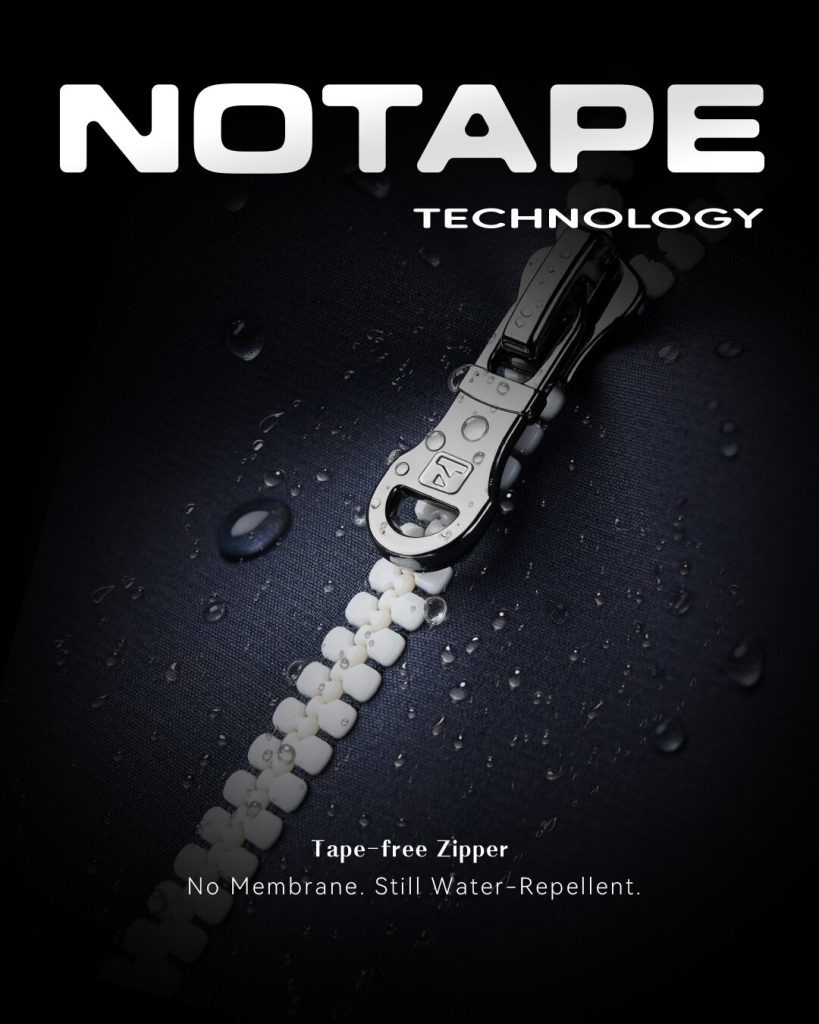
Instead of relying on separate fabric tapes, the zipper teeth are attached directly to the garment fabric. That means the fastening structure becomes much more integrated with the textile itself.
The result is a zipper that looks cleaner, feels lighter, and removes several problems that come with conventional tape-based construction.
There is no extra tape bulk.
There are fewer sewing-related variables.
And there is a much slimmer visual line across the garment.
For designers, that creates more freedom. For factories, it can reduce complexity. For outdoor users, it improves comfort in ways that are easy to feel, even if they never notice the engineering behind it.
The First Breakthrough: Water Repellency Without Heavy Tape Layers
In outdoor apparel, water protection matters. But how that protection is achieved also matters.
Traditional water-resistant zippers often depend on laminated or coated tape surfaces. That approach can help block moisture, but it usually makes the zipper look more obvious and feel more rigid.
Tape-free construction takes a different route.
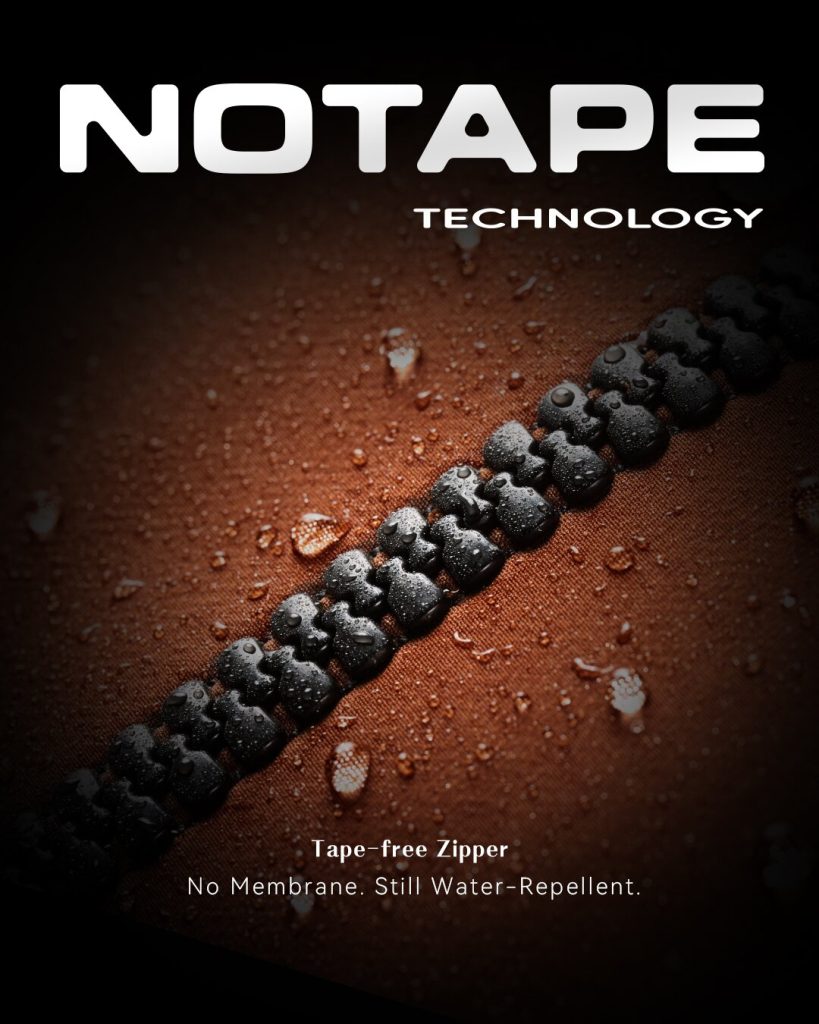
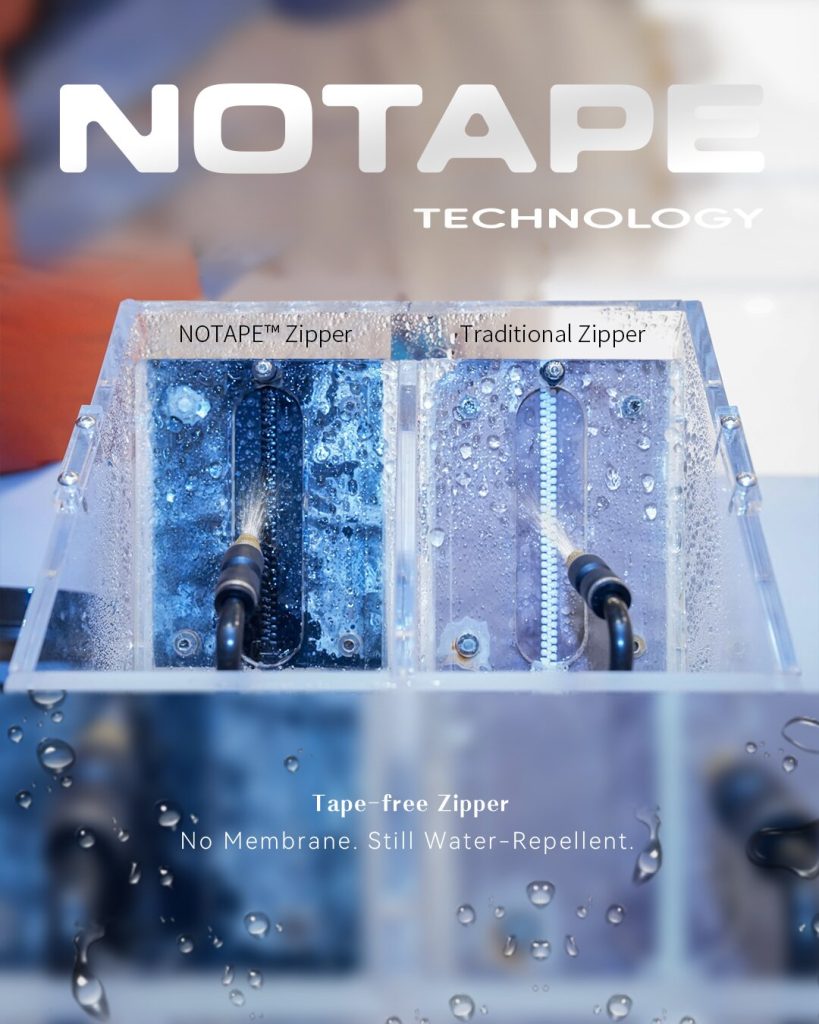
By using a more precise interlocking structure, NOTAPE™ zipper achieves physical water-repellent performance without relying on the same visible tape membrane concept. This makes it especially attractive for brands developing lightweight shells, hiking jackets, and sports outerwear that need functional protection without a heavy visual effect.
This matters because outdoor design is moving in a cleaner direction.
Buyers increasingly prefer products that look technical, but not overly complicated. They want details that feel refined, not overbuilt. A zipper that supports water repellency while keeping the garment surface cleaner is therefore a strong design advantage, not just a technical one.
The Second Breakthrough: A Real Lightweight Upgrade
Weight reduction is one of the clearest benefits of tape-free zipper design.
By removing zipper tape and unnecessary stitching structures, NOTAPE™ reduces zipper weight by around 40% compared with traditional zipper constructions.
That number is meaningful for outdoor brands.
In categories like down jackets, running outerwear, technical shells, and light sportswear, every gram matters. Lightweight performance is not just a marketing phrase. It plays a clear role in wearer comfort, ease of motion, and overall product feel.
A lighter zipper helps in several ways:
• It reduces the burden on lightweight fabrics
• It improves drape
• It makes the garment feel less stiff
• It supports a softer and more flexible wearing experience
For brands that are trying to build premium outdoor product lines, this kind of detail can strengthen the entire product story.
Because in high-performance apparel, users do not only judge a jacket by the fabric. They judge it by how the whole garment feels when worn.
Why It Works So Well in Outdoor and Sports Apparel
Some innovations sound impressive in theory but are hard to apply in real products.
Tape-free zipper construction is different because its value is easy to connect to actual outdoor categories.
It is especially suitable for:
• Down jackets
• Technical shells
• Sports outerwear
• Lightweight windbreakers
• Trail and hiking apparel
These are all categories where brands want to improve comfort, reduce bulk, and keep the garment visually clean.
In insulated products, a more integrated zipper can also help reduce friction around the seam area. When used in lightweight outerwear, it enhances fabric drape and helps achieve a neater front appearance. In technical sports garments, it aligns well with the demand for components that feel functional without adding visual weight.
That is why NOTAPE™tape-free zipper design is not just a niche idea. It fits directly into the product direction many outdoor brands are already following.

What This Means for Brands
For brands, the value is bigger than a single trim upgrade.
A NOTAPE™ tape-free zipper helps make the final product more competitive in a market where buyers are comparing not only price, but also construction quality, comfort, and functional differentiation.
It gives outdoor products a stronger premium feel.
It supports cleaner design language.
And it gives marketing teams a more specific story to tell than generic claims like “high performance” or “lightweight design.”
From a business point of view, it can also strengthen product positioning in premium outdoor and sports categories, where small material and construction improvements often help justify better pricing.
In simple terms, this is the kind of innovation that can support both product development and brand storytelling at the same time.
What This Means for End Users
For the wearer, the benefit feels very direct.
A membrane-free water-repellent zipper feels softer.
A lighter zipper feels more natural on the body.
A cleaner zipper profile looks more refined on the garment.
And because the construction is less bulky, the garment often feels more comfortable in movement and in close-contact areas such as the neck, chest, and cuffs.
Users may not always know why a jacket feels better. But they notice when it does.
That is what makes this kind of component upgrade so valuable. It improves the experience without demanding attention.
More Than Performance: A Smarter Direction for Product Development
One of the most interesting things about tape-free zipper construction is that it does not only improve function. It also points to a smarter way of building garments.
No tape dyeing.
No tape color-matching.
Fewer sewing steps.
Fewer chances for tape-related defects.
That means the zipper is not only lighter in the final product. It is also cleaner in the way it is developed and produced.
For design teams, that opens the door to more streamlined silhouettes.
For production teams, it can mean simpler planning.
For sustainability teams, it creates a more measurable conversation around reducing water use, energy demand, and unnecessary process steps.
This is important because the market is moving beyond broad sustainability language. Buyers increasingly want improvements that are visible in both product design and production logic.
Tape-free construction speaks to both.
A New Functional Standard for Outdoor Components
Outdoor apparel has entered a stage where every detail is being re-evaluated.
Not because the old way stopped working, but because the market now expects more.
• More comfort.
• More lightness.
• More refined functionality.
• More design efficiency.
That is why the tape-free zipper matters.
Through foundational reinvention, it delivers a dual breakthrough in water repellency and lightweight performance. More importantly, it shows that even a century-old component can still be redesigned to fit the needs of modern outdoor gear.
For brands, it offers a stronger path to product differentiation.
For users, it improves comfort in a simple and practical way.
And for the outdoor industry as a whole, it sets a new benchmark for how garment components should perform in the years ahead.



Contact Us
In This Article
Related Posts
130 Years Later, Cars Were Reinvented by Electrification. What About the Zipper?
October 12, 2026
Waterproof Zipper without Coating Supplier | NOTAPE™ No Coating Zipper Technology
September 26, 2026
From No Tape to Water Resistance Without Coating: NOTAPE™ Rethinks the Zipper Through Its “Three-No” Design
September 14, 2026
NOTAPE™Returns to Intertextile Shanghai Apparel Fabrics with Groundbreaking NO TAPE, NO SEAM, NO COATING Zipper Innovation
August 06, 2026


