




From No Tape to Water Resistance Without Coating: NOTAPE™ Rethinks the Zipper Through Its “Three-No” Design
By NOTAPE
09, 2026Related Posts

From No Tape to Water Resistance Without Coating: NOTAPE™ Rethinks the Zipper Through Its “Three-No” Design
September 14, 2026

NOTAPE™Returns to Intertextile Shanghai Apparel Fabrics with Groundbreaking NO TAPE, NO SEAM, NO COATING Zipper Innovation
August 06, 2026
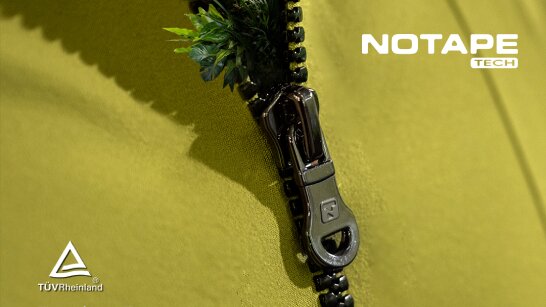
Eco Zippers 2.0: How NOTAPE™ Tape-less Seamless Zipper Technology Redefines Sustainable Closures
June 15, 2026

NOTAPE™ to Debut Tape-Free, Stitch-Free Zipper Technology at European Outdoor Week 2026
May 12, 2026
Recently, NOTAPE™ held a Media Open Day during the China International Textile Fabrics and Accessories (Autumn/Winter) exhibition. At the event, NOTAPE™ presented its full “Three-No” design philosophy for the Chinese market: No Tape, No Seam, No Coating. Through product demonstrations and discussions, media representatives experienced how this approach is reshaping the zipper.
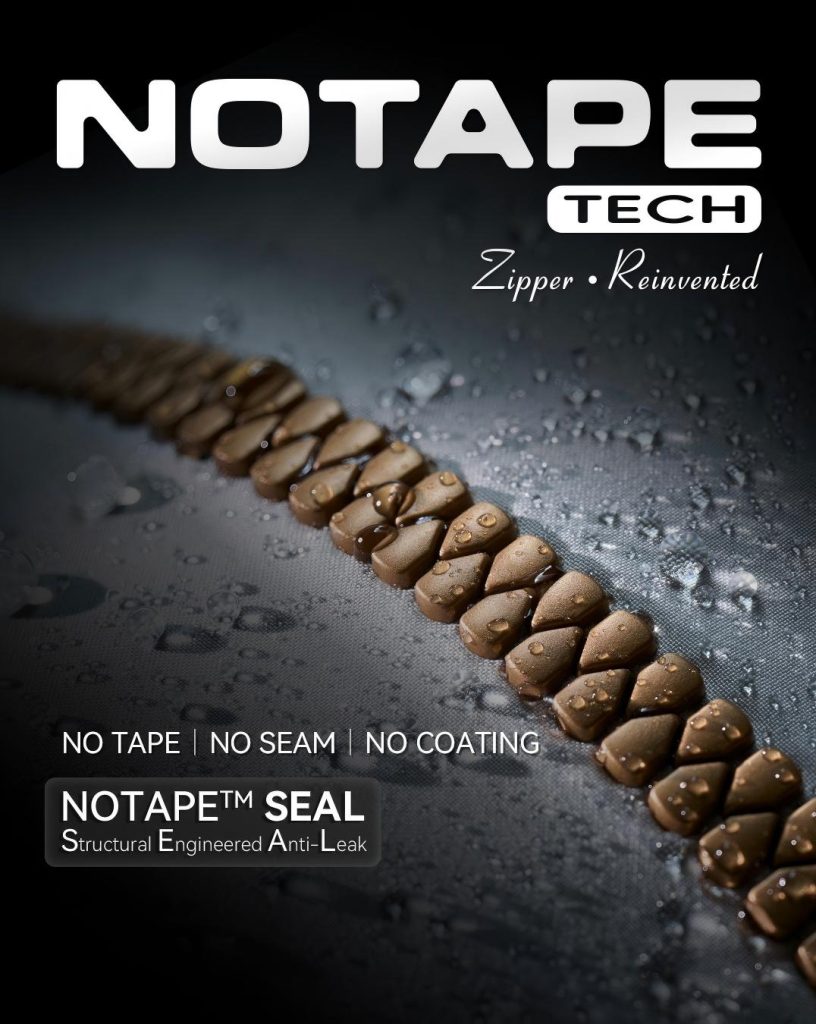
The “Three-No“ Design: Water Resistance, Built into the Structure
For more than 130 years, the zipper’s fundamental architecture has remained largely unchanged: teeth attached to tape. Traditional zippers rely on a separate fabric tape to hold the teeth, which is then sewn onto the garment.
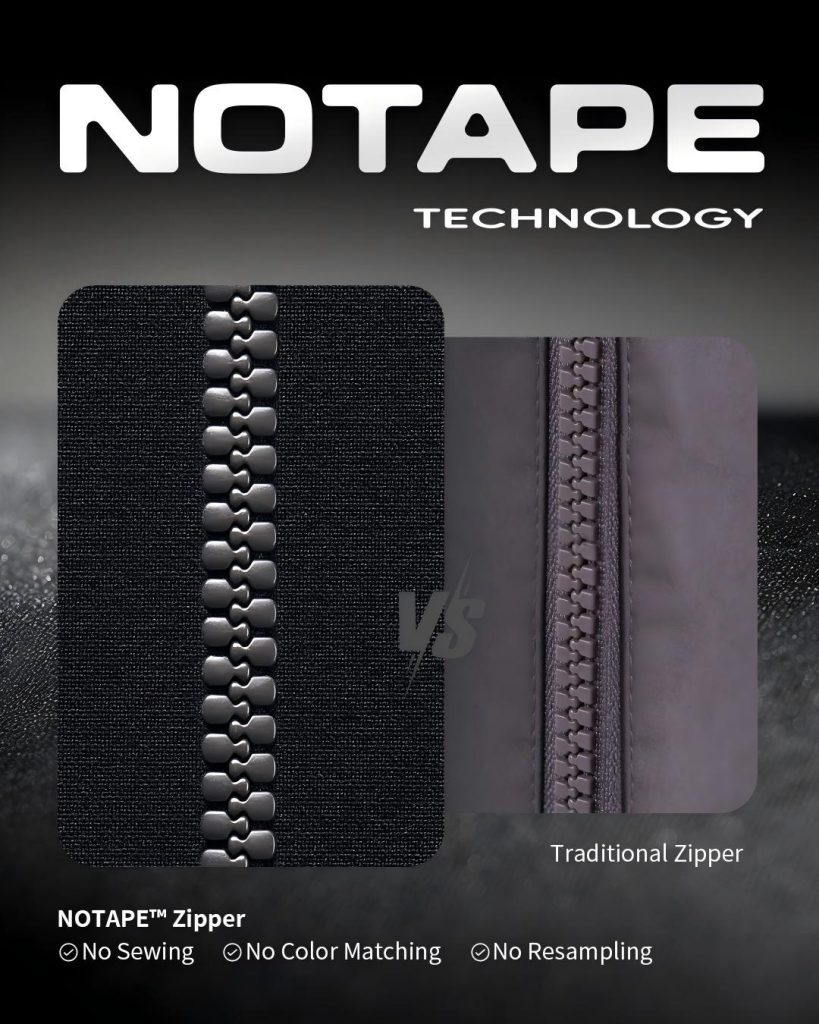
NOTAPE™ starts by rethinking this fundamental construction. By eliminating the traditional tape and additional sewing, the teeth are integrated directly into the fabric, resulting a cleaner and more streamlined structure.
The highlight of this exhibition, NOTAPE™ SEAL, takes this structural subtraction one step further. Building on its No Tape, No Seam construction, it eliminates the need for conventional water-resistant films or coatings. The result is a No Tape, No Seam, No Coating design that delivers water-resistant performance through the zipper’s own physical structure.
Traditional water-resistant zippers often rely on a film or coating applied to the tape. However, the tape can absorb moisture, and needle holes from sewing may become pathways for water ingress. Over time, films or coatings can wear down and lose performance.
NOTAPE™ SEAL takes a fundamentally different approach. By removing the absorbent tape and traditional sewing construction, it uses precision tooth engagement and material surface characteristics to create a physical barrier against water—without relying on conventional coating.
The shift from “adding a layer for water resistance” to “letting the structure itself perform” became a key topic event.
From Water-Resistant to Design and Comfort
The impact of the “Three-No” design goes beyond how water resistance is achieved.
As outdoor and sportswear continue to evolve toward lighter, more technical constructions, the zipper is no longer simply a functional fastening component. Its weight, thickness, hand feel, and integration with the fabric can all have a direct impact on the final design and wearing experience.
The tape and additional sewing used in conventional zipper constructions create extra structural layers. On lightweight fabrics in particular, these layers can cause raised areas, bulging at the zipper, or unwanted wrinkling.
By removing the tape and traditional sewing, NOTAPE™ helps preserve the fabric’s natural drape and movement, while creating a lighter, flatter and more integrated wearing experience.
For designers, eliminating the tape can also ease constraints around color matching, sewing compatibility and repeated sampling. Instead of appearing as a separate component attached to the garment, the zipper becomes more seamlessly integrated with the fabric—creating greater freedom for minimalist aesthetics and performance-driven apparel construction.
Today, NOTAPE™ has developed a range of functional zipper solutions for different professional requirements, with applications across outdoor, sports, urban casual and business apparel.
From Product Subtraction
to Sustainable Subtraction
Another key focus of the event was NOTAPE™’s philosophy of “subtraction-driven innovation“.
From No Tape and No Seam to the No Coating approach demonstrated by NOTAPE™ SEAL, NOTAPE™ is not simply adding more materials or components to enhance performance. Instead, it continuously questions which structures can be reduced—or even eliminated altogether.
This philosophy also extends to sustainability across the supply chain.
Conventional zipper tape requires multiple resource-intensive processes, including yarn production, weaving, dyeing and finishing. By eliminating the tape at the source, NOTAPE™ can reduce the associated materials and manufacturing processes.
According to TÜV-certified data, compared with conventional tape-based zipper constructions, NOTAPE™ can achieve reductions of up to 95% across selected metrics including weight, water consumption, energy consumption and chemical use, while reducing carbon footprint by approximately 19.4%–26.6%.
The change to a single zipper may appear small. But when structural innovation is introduced into apparel production at scale, the resulting reduction in materials, processes and resource consumption can become increasingly significant.

Rethinking What a Zipper Can Be
Through product demonstrations, hands-on experiences and industry discussions, the Media Open Day give media a direct look at NOTAPE™’s structural innovation more directly.
From removing a single strip of tape to eliminating traditional sewing and conventional water-resistant films or coatings, NOTAPE™ is putting its “Three-No“ design—No Tape, No Seam, No Coating—into practice, exploring new possibilities across technical performance, design freedom, wearing experience and sustainable development.
When a fundamental construction that has remained largely unchanged for more than 130 years is reimagined, the change is not limited to the zipper itself.
It expands the possibilities of apparel design.
NOTAPE™ — Zipper Reinvented.



Contact Us
In This Article
Related Posts
From No Tape to Water Resistance Without Coating: NOTAPE™ Rethinks the Zipper Through Its “Three-No” Design
September 14, 2026
NOTAPE™Returns to Intertextile Shanghai Apparel Fabrics with Groundbreaking NO TAPE, NO SEAM, NO COATING Zipper Innovation
August 06, 2026
Eco Zippers 2.0: How NOTAPE™ Tape-less Seamless Zipper Technology Redefines Sustainable Closures
June 15, 2026
NOTAPE™ to Debut Tape-Free, Stitch-Free Zipper Technology at European Outdoor Week 2026
May 12, 2026


