




Technical Zipper for Outdoor Clothing: How to Match Zipper Structure With Fabric Thickness and Elasticity
By hqt
10, 2026Related Posts
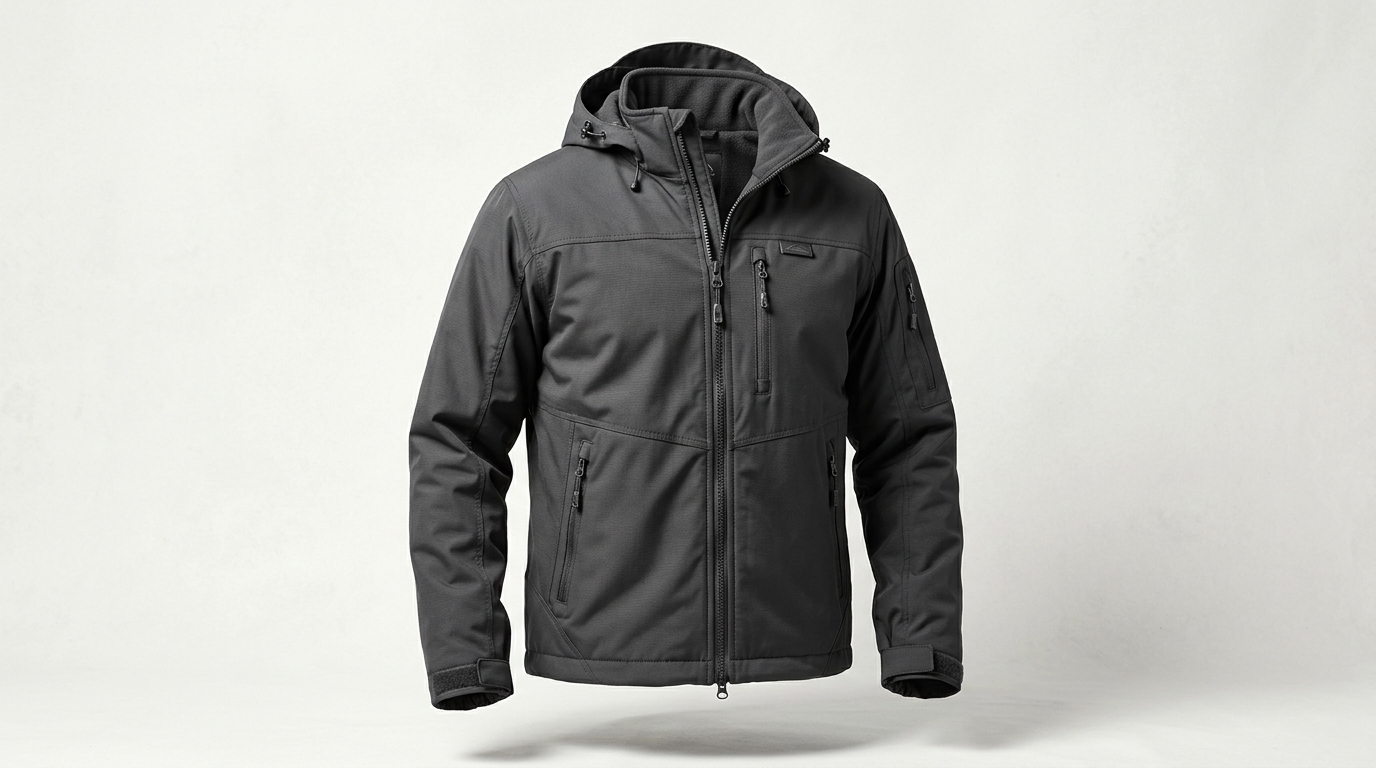
How Should Brands Evaluate Zipper Performance for High-End Outdoor Clothing?
November 17, 2026
Notape pitches lighter repairable zippers
November 16, 2026
130 Years Later, Cars Were Reinvented by Electrification. What About the Zipper?
October 12, 2026
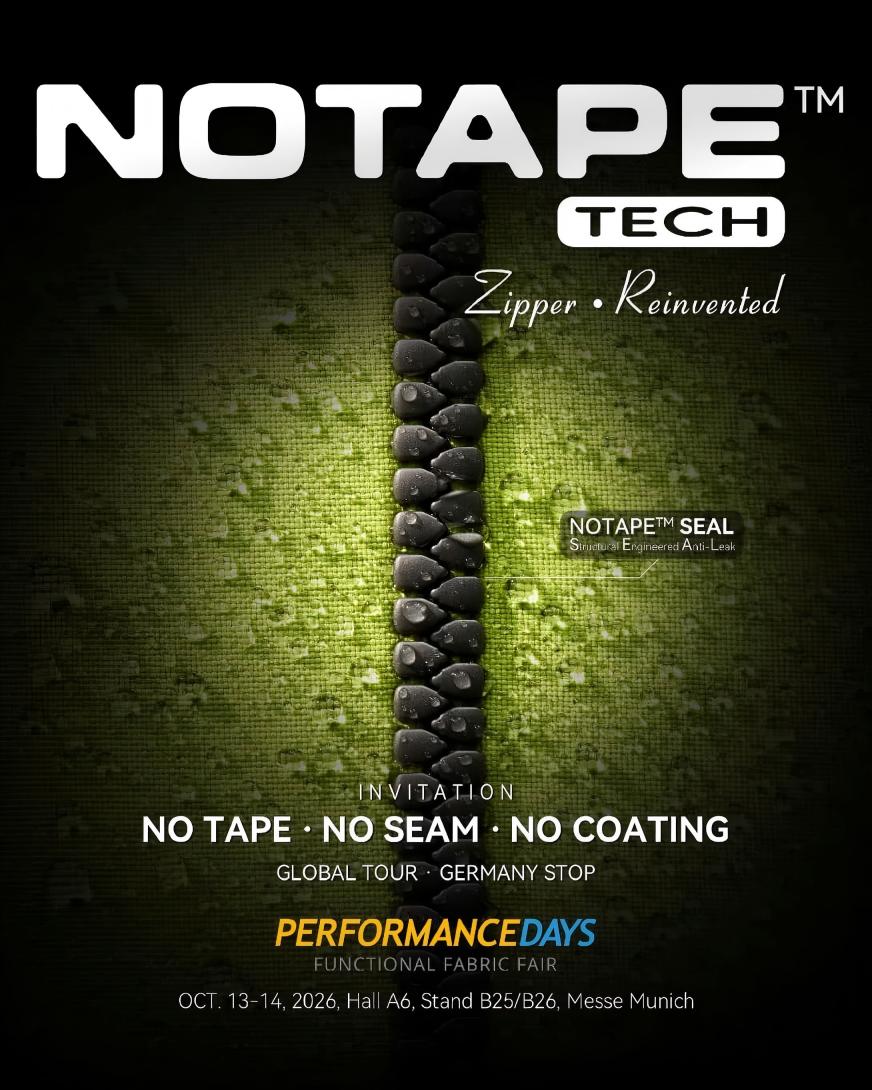
Waterproof Zipper without Coating Supplier | NOTAPE™ No Coating Zipper Technology
September 26, 2026
When selecting a Technical Zipper for outdoor clothing, it is not as simple as choosing a stronger or more waterproof closure. The zipper and the fabric of the garment form a mechanical system. How the closure performs is impacted by the elasticity, surface construction, bending stiffness, thickness and the method of attachment of the fabric as well as how the garment is used outdoors and washed repeatedly.
A zipper that works well on a medium-weight woven shell may behave very differently on a thin laminated fabric or a highly elastic knitted panel. For this reason, zipper selection should begin with the fabric rather than the zipper specification alone.
Why Fabric Thickness Changes Zipper Requirements
Fabric thickness affects the geometry and stiffness of the entire closure area.
On thin lightweight fabrics, a relatively thick or rigid zipper can become the stiffest part of the garment. This difference may cause:
•Local puckering around the zipper
•Poor drape when the garment bends
•Noticeable bulk along the closure
•Stress concentration near the zipper edge
•Uncomfortable folding against the body
Thicker or multilayer fabrics present a different problem. Laminated shells, reinforced panels and insulated garments may require greater attention to attachment depth, folding radius, slider clearance and local reinforcement.
This means that choosing a Technical Zipper for Outdoor Clothing should not follow a simple rule such as “thicker fabric requires a stronger zipper.”
The real issue is structural compatibility.
| Fabric Condition | Main Engineering Risk | Zipper Priority |
| Thin / lightweight | Stiffness mismatch | Low bulk and flexibility |
| Medium-weight | Balance between flexibility and stability | Controlled interface |
| Thick / multilayer | Excess local thickness | Stable attachment |
| Laminated | Layer deformation | Surface and attachment compatibility |
Fabric weight alone is also insufficient. Two materials with similar thickness may respond differently if one is woven nylon and the other is a membrane-laminated polyester.
How Fabric Elasticity Affects Zipper Stability
Elasticity is often more difficult to manage than thickness.
When an outdoor fabric stretches but the zipper does not extend by the same amount, relative movement develops between the two structures.
Fabric Extension → Zipper Constraint → Localized Interface Load
This can lead to zipper waviness, edge distortion, tooth misalignment or fatigue around the attachment area.
Designers therefore need to ask more than whether a fabric is “stretch.”
They should evaluate:
•How much does the fabric stretch?
•In which direction does it stretch?
•How well does it recover?
•Is the zipper positioned parallel or perpendicular to the main stretch direction?
•Does the zipper area actually need to stretch during body movement?
A Technical Zipper for Outdoor Clothing used on low-elastic woven fabric will therefore have different interface requirements from one used on a four-way stretch panel.
The objective is not necessarily to find a zipper that stretches as much as the fabric. It is to control relative deformation between the zipper, attachment zone and surrounding textile.
Zipper Stiffness Must Match Fabric Flexibility
Thickness and stiffness are related, but they are not identical.
A thin zipper can still be relatively rigid, while a thicker textile structure may bend easily. Product developers should therefore consider bending behavior across the complete closure.
If:
Zipper stiffness ≫ Fabric stiffness
the transition between the two structures becomes a potential stress concentration zone.
This matters particularly for lightweight shells, cycling apparel and garments that repeatedly fold around the torso.
A well-matched Technical Zipper for Outdoor Clothing should allow the closure area to move predictably without making the zipper line excessively rigid compared with the surrounding garment.
Surface Construction Also Changes Compatibility
Fabric composition alone does not determine zipper compatibility.
For example:
Woven Nylon ≠ Coated Nylon ≠ Laminated Nylon
Even when their nominal thickness is similar.
PU coatings, membranes, knitted backings, surface textures and other treatments can change friction, deformation and attachment behavior.
A more useful selection sequence is therefore:
Material → Surface Structure → Thickness → Elasticity → Zipper Structure → Attachment Method
This becomes especially important when moving from prototype development to mass production.
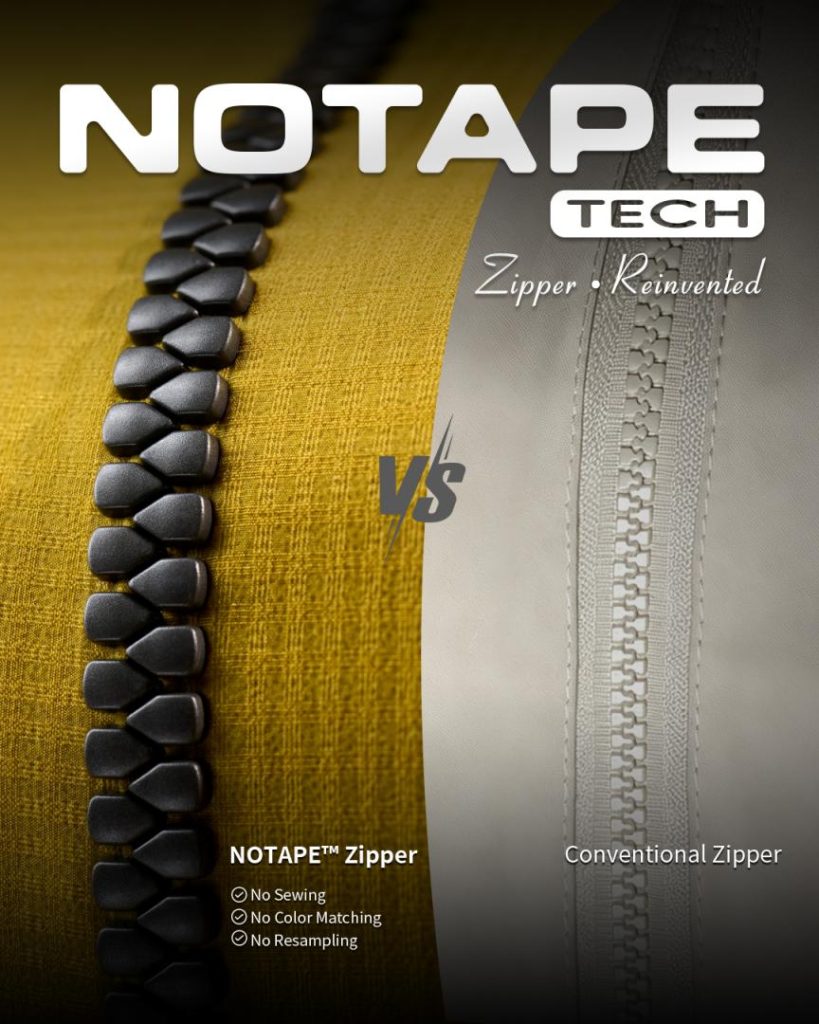
Conventional Tape Zipper vs Tape-Free Structure
Traditional zipper construction normally uses an intermediate textile tape:
Teeth → Zipper Tape → Sewing → Garment Fabric
The tape provides a carrier for the teeth, but it also adds another material layer around the closure.
A tape-free structure changes this relationship:
Zipper Structure → Engineered Interface → Garment Fabric
NOTAPE™ takes this second approach. Its zipper structure removes the conventional textile zipper tape and integrates the closure more directly with compatible garment fabric. The company also describes its SEAL water-resistant structure as eliminating the traditional tape-sewing line and relying on engineered structure rather than a conventional coating for its primary water-resistant function.
Removing the intermediate tape may reduce layer accumulation and create a thinner transition between closure and garment. However, it also makes fabric compatibility more important.
Tape-free construction should therefore not be treated as a universal drop-in replacement.
NOTAPE™ itself notes that fabric thickness, elasticity, coating, surface structure and garment construction should be evaluated before production.
How to Select a Technical Zipper for Outdoor Clothing
A practical selection process should follow six steps.
1. Define the Fabric
Record:
•Fiber composition
•Fabric thickness
•Weight
•Woven or knitted construction
•Coating or membrane structure
•Surface treatment
2. Measure Stretch Behavior
Identify the amount and direction of stretch rather than simply labeling the material “elastic.”
3. Compare Structural Stiffness
Look at how the zipper bends with respect to the fabric. Substantial stiffness differences may require re-adjustment of the interface or reinforcement.
4. Evaluate the Attachment Method
Compare sewing, bonding and direct integration. Each changes layer thickness, local stiffness and load transfer.
5. Build a Prototype
Datasheets cannot fully predict zipper–fabric interaction. Actual garment panels should be assembled before final approval.
6. Validate the Finished Assembly
Depending on the application, verification may include:
•Opening and closing cycles
•Tensile or attachment testing
•Washing
•Abrasion
•Repeated flexing
•Dimensional stability
•Water-resistance testing
Testing the zipper alone is not enough. Fabric preparation, attachment parameters and garment construction can all affect the final result.
From Prototype to Mass Production
A successful prototype does not automatically guarantee stable production.
The complete development chain should be:
Fabric Sample → Compatibility Evaluation → Prototype → Mechanical Testing → Garment Testing → Pilot Production → Mass Production
Processing variation, fabric-lot differences and attachment consistency should all be checked before large-scale production.
This is particularly important for tape-free designs. NOTAPE™ currently identifies nylon and polyester, including woven, knitted, low-elastic and non-elastic fabrics, among the materials more suited to its technology, while uncertain applications should be tested with actual fabric samples.
What Should Buyers Verify Before Approval?
Before approving a Technical Zipper for Outdoor Clothing, sourcing and product-development teams should ask:
| Question | Why It Matters |
| What is the fabric composition? | Affects processing compatibility |
| How thick is the fabric? | Influences interface geometry |
| How elastic is it? | Determines relative movement |
| Is it coated or laminated? | Changes surface behavior |
| How stiff is the zipper? | Reveals possible structural mismatch |
| Is reinforcement required? | Helps control localized loading |
| What attachment method is used? | Affects thickness and load transfer |
| Has the finished garment been tested? | Component tests cannot represent the complete system |
There is no single Technical Zipper for Outdoor Clothing that is automatically suitable for every hardshell, ski jacket or lightweight sports garment. The correct structure depends on how fabric thickness, elasticity, surface treatment, zipper stiffness and attachment method work together.
For outdoor brands designing lightweight or integrated garments, or water-resistant garments, tape-free construction offers an alternative method worth exploring. NOTAPE™ removes zipper tape and integrates closures more directly to fabrics, therefore fabric-specific testing becomes part of the development process. Designers and sourcing teams are invited to explore the NOTAPE™ website to familiarize with NOTAPE™ Technology and for further discussion regarding fabric and sample testing.
Q1: Is NOTAPE™ a copy or imitation?
No. NOTAPE™ is the world’s first to develop tape-free zipper solutions and holds exclusive patented technologies for both no tape coil zippers and no tape, no seam resin zippers.
Q2: What does NOTAPE™ mean?
NOTAPE” means eliminating the traditional fabric tapes of the zipper, allowing the zipper to integrate directly with the fabric structure.
Q3: How is NOTAPE™ zipper installed onto fabric?
Can it be installed by home sewing machines, or does it require special equipment? Is it glued on?
NOTAPE™ is a global first, featuring proprietary patented technologies for no tape coil zippers and no tape, no seam resin zippers. The zipper is formed as one with the fabric using patented equipment, rather than traditional sewing methods.
Q4: What makes NOTAPE™ zippers uniquely different?
we come at a premium — because true innovation is rare. NOTAPE™ is not available to every brand. By integrating our no tape zipper technology, your products gain a level of exclusivity and uniqueness that sets them apart.
Q5: Does every garment using a NOTAPE™ zipper require customization?
Good question.
Not every piece requires customization, but each zipper style must undergo preliminary validation testing before production.



Contact Us
In This Article
Related Posts
How Should Brands Evaluate Zipper Performance for High-End Outdoor Clothing?
November 17, 2026
Notape pitches lighter repairable zippers
November 16, 2026
130 Years Later, Cars Were Reinvented by Electrification. What About the Zipper?
October 12, 2026
Waterproof Zipper without Coating Supplier | NOTAPE™ No Coating Zipper Technology
September 26, 2026


