




Water-Resistant Zippers Without Coating: How They Work

Related Posts
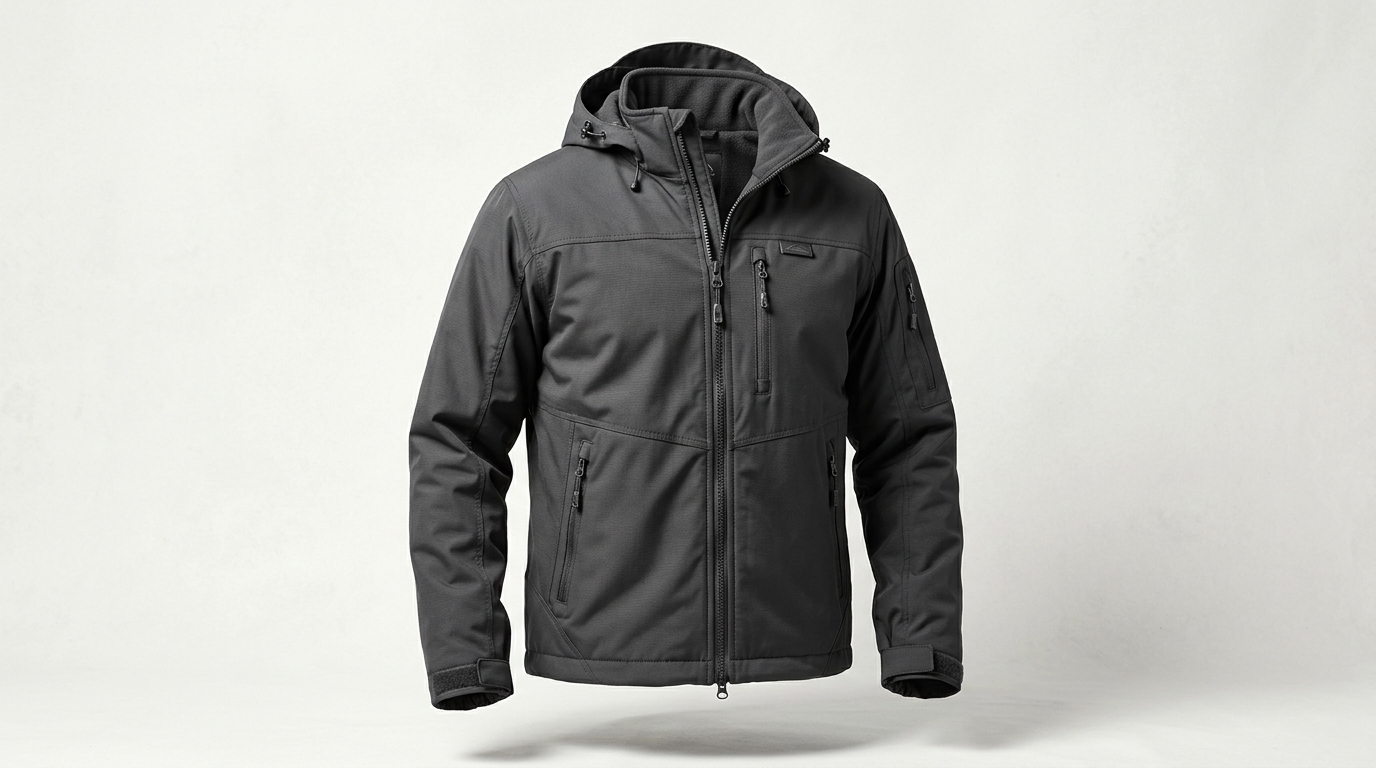
How Should Brands Evaluate Zipper Performance for High-End Outdoor Clothing?
November 17, 2026
Notape pitches lighter repairable zippers
November 16, 2026
130 Years Later, Cars Were Reinvented by Electrification. What About the Zipper?
October 12, 2026
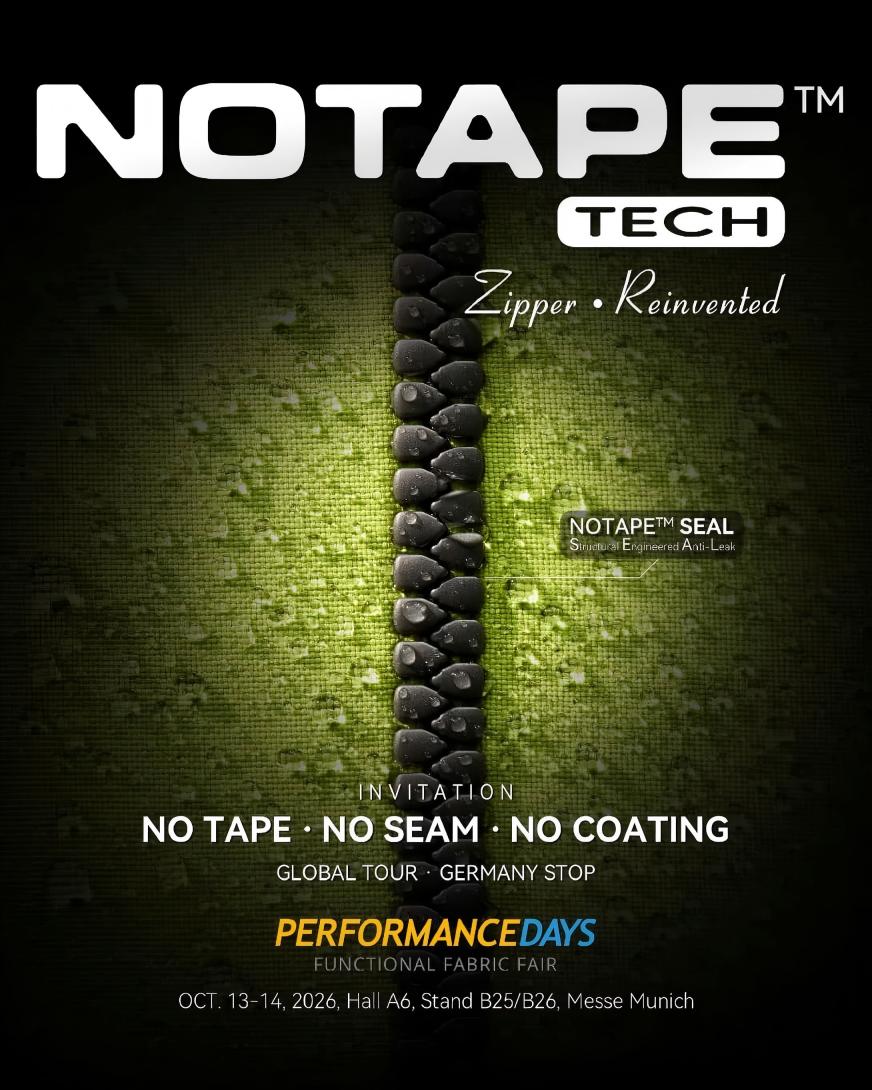
Waterproof Zipper without Coating Supplier | NOTAPE™ No Coating Zipper Technology
September 26, 2026
Water-Resistant Zippers Without Coating: How They Work
Water-resistant zippers are essential in outdoor apparel. They help protect the wearer from rain, snow, and wet wind. But many people assume that water resistance always depends on extra layers or coatings.
A zipper is an opening in the garment. It runs through the front of most jackets. Any opening can be a weak point in wet weather. It was specifically designed to overcome one of the biggest problems that has plagued modern rain gear.
How Traditional Water-Resistant Fabrics and Zippers Work
If you heat up and rapidly stretch fluorinated chemicals, it creates a porous membrane with thousands of microscopic holes, each one just large enough for vapor to pass through but too small for water to enter: the ultimate breathable waterproof fabric.
This membrane is in fact waterproof, with an impressive hydrostatic head rating. If you clamp it over this pipe, fill it full of water, and then pressurize it with air, it takes over 40 PSI before it begins to fail. That’s the equivalent of over 20,000 mm of hydrostatic head.
The problem is, while it is in fact breathable and waterproof, it’s not always breathable and waterproof at the same time.
The Coating Problem: Why Water-Resistant Zippers and Jackets Wet Out
It really does have microscopic holes too small for water to enter but big enough for vapor to escape. But that vapor can only escape if the outermost layer of the fabric isn’t absorbing water. If the outer fabric becomes saturated, vapor can’t escape and instead just recondenses back into a water drop that gets you wet from the inside out.
To prevent this from happening, jackets are treated with more of those fluorinated chemicals to create a water-repellent finish that causes water to bead up and roll off the outer layer. This is known as DWR, or durable water repellent finish, and despite the name, it’s not very durable and needs to be reapplied multiple times throughout the life of the jacket. Once the DWR stops working, we call that wet out, and sweat can no longer escape from the jacket, getting you wet from the inside out.
Fluorinated chemicals, also known as forever chemicals, are now known to wreak havoc on the environment and the human immune system.
Removing the Coated Layer
The patent expired in 1997, which has allowed companies to make their own version of the breathable membrane. The only difference is that this doesn’t need the DWR coating to work properly.
Most jackets have three layers of fabric: an outer layer that gets coated in DWR, the waterproof membrane in the middle, and the inner fabric so that it feels soft against your skin. But this jacket has eliminated that outer fabric, which means what you are looking at now is the membrane itself. And since that membrane is 100% waterproof, it can’t absorb water and theoretically never gets wet.
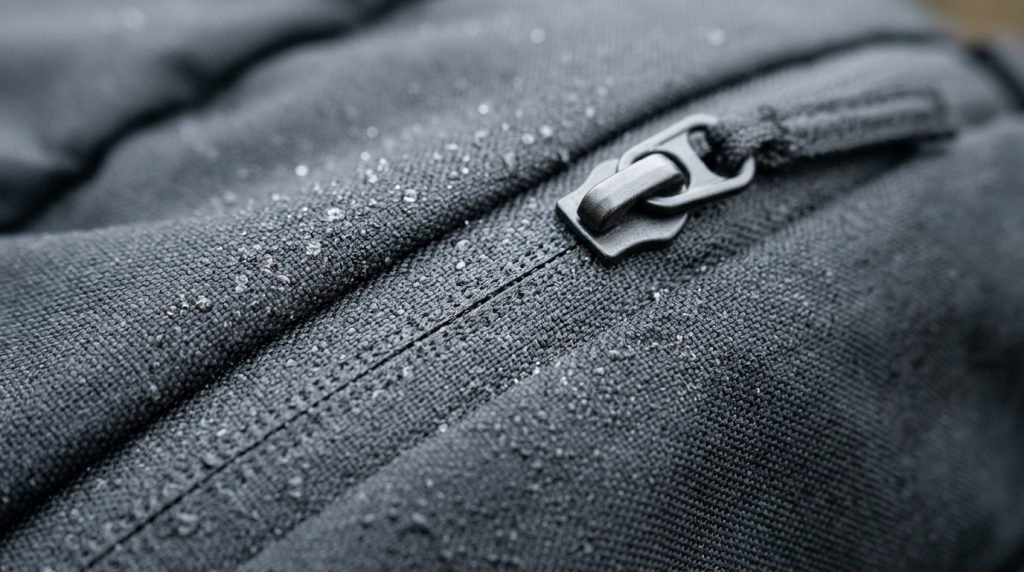
Why Water-Resistant Gear Struggles to Breathe
I wanted a way to quantify what I’ve always experienced in the field: that when it’s raining, and humidity is relatively high, these jackets don’t seem to breathe very much at all. So we need to have the capacity, or thirst, of the atmosphere to drive that evaporation.
The Parking Lot Analogy
Think of the air like a giant parking lot, and water molecules are like cars looking for a place to park. When the humidity is low, it’s like the parking lot is empty and it’s really easy to find a place to park. But when humidity is high, it’s like the parking lot is almost full. It’s not only going to be harder to find a place to park, but it’s going to take more time. Once the air reaches saturation, the parking lot is full, and no more cars are going to be able to park at all.
This jacket acts like a divider, creating two different environments: conditions under the jacket and outside of the jacket. Imagine you have one smaller parking lot on the inside of the jacket and one much larger overflow lot outside the jacket. If the smaller parking lot is full, cars will naturally want to leave to go to the overflow lot. But once the lots reach equilibrium, there’s no reason for cars to leave the smaller lot, because there’s still room to park inside the jacket.
So these jackets will do best when the humidity outside the jacket is low, like when it’s snowing in a dry climate. But when humidity is high, like a rainforest, they don’t do very well at all.
Air Movement Matters
One of the things I discovered early on in my testing is that if there’s no air movement, you get absolutely no evaporation. So not only do you need low humidity, but you also need some way to introduce airflow into the jacket.
These jackets are also designed to block wind, so you aren’t going to get very much airflow without some sort of ventilation like pit zips. And the problem with that is, if you’re using pit zips, do you really need a breathable jacket? And does it even matter? Because anytime it’s raining, humidity is naturally going to be high. I mean, water is literally falling through the air. That’s what rain is. And anytime humidity is high, that leaves little to no room in the air to accept any more moisture, which means sweat can’t evaporate and leave your jacket.
Even though it is waterproof and it is breathable, it can’t do both of those things at the same time. The science just won’t allow it.
NOTAPE™ SEAL: A Water-Resistant Zipper Without Coating
NOTAPE™ SEAL takes a different approach. It is described as No Tape, No Seam, No Coating. With NOTAPE™, the zipper is formed as one with the fabric using patented equipment, rather than traditional sewing methods.
NOTAPE™ SEAL is described as having no coating. Its water resistance does not rely on a coated layer. The exact process is protected by patents. NOTAPE™ SEAL is aimed at outdoor and performance apparel.
Testing Water-Resistant Zippers Without Coating
The best way to understand how NOTAPE™ SEAL performs is to test it on your own garment.
This is my best attempt to simulate the human body in a measurable, repeatable way. What I have here is a small tray of water that is being warmed up by a small heating element attached to a thermostat to keep the water at body temperature. I fill the tray with 120 g of water and clamp the jacket over the top. I let the whole thing sit for 2 hours and then weigh the tray to see how much water has evaporated.
I also built this humidity control chamber where I can measure how much vapor passes through these jackets in a variety of conditions. I tested the jacket at low humidity, high humidity, and with water raining on the jacket, and discovered that in order for these jackets to breathe even a little bit, they need a very specific set of circumstances.
Avoid adding performance claims that have not been confirmed in testing.
Contact NOTAPE™ to test NOTAPE™ SEAL on your next outdoor collection.



Contact Us
In This Article
Related Posts
How Should Brands Evaluate Zipper Performance for High-End Outdoor Clothing?
November 17, 2026
Notape pitches lighter repairable zippers
November 16, 2026
130 Years Later, Cars Were Reinvented by Electrification. What About the Zipper?
October 12, 2026
Waterproof Zipper without Coating Supplier | NOTAPE™ No Coating Zipper Technology
September 26, 2026


