




Waterproof Zipper Without Coating for the Growing Urban Outdoor Fashion Market
By hqt
11, 2026Related Posts
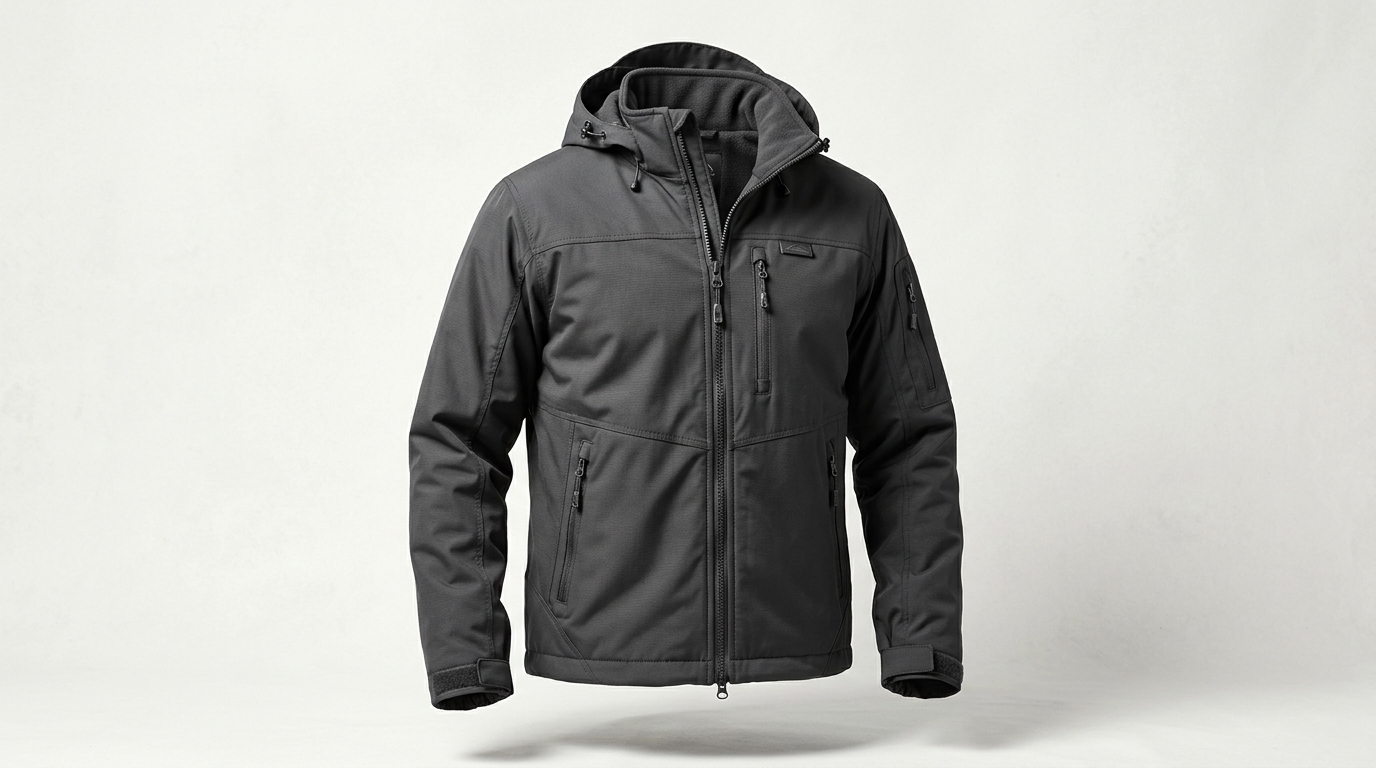
How Should Brands Evaluate Zipper Performance for High-End Outdoor Clothing?
November 17, 2026
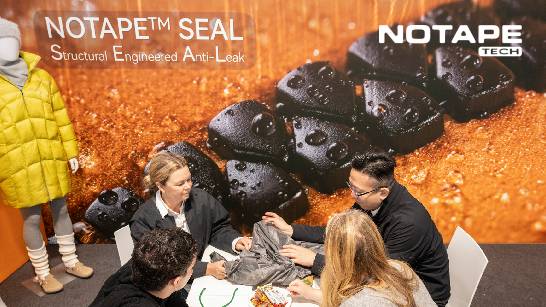
Notape pitches lighter repairable zippers
November 16, 2026
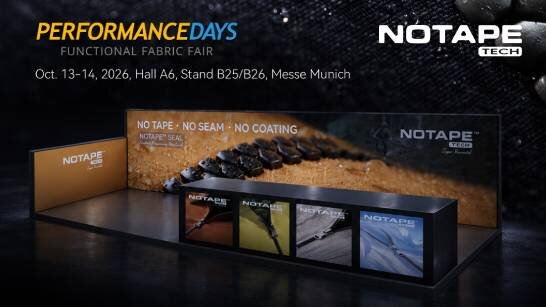
130 Years Later, Cars Were Reinvented by Electrification. What About the Zipper?
October 12, 2026
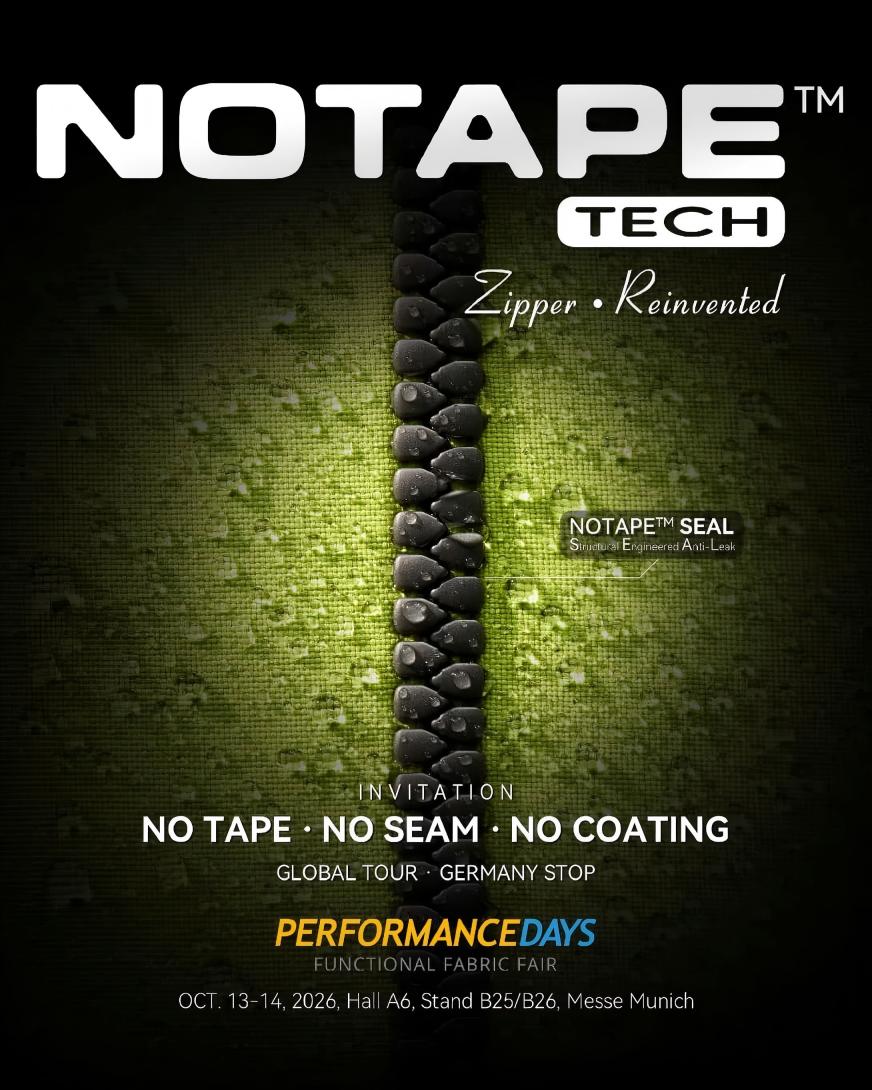
Waterproof Zipper without Coating Supplier | NOTAPE™ No Coating Zipper Technology
September 26, 2026
A commuter jacket faces a different specification from a mountaineering shell. It may encounter brief rain on a bicycle, repeated folding in a bag, and hours of indoor wear. Its front closure therefore has to balance moisture protection, flexibility and a clean appearance.
For product developers, Waterproof Zipper Without Coating is not simply a styling term: it raises questions about how water moves through a zipper and how that zipper joins the garment.
Why Urban Outdoorwear Changes the Zipper Brief
Gorpcore has made technical details familiar in daily clothing, but urban applications put different demands on them:
•Intermittent exposure: Sudden showers, wet commutes and repeated transitions indoors.
•Low-profile construction: Fewer raised edges beneath a backpack strap or close-fitting outer layer.
•Everyday mobility: Bending, sitting and cycling place frequent loads on the front opening.
A coated zipper may meet these needs. The design question is whether its layers are necessary for every garment.
How Does a Waterproof Zipper Without Coating Work?
Conventional water-resistant zippers commonly combine interlocking elements, textile tape, a laminated film or coating, and a stitching line connecting the tape to the shell.
Each interface has a function—and a possible route for moisture:
•Closure line: Gaps between engaged elements can permit ingress under sufficient pressure.
•Tape edges: Exposed textiles may wick water, depending on their construction and treatment.
•Attachment line: Needle penetrations and adjoining seams require their own water-management strategy.
•Ends and transitions: The slider area, stops and surrounding garment construction remain critical.
Removing a coating alone does not solve these pathways.
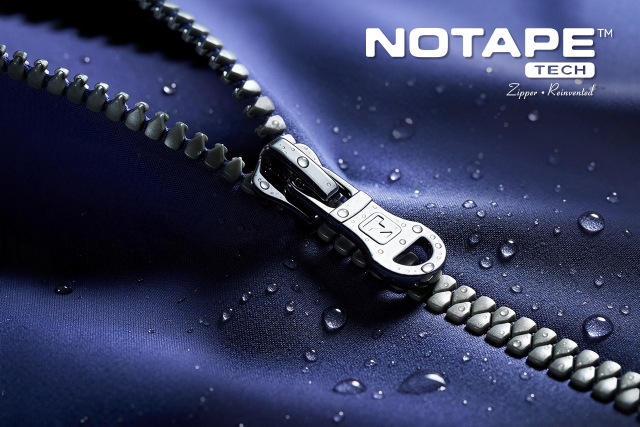
At NOTAPE™, our SEAL (Structural Engineered Anti-Leak) system takes a structural approach. Its No Tape, No Seam, No Coating design integrates the engineered zipper structure directly with compatible garment fabric and uses a physical partition to resist water entry.
Importantly, “No Seam” specifically means no conventional zipper-tape attachment seam; it does not mean a jacket has no sewn seams.
A Waterproof Zipper Without Coating must still be described according to its verified protection level. NOTAPE™ classifies SEAL as water-resistant, not universally waterproof.
Coated vs. Coating-Free: A Construction Comparison
| Design Consideration | Conventional Coated Zipper | NOTAPE™ SEAL Structural Approach |
| Main water barrier | Film or coating on zipper tape | Engineered geometry and physical partition |
| Garment interface | Separate tape typically stitched to fabric | Direct integration with compatible fabric |
| Attachment needle holes | Present at tape-sewing line | Conventional tape-sewing line removed |
| Local thickness | Tape, coating and seam allowances accumulate | Fewer intermediate layers |
| Long-term checks | Coating wear, delamination and closure integrity | Tooth engagement, fabric interface and closure integrity |
This comparison describes construction, not a universal performance ranking.
A Waterproof Zipper Without Coating is only as effective as the tested assembly, including its end details.
Where Urban Designers Can Apply It
1. Commuter Shells
Flat front opening can be used with restrained styling and without exposed coated tape. But the city weather is still unpredictable, and you need weather protection.
2. Packable Travel Jackets
Eliminating a separate tape layer may reduce local bulk. However, finished-garment weight, fold behavior and packing recovery still require measurement.
3. Cycling and Active Outerwear
Frequent torso flexion makes slider movement, fabric tension and wet-weather exposure worth testing together.
The same zipper may perform differently on a stable woven shell and a stretch knit. Application decisions belong at the fabric-and-garment level.
Five Checks Before Specifying a Coating-Free Zipper
When choosing Waterproof Zipper Without Coating suppliers, you might want to look at the following five criteria.
1. Water Resistance
•What test method and exposure conditions apply?
•What are the acceptance criteria?
•Has leakage around closure ends been evaluated?
Independent assessments by ITS and SGS are reported by NOTAPE™. Designers should review applicable test conditions and results before specifying a particular configuration.
2. Fabric Compatibility
Fabric composition, thickness, elasticity and surface construction directly influence integration.
Nylon and polyester are good candidates for NOTAPE™ at the moment. Any doubtful fabrics should be tested on swatches before production.
3. Flexibility and Comfort
Does the closure bend naturally with the garment?
Evaluate slider operation, edge feel, bending resistance and appearance on a worn prototype rather than a flat fabric sample alone.
4. Durability
Test the effect of:
•Repeated opening and closing
•Washing and drying
•Folding and flexing
•Surface abrasion
Wearing away a coating gets rid of one way it can wear, but durability testing is still necessary.ary.
5. Visual Integration
Inspect zipper profile, surface continuity and fabric transitions across garment sizes and production samples.
For Waterproof Zipper Without Coating development, testing must include the assembled garment; zipper-only results cannot account for every fabric junction.
A Closure Designed with the Fabric
At NOTAPE™, we see a Waterproof Zipper Without Coating as an engineering choice, not a shortcut around testing.
SEAL asks a precise question: Can water resistance be built into the closure and its connection to the garment, rather than added as another surface layer?
For teams developing their next urban outerwear collection, explore NOTAPE™ zipper technology and consider how a tape-free, seam-free and coating-free construction could work with your selected fabric.
FAQs
Q1: What kind of brand is NOTAPE™?
NOTAPE™ was founded in Hong Kong and is a technology-driven brand serving the global market, with a focus on innovative zipper technologies.
Q2: What does NOTAPE™ mean?
“NOTAPE” means eliminating the traditional fabric tapes of the zipper, allowing the zipper to integrate directly with the fabric structure.
Q3: How are the zipper top stop and bottom stop handled?
The zipper structure is formed using patented equipment and specialized process treatments.
Q4: What makes NOTAPE™ zippers uniquely different?
We come at a premium — because true innovation is rare. NOTAPE™ is not available to every brand. By integrating our no tape zipper technology, your products gain a level of exclusivity and uniqueness that sets them apart.
Q5: If a NOTAPE™ zipper is damaged, can it be replaced or repaired?How is it repaired? Will it affect the garment?
Individual zipper teeth on plastic zippers can be repaired without affecting the garment.



Contact Us
In This Article
Related Posts
How Should Brands Evaluate Zipper Performance for High-End Outdoor Clothing?
November 17, 2026
Notape pitches lighter repairable zippers
November 16, 2026
130 Years Later, Cars Were Reinvented by Electrification. What About the Zipper?
October 12, 2026
Waterproof Zipper without Coating Supplier | NOTAPE™ No Coating Zipper Technology
September 26, 2026


