




Water-Resistant Zippers Without Coating: Technologies Explained

Related Posts
How Should Brands Evaluate Zipper Performance for High-End Outdoor Clothing?
November 17, 2026
Notape pitches lighter repairable zippers
November 16, 2026
130 Years Later, Cars Were Reinvented by Electrification. What About the Zipper?
October 12, 2026
Waterproof Zipper without Coating Supplier | NOTAPE™ No Coating Zipper Technology
September 26, 2026
Which Zipper Technologies Provide Water Resistance Without a Coating?
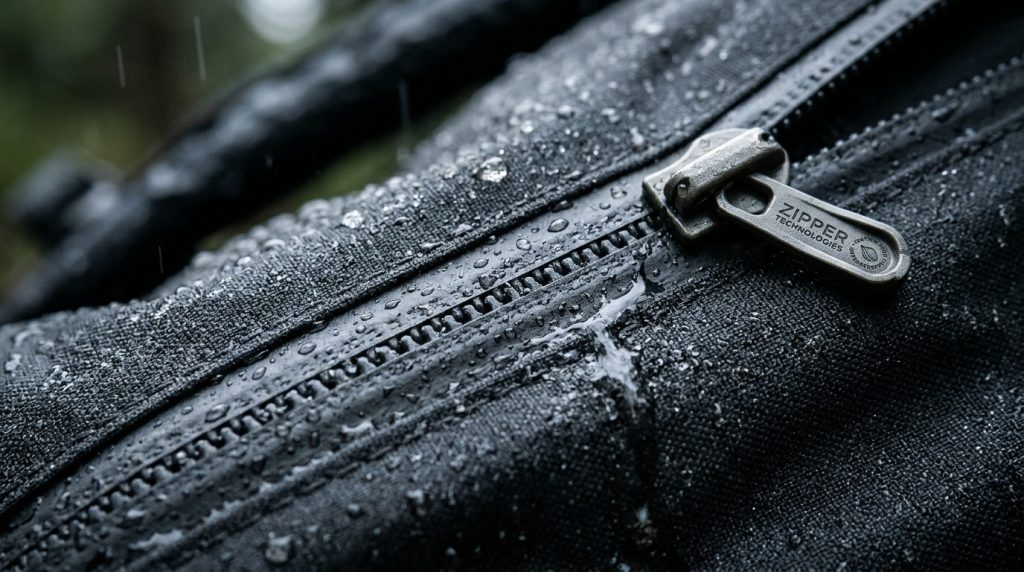
Water resistance is one of the most important needs in outdoor apparel. Rain, snow, and wet wind can quickly ruin a day outside. That is why brands pay close attention to every part of a jacket, including the zipper. But coatings add material and change how a closure looks and feels.
And one of the biggest talking points in the community is PU-coated zippers.
What is a PU-Coated Zipper?
Now for reference, a PU-coated zipper is a zipper like this. And the only difference between this zipper and a regular zipper is the PU, which is a polyurethane coating. It’s basically just a plastic coating applied to the zipper to, in theory, improve its weather resistance. And that’s the biggest perceived value point with PU-coated zippers.
The Drawbacks of Coated Zippers
Harder to Open and Close
But that aside, PU-coated zippers have some cons. The first con is that the PU coating makes the zippers particularly sticky and difficult to open and close. It does get a bit easier over time as the zipper breaks in. So the non-PU-coated zipper took around 1.9 lbs of pressure to open it. But the PU-coated zipper maxed out at like 2.5 lbs.
Peeling Over Time
But the other big con of a PU-coated zipper is the fact that over time, especially with exposure to sunlight and humidity, these guys can peel. Because as time goes on, the backpack niche is getting bigger, and more people are ordering backpacks with PU-coated zippers. And then slowly those zippers are starting to fade and peel. But it should be noted that it’s not a guarantee. It depends on the zipper brand, exposure to the elements, and lots of other factors.
A Cleaner Look Without Coating
Cleaner look. The closure does not depend on an added coated layer for its look.
The Real Weak Point: Seams
So, if the zippers are annoying to open and they can potentially peel over time, that water resistance better be worth it, right? Well, here’s where the plot thickens.
The reality is, or what a lot of people are saying, is that sure, while this polyurethane coating is stopping water from getting into that area, technically, along the edges of every zipper are seams, right? Cuz these zippers need to be sewn into place. So, while yeah, you’re getting a bit more water protection right there, the water is still going to easily penetrate the seams above and below the actual zipper itself. Or is it?
Why Traditional Zippers Have Seams
Most zippers are built on textile tape. The zipper teeth sit on the tape. The tape is then sewn into the garment.
Testing Coated, Regular and Reverse Coil Zippers
And you can see, we’ve got three swatches for each fabric, and each fabric has its own zipper that we’re going to be testing. So, for example, we’ve got three canvas swatches: one with a regular zipper, one with a reverse coil zipper, and one with a PU-coated zipper.
What is a Reverse Coil Zipper?
A quick note on reverse coil zippers is that most modern backpacks these days are, in fact, reversing their zippers. And what that means is instead of a toothy zipper aesthetic, like this, you get a bit smoother of a zipper aesthetic like this. So, we want to add both zippers to the test to cover all angles.
How the Test Worked
Now, let’s talk about the methodology. 30 sprays each with our dyed water. And we’re doing dyed water because we’re going to put a sheet of toilet paper underneath each zipper, so we can A, visually see, with the blue dye, how much water has penetrated the zipper and been soaked up by the tissue paper. And we’re going to weigh the before and after, so we can see how much water the toilet paper actually soaked in.
So, we’re going to do a little baseline test, see what the weight is of three sheets of toilet paper, measured in grams. We’re clocking in at 1.6 g. So, any weight over that will be the water that the tissue paper has soaked in.
Simulating Real Rain
So, we set a timer for 5 minutes cuz the goal of this is to try and simulate some real-life experience. We know it’s not going to be perfect, right? But at the end of the day, if you are caught in a rainstorm and you get 30 sprays- a comparable amount of rain on your bag- you’re not going to be able to just take the bag off and dry it right away; you’re probably still walking with it.
The Results
Canvas
So, for the first one, which was the reverse coil zipper, we’re coming in at 4.15. For the second one, which is the regular zipper, 3.45. And then for the PU-coated zipper, call it 3.39. So, interesting, for test number one with the canvas, the PU-coated zipper did perform the best. With the regular zipper right behind it, and the reverse coil a pretty distant third place.
Ballistic Nylon
All right, next up we got ballistic nylon with the reverse coil, the regular zipper, and the PU-coated zipper. Now, some quick notes about nylon. A lot of people believe that nylon is more weather resistant than polyester cotton, but in fact, the opposite is true. Nylon has a tendency to absorb water. But the perception that nylon is actually quite weather resistant in itself comes from the fact that a lot of modern bag makers are usually coating nylon with some sort of DWR spray. And DWR sprays are absolutely super weather resistant, but they do fade over time.
All right, so reverse coil zipper, 3.6. Regular zipper, 3.6 as well. And then for the PU-coated zipper, 3.3. Consistent, right? I mean, the first two zippers are sort of performing similarly to each other, letting through a bit more water. The PU coating is not waterproof by any stretch. Still, water is getting through, but less so than the other two. Yeah, it’s not much. We’re not getting a lot of extra weather protection when it comes to those seams, but it is there; something is there.
Why Reverse Coil Zippers Let More Water Through
Because the other side of the zipper has more surface area. So it absorbs more water.
When Water Pools
Whoa, so you can see right there: if you let the water pool up like that, as you can see, if you put enough water on any backpack, it’ll definitely get through.
What the Test Shows
PU-coated zippers definitely seem to work in some capacity. Just depends on a lot of circumstances. Who made the backpack, how well it’s made, what fabrics are being used, if there’s a weather-resistant spray, which direction the rain is coming from- a lot of factors.
Water Resistance Without a Coating: NOTAPE™ SEAL
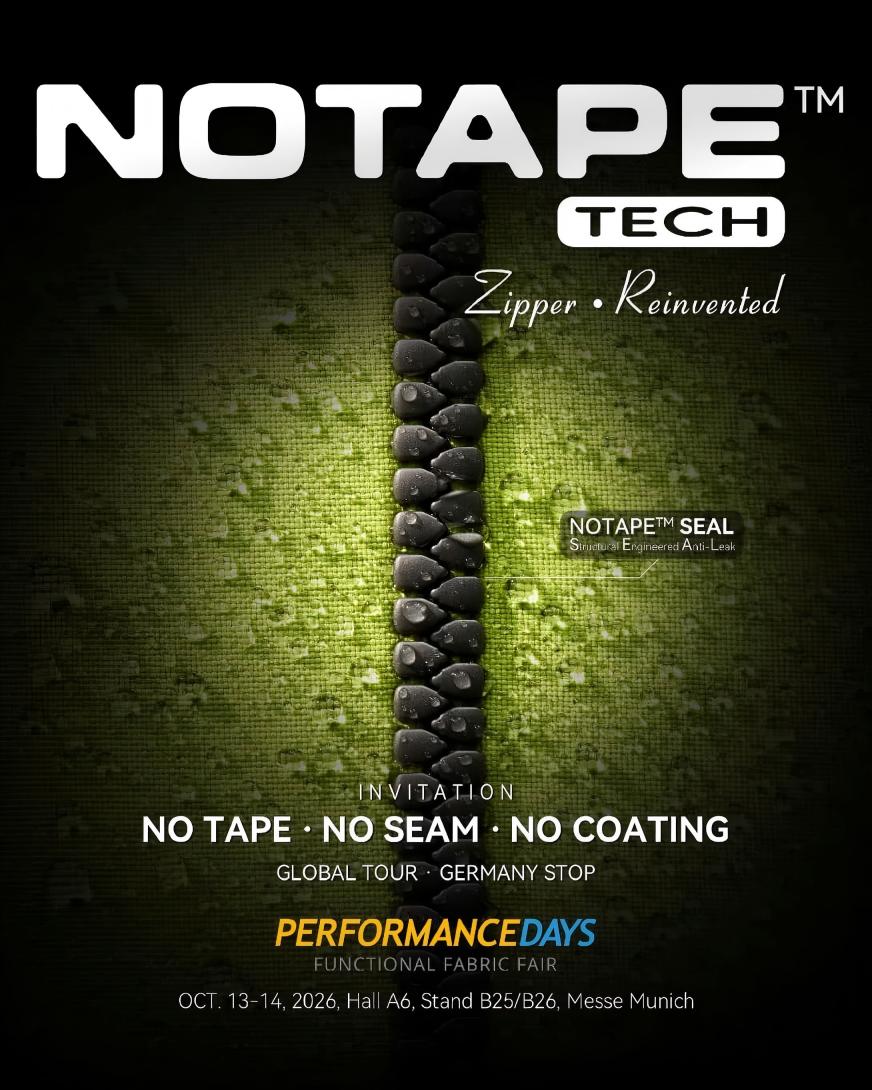
NOTAPE™ offers the NOTAPE™ SEAL Water-resistant Zipper. Its idea is clear and simple: No Tape, No Seam, No Coating. It brings water resistance and a tape-free, seam-free structure together in one zipper.
How it is Made
The zipper is formed as one with the fabric, using patented equipment. It is not attached using traditional sewing methods.
A Simpler Closure
Simpler structure. No tape, no seam, and no coating means fewer added elements in the closure.
Explore NOTAPE™ SEAL for Your Outdoor Collection
Contact NOTAPE™ to discuss sample testing and customized development for your next outdoor collection.
Share on Social:



Contact Us
In This Article
Related Posts
How Should Brands Evaluate Zipper Performance for High-End Outdoor Clothing?
November 17, 2026
Notape pitches lighter repairable zippers
November 16, 2026
130 Years Later, Cars Were Reinvented by Electrification. What About the Zipper?
October 12, 2026
Waterproof Zipper without Coating Supplier | NOTAPE™ No Coating Zipper Technology
September 26, 2026


