




What Is a Next Generation Zipper? Exploring Tape-Free Technology
By hqt
11, 2026Related Posts
How Should Brands Evaluate Zipper Performance for High-End Outdoor Clothing?
November 17, 2026
Notape pitches lighter repairable zippers
November 16, 2026
130 Years Later, Cars Were Reinvented by Electrification. What About the Zipper?
October 12, 2026
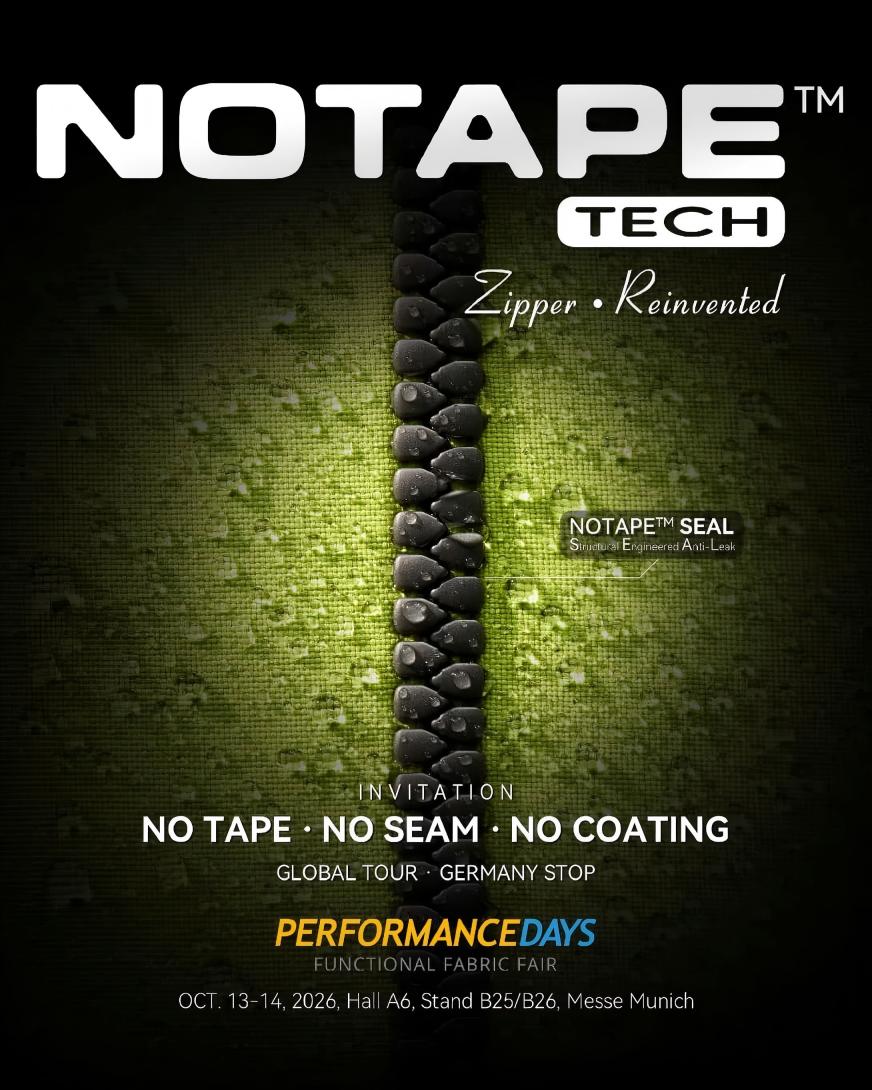
Waterproof Zipper without Coating Supplier | NOTAPE™ No Coating Zipper Technology
September 26, 2026
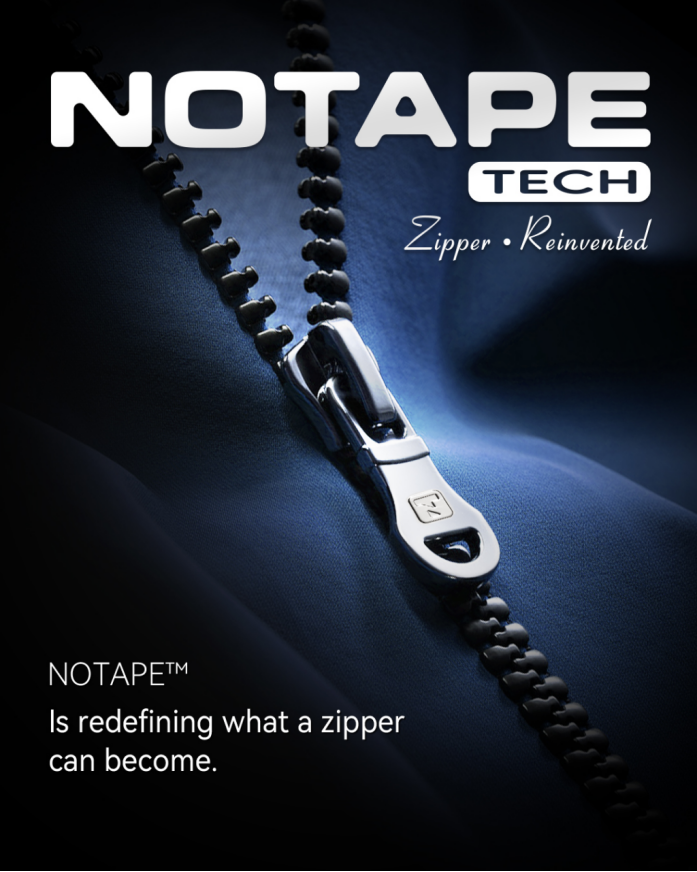
On a conventional zipper, the teeth do not attach directly to the jacket panel. They sit on textile tapes, which are then sewn to the garment. Those tapes are useful—but they also add material layers, stitching lines, and a separate component to colour-match.
A Next Generation Zipper asks whether that intermediate structure is always necessary.
What Is a Next Generation Zipper?
A Next Generation Zipper refers to fastening technologies that reconsider conventional zipper materials, construction, or attachment methods. It is a broad technical concept rather than a single industry standard.
Tape-free zipper technology represents one approach. Instead of treating the zipper as a separate trim sewn onto fabric, it integrates fastening elements more directly with the garment textile.
This change in the attachment interface is the foundation of our technology development at NOTAPE™.
Why Do Conventional Zippers Require Fabric Tape?
Zippers consist of the following elements:
•Interlocking elements: These elements consist of nylon coils or resin molded teeth and function to close the zipper.
•Woven Zipper Tape: This element, together with the interlocking elements, forms the support structure of the closure and gives a sewing allowance.
•Slider Elements: When the teeth element of the closing mechanism is engaged, this element opens and closes the zipper and controls the movement of the slider.
•Attachment Stitching: This element of the zipper is attached to the garment by means of stitching.
•Fabric Tape: This element is sewn to the zipper tape to help spread the mechanical loads and assist conventional sewing.
Although a zipper tape helps to reduce the fullness of fabric of the garment and closes it, it adds stiffness to the garment and increased bulk, especially to lightweight outerwear.
Tape dyeing, colour matching and seaming also become part of garment construction.
How Does Next Generation Zipper Tape-Free Technology work?
The key to this innovation is changing how zipper elements connect with fabric.
Traditional vs. Tape-Free Construction
Traditional construction:
Zipper Elements → Woven Tape → Sewing → Fabric
Tape-Free Construction:
Zipper Elements → Engineered Connection → Fabric
Removing the tape means that the supporting function of the tape is transferred to the connection between the fastening elements and the fabric.
This means that three things must be ensured.
1) Attachment strength: The connection must support the lateral opening and the repeated movement of the slider.
2) Material Compatibility: Attachment strength depends on the fabric and its finishing.
3) Manufacturing consistency: This must be consistent during the entire production process.
NOTAPE™ develops tape-free coil zippers and No Tape, No Seam resin zipper constructions using proprietary, parameter-controlled processes and dedicated equipment.
Importantly, No Seam refers to eliminating conventional zipper-tape attachment stitching—not every seam within the garment.
Next Generation Zipper vs. Traditional Zipper: Structural Comparison
| Technical Aspect | Traditional Zipper | NOTAPE™ Tape-Free Technology |
| Fabric tape | Separate woven tape | Traditional tape eliminated |
| Attachment | Tape sewn to fabric | Engineered fabric integration |
| Material layers | Tape and garment overlap | Reduced overlapping layers |
| Closure profile | Additional tape thickness | Flatter integrated structure |
| Colour matching | Separate tape colour | No separate tape matching |
| Manufacturing | Conventional sewing | Specialised attachment process |
These differences describe construction methods, not universal claims about strength or durability.
What Are the Practical Benefits of a Next Generation Zipper?
1. Reduced Thickness and Structural Bulk
The woven tape seams build material around the closure. The problem is solved by taking out woven tapes. This can help to reduce raised edges and stiffness, which is particularly noticeable on thin panels of garment fabric.
2. Measurable Component Weight Reduction
NOTAPE™ has offered the following comparison for a No. 5, 65 cm resin zipper:
| Zipper Construction | Reference Weight |
| Conventional resin zipper | 12–15 g |
| NOTAPE™ tape-free resin zipper | 6.66 g |
Actual weight differences depend on zipper length, slider configuration, materials, and the conventional reference used.
3. Cleaner Garment Integration
With no separate tape edges and attachment stitching, closures can conform more closely to the surface of the garment.
This is pertinent to outerwear and other types of apparel where seam appearance and fabric drape affect design.
4. Different Production Requirements
Tape-free construction can eliminate tape-related colour matching and conventional zipper-tape sewing.
However, it introduces additional requirements for fabric assessment, attachment parameters, and production validation.
Is a Tape-Free Next Generation Zipper Waterproof?
No, removing zipper tape won’t help. Water will just find another way to get in.
Some of the likely paths the water could take to get in include:
•Spaces between engaged zipper elements.
•The slider and end-stop regions.
•Interfaces between the closure and adjacent garment fabric.
How NOTAPE™ SEAL Approaches Water Resistance
Our NOTAPE™ SEAL technology uses a three NO design concept:
•No Tape: Eliminates traditional absorbent zipper tape.
• No Seam: Removes the conventional tape-sewing line and its needle holes.
•No Coating: Uses engineered tooth engagement and material interfaces rather than a conventional surface coating as the water-resistant barrier.
Evaluation of water resistance performance is dependent on zipper construction, fabric of the garment and test conditions.
Is Next Generation Zipper Technology Sustainable?
Zipper tape reduction can minimize the quantity of material utilized and skip textile processing steps of weaving, dyeing and finishing.
Merely lessening material use does not really indicate a lessened overall environmental footprint.
A more through analysis must consider:
•Energy used in material and manufacturing.
•Product life, use, and maintenance.
•The conditions and the lifecycle of the product.
The principles of design simplification could lead to materials and mass reductions. The environment benefits of those reductions would have to be supported by data.
What Are Some Potential Use Cases for Next Generation Zippers?
Next Generation Zipper technology lends itself well to the following applications:
•Outdoor apparel: Lightweight, technical jackets.
•Cycling apparel: and other form fitting apparel.
•Sun protective clothing: Lightweight, technical fabrics.
•Urban apparel: Minimalist outerwear.
•Other apparel: Relies on a number of other factors, including the desired performance of the apparel.
What Should Designers Check Before Moving to Production?
Prior to specifying Next Generation Zippers, design and development teams should confirm:
•Fabric compatibility: The type and construction of the fibers, thickness, degree of stretch, surface finish and other factors.
•Mechanical and function performance: Element retention, crosswise strength, slider cycling and end stop, and other factors.
•Functional protection: Barriers against water ingress.
•Production: Equipment, process, repeatability and cost.
NOTAPE™ technology is more applicable to certain nylon and polyester fabrics, and compatible constructions.
Further fabric sample and basic validation are required.
Explore Next Generation Zipper Technology With NOTAPE™
At NOTAPE™, we approach Next Generation Zipper development by reconsidering which elements of conventional zipper construction remain necessary.
Our tape-free coil, resin, and NOTAPE™ SEAL technologies represent different approaches to integrating closures more directly with garment fabrics.
Explore NOTAPE™ to learn more about our tape-free technology and how it may fit your next garment development project.
FAQs
Q1: What types of garments can NOTAPE™ zippers be used for? Can they be used for bags, hats, or cases?
NOTAPE™ currently focuses on the high-end apparel segment, primarily covering down jackets, windbreakers, lightweight jackets, and business-formal garments.
If future application directions are updated, we will inform our partners in a timely manner and share relevant technical and application information accordingly.
Q2: Can NOTAPE™ coil zippers be repaired?
No. Coil zippers cannot be repaired.
However, the damage rate for coil zippers is extremely low.
Q3: How can NOTAPE™ zippers be purchased?
Will they be available to general consumers or individual buyers?
At present, NOTAPE™ works exclusively with apparel designers and industry professionals.
Q4: Are there detailed specifications for NOTAPE™ zipper styles, colors, sizes, and customization options?
We provide dedicated color cards and profiles.
If you have further questions, our team can assist you directly.
Q5: Can we view videos or technical materials showing the zipper manufacturing process?
Depending on the stage of cooperation and mutual evaluation between parties, and as sample testing and customized development progress, certain process-related technical materials may be gradually shared with clients.



Contact Us
In This Article
Related Posts
How Should Brands Evaluate Zipper Performance for High-End Outdoor Clothing?
November 17, 2026
Notape pitches lighter repairable zippers
November 16, 2026
130 Years Later, Cars Were Reinvented by Electrification. What About the Zipper?
October 12, 2026
Waterproof Zipper without Coating Supplier | NOTAPE™ No Coating Zipper Technology
September 26, 2026


