




Green Zipper Solution and Life Cycle Assessment: What Should Apparel Brands Actually Measure?
By hqt
10, 2026Related Posts
How Should Brands Evaluate Zipper Performance for High-End Outdoor Clothing?
November 17, 2026
Notape pitches lighter repairable zippers
November 16, 2026
130 Years Later, Cars Were Reinvented by Electrification. What About the Zipper?
October 12, 2026
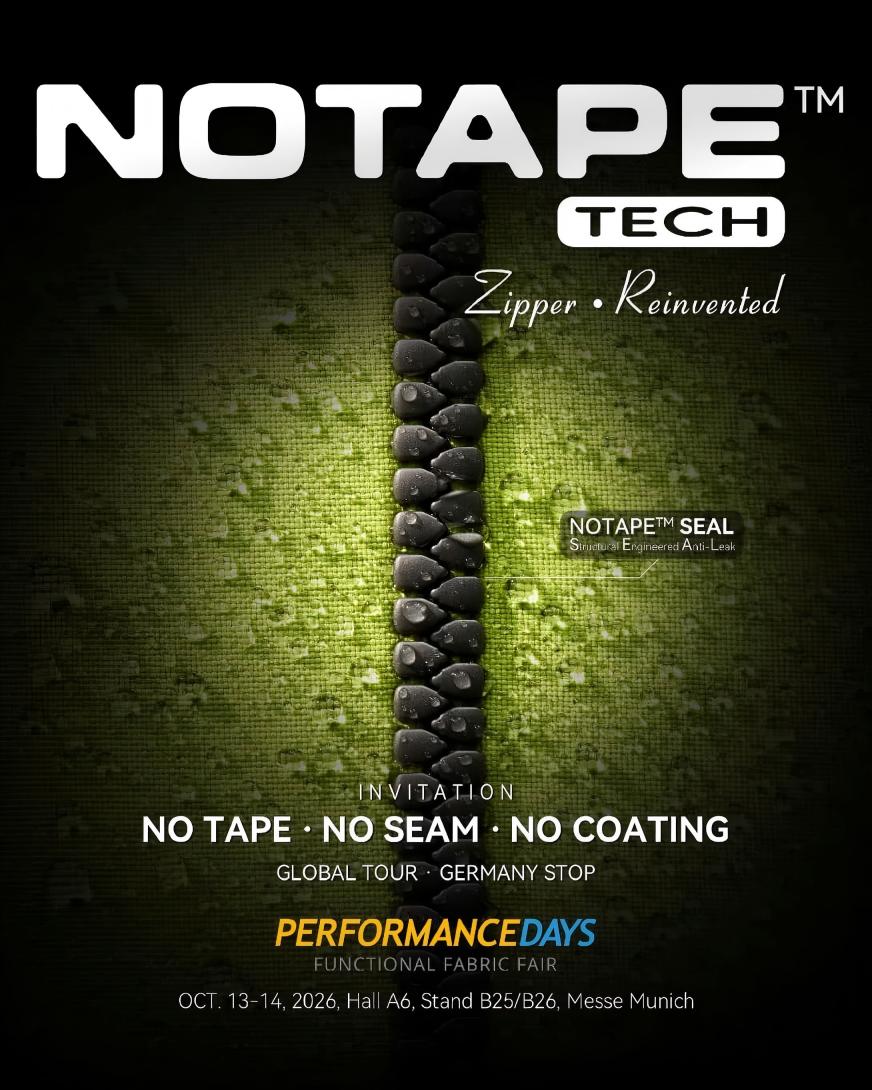
Waterproof Zipper without Coating Supplier | NOTAPE™ No Coating Zipper Technology
September 26, 2026
A zipper made with recycled polyester may sound sustainable. But does recycled content alone make it a Green Zipper Solution?
Not necessarily.
For apparel brands, the more useful question is: what has actually changed across the zipper’s life cycle? Material quantity, manufacturing processes, energy, water, chemical inputs, durability and end-of-life all matter.
Life Cycle Assessment (LCA) provides a framework for answering that question. ISO 14040 structures LCA around goal and scope definition, life-cycle inventory, impact assessment and interpretation.
Start With the Functional Unit, Not the Green Claim
Before comparing two zippers, brands need a common functional unit.
Comparing “one lightweight zipper” with “one conventional zipper” is too vague. A more useful comparison might be:
One finished zipper of the same type, size and length, performing the same closure function in the same garment application.
This matters because zipper length, materials, slider configuration, water-resistance requirements and construction can all affect environmental results.
The same rule applies to the system boundary.
| LCA Boundary | What It Covers | Best Use |
| Cradle-to-Gate | Raw materials through zipper manufacturing | Supplier comparison |
| Cradle-to-Garment | Materials, zipper production and garment assembly | Apparel sourcing |
| Cradle-to-Grave | Production, use and disposal | Full lifecycle assessment |
| Cradle-to-Cradle | Includes material recovery | Circular design |
A cradle-to-gate carbon reduction should therefore not automatically be described as the same reduction across the entire garment lifecycle.
What Should a Green Zipper Solution Actually Measure?
A credible Green Zipper Solution requires more than one environmental number.
Brands should examine at least seven dimensions:
| Metric | What to Check |
| Material use | Polymer, textile tape, thread, coating and other layers |
| Carbon footprint | CO₂e per defined functional unit |
| Water use | Water associated with relevant manufacturing processes |
| Energy use | Electricity and thermal energy |
| Chemical inputs | Dyeing, finishing, coating and treatment processes |
| Manufacturing waste | Process scrap, trimming and rejected material |
| Durability / End-of-Life | Service life, separation and recycling options |
These indicators should be interpreted together rather than reduced to one “eco-friendly” label.
Material Reduction Is Different From Material Substitution
One common sustainability strategy is replacing virgin polyester with recycled polyester.
That changes what material is used.
Structural reduction asks a different question:
Does this component need to exist at all?
A conventional zipper commonly uses:
Teeth → Textile Tape → Sewing → Garment Fabric
Removing the separate zipper tape changes the life-cycle inventory because the tape itself and its associated production steps are no longer part of the same structure.
This is relevant to a Green Zipper Solution because sustainability can come from both material substitution and material elimination.
However, less material should not automatically be translated into a lower total environmental impact. The reduction still needs to be quantified through comparable LCA data.
Carbon Footprint: The Percentage Alone Is Not Enough
Suppose Supplier A reports a 20% carbon reduction while Supplier B reports 25%.
Is Supplier B automatically better?
No.
Before comparing percentages, sourcing teams should ask:
•What was the baseline product?
•What zipper length and size were tested?
•Were materials equivalent?
•What processes were included?
•Was transport included?
•What was the functional unit?
•Was the same system boundary used?
•Was the assessment independently verified?
•A carbon-footprint number without these conditions can easily be misunderstood.
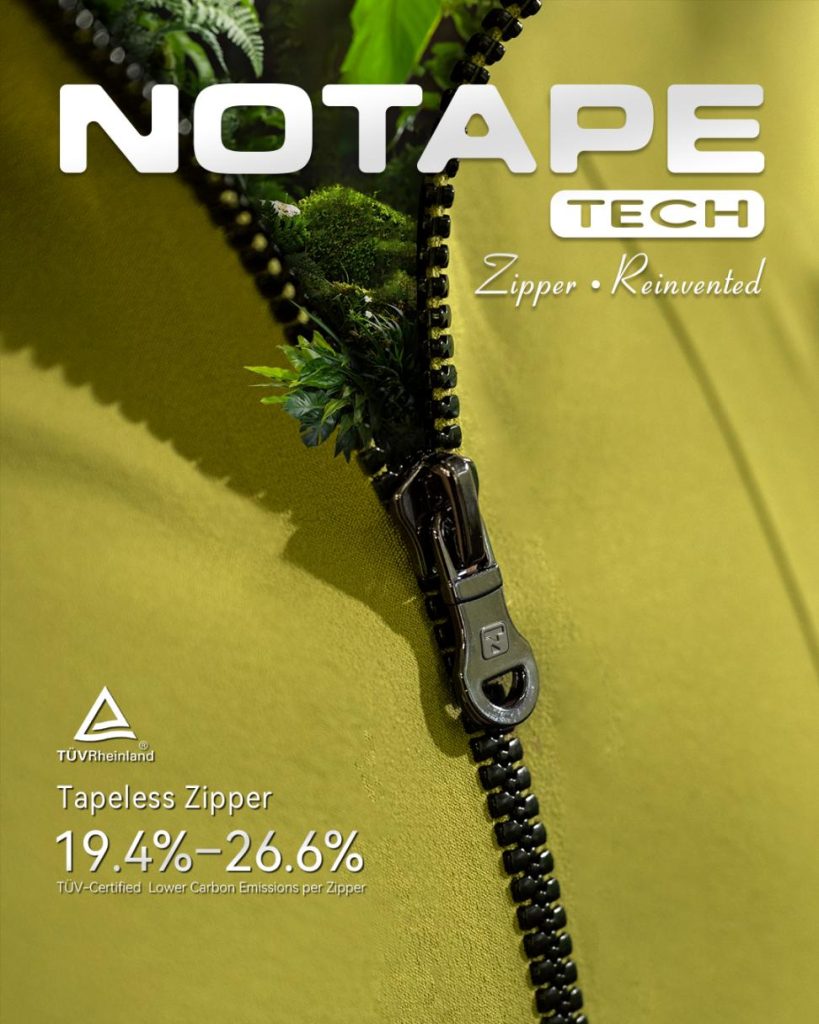
At NOTAPE™, we approach sustainability through measurable structural changes rather than broad environmental claims. Based on our published environmental assessment, TÜV-certified data show a carbon-footprint reduction of approximately 19.4%–26.6% compared with corresponding traditional zipper structures under the specified assessment conditions.
We also recognize that this percentage is not a universal value for every zipper application. Actual results can vary depending on zipper type, product configuration, materials, dimensions, manufacturing route and the comparison boundary used in the assessment. For this reason, we believe carbon-footprint data should always be interpreted together with the functional unit, baseline product and assessment conditions rather than treated as a standalone sustainability claim.
That qualification is essential. The percentage should not be treated as a universal reduction factor for every zipper application.
Water, Energy and Chemicals: Look Upstream
A finished zipper may look simple, but its components can carry upstream processing.
Textile zipper tape may involve yarn preparation, weaving, dyeing, heat treatment and finishing. Water-resistant constructions may introduce additional films or coatings.
Therefore, evaluating a Green Zipper Solution means asking not only:
“How heavy is the final zipper?”
but also:
“Which production processes were required to create it?”
Removing a component can potentially remove some associated upstream processes, but each reduction should be supported by defined inventory data rather than assumed from the structure alone.
Manufacturing Waste Should Be Measured per Functional Unit
Waste is another area where general claims can hide important differences.
Brands can examine:
•Yarn and weaving waste;
•Trimming waste;
•Rejected zipper components;
•Coating or film waste;
•Color-matching inventory;
•Garment panels rejected during zipper installation.
Instead of simply claiming “less waste,” a stronger comparison reports waste mass per functional unit under equivalent production conditions.
Is the Lightest Zipper Always the Greenest?
Again, no.
A lightweight Green Zipper Solution may require fewer resources during production. But if its functional life is significantly shorter, replacement or early garment failure can change the lifecycle result.
Durability evaluation should therefore consider:
•Repeated opening and closing;
•Tensile and attachment stability;
•Washing;
•Abrasion;
•Water-resistant performance after use;
•Compatibility with the garment fabric.
This is especially important for outdoor, sportswear and frequently washed garments.
Environmental performance should be evaluated against the useful service delivered, not product weight alone.
A Structural Example: NOTAPE™ No Tape, No Seam, No Coating
NOTAPE™ approaches zipper sustainability from a structural direction.
Its basic concept removes conventional textile zipper tape and integrates the zipper structure more directly with compatible garment fabric. In its SEAL water-resistant construction, the concept extends to No Tape, No Seam and No Coating, using engineered structure rather than a conventional coated tape as the primary water-resistant mechanism.
This changes the comparison from:
Teeth + Tape + Sewing + Optional Coating
toward a structurally simplified closure.
For LCA, the important point is not simply that fewer layers “sound greener.” The real question is whether removing those layers produces measurable changes in material input, processing, carbon emissions, water, energy, chemicals and manufacturing waste.
Five Mistakes Brands Should Avoid
When selecting a Green Zipper Solution, avoid these shortcuts:
- Recycled means sustainable. Recycled content is only one lifecycle variable.
- Lighter always means greener. Durability and material type still matter.
- Lower carbon means lower impact everywhere. Carbon, water, chemicals and waste measure different effects.
- Supplier percentages are directly comparable. Functional units and boundaries may differ.
- Component LCA equals garment LCA. A zipper result cannot automatically represent the finished garment.
A Practical Green Zipper Solution Procurement Checklist
Before approving a supplier claim, ask for:
Functional Unit → System Boundary → Material Composition → Carbon Data → Water/Energy/Chemical Inputs → Manufacturing Waste → Durability Testing → End-of-Life Considerations → Verification Method
That sequence turns sustainability from a marketing adjective into a purchasing framework.
A Green Zipper Solution should ultimately be judged by measurable structural and lifecycle changes—not simply by the presence of a recycled material or a green label.
For apparel brands exploring this approach, NOTAPE™ offers an interesting structural case: beginning with No Tape and extending to No Seam and No Coating solutions for selected applications. Product developers and sourcing teams can explore NOTAPE™ technology and its published sustainability information through the official NOTAPE™ website while assessing whether the structure, fabric compatibility, performance and LCA boundary fit their own garment program.



Contact Us
In This Article
Related Posts
How Should Brands Evaluate Zipper Performance for High-End Outdoor Clothing?
November 17, 2026
Notape pitches lighter repairable zippers
November 16, 2026
130 Years Later, Cars Were Reinvented by Electrification. What About the Zipper?
October 12, 2026
Waterproof Zipper without Coating Supplier | NOTAPE™ No Coating Zipper Technology
September 26, 2026


