




No Tape Zippers Are Becoming an Innovative Choice for Apparel Designers
By hqt
08, 2026Related Posts
130 Years Later, Cars Were Reinvented by Electrification. What About the Zipper?
October 12, 2026
Waterproof Zipper without Coating Supplier | NOTAPE™ No Coating Zipper Technology
September 26, 2026
From No Tape to Water Resistance Without Coating: NOTAPE™ Rethinks the Zipper Through Its “Three-No” Design
September 14, 2026

NOTAPE™Returns to Intertextile Shanghai Apparel Fabrics with Groundbreaking NO TAPE, NO SEAM, NO COATING Zipper Innovation
August 06, 2026
For more than 130 years, the conventional zipper has followed a familiar construction: zipper teeth are fixed to textile tapes, and the tapes are then sewn onto the garment.
This structure is reliable and widely understood. However, as apparel design moves toward lighter materials, cleaner silhouettes, simplified construction, and measurable sustainability, designers are beginning to reconsider whether zipper tape must always remain part of the garment.
NOTAPE™ takes a different angle on an existing component. By eliminating the separate textile tape, the zipper structure fuses more closely with the fabric of the garment. The end result is more than a visual alteration. It can impact the thickness of the garment as well as the tactile perception, weight, production logistics, and even sustainability.
No Tape Zipper vs. Conventional Zipper: The Structural Difference
A conventional zipper normally creates a three-layer construction around the opening:
Zipper teeth + textile tape + garment fabric
A NOTAPE™ zipper removes the separate tape layer:
Zipper teeth + garment fabric
This simplified structure forms the foundation of two different NOTAPE™ solutions:
•The World’s First No Tape Coil Zipper, which retains a sewing process appropriate to its construction
•The World’s First No Tape, No Seam Resin Zipper, which removes both the separate zipper tape and the conventional zipper-tape sewing seam
It is therefore important to note that No Seam applies specifically to the Resin Zipper solution, rather than every NOTAPE™ zipper category.
| Design Consideration | Conventional Zipper | NOTAPE™ Zipper |
| Basic structure | Teeth, zipper tape, garment fabric | Teeth integrated with garment fabric |
| Layering around opening | Three-layer overlap | Reduced structural layering |
| Visible appearance | Traditional sewn-on zipper line | Cleaner, more integrated closure line |
| Hand feel | Tape may add stiffness or thickness | Thinner and closer to the garment fabric |
| Weight | Includes separate textile tapes | Lower material weight |
| Color coordination | Tape color normally requires matching | No separate zipper tape color matching |
| Construction method | Tape positioning and sewing required | Direct Fabric Integration |
A Cleaner Appearance for Contemporary Apparel
Zippers are no longer treated only as hidden functional components. In outdoor clothing, sportswear, casualwear, cycling apparel, skin jackets, sun-protective clothing, hardshell jackets, and ski apparel, the zipper often becomes part of the visible design language.
Conventional zipper tape may create a wider border around the garment opening. Depending on the fabric and sewing method, it can also introduce additional thickness, puckering, or a noticeable transition between the zipper and the body fabric.
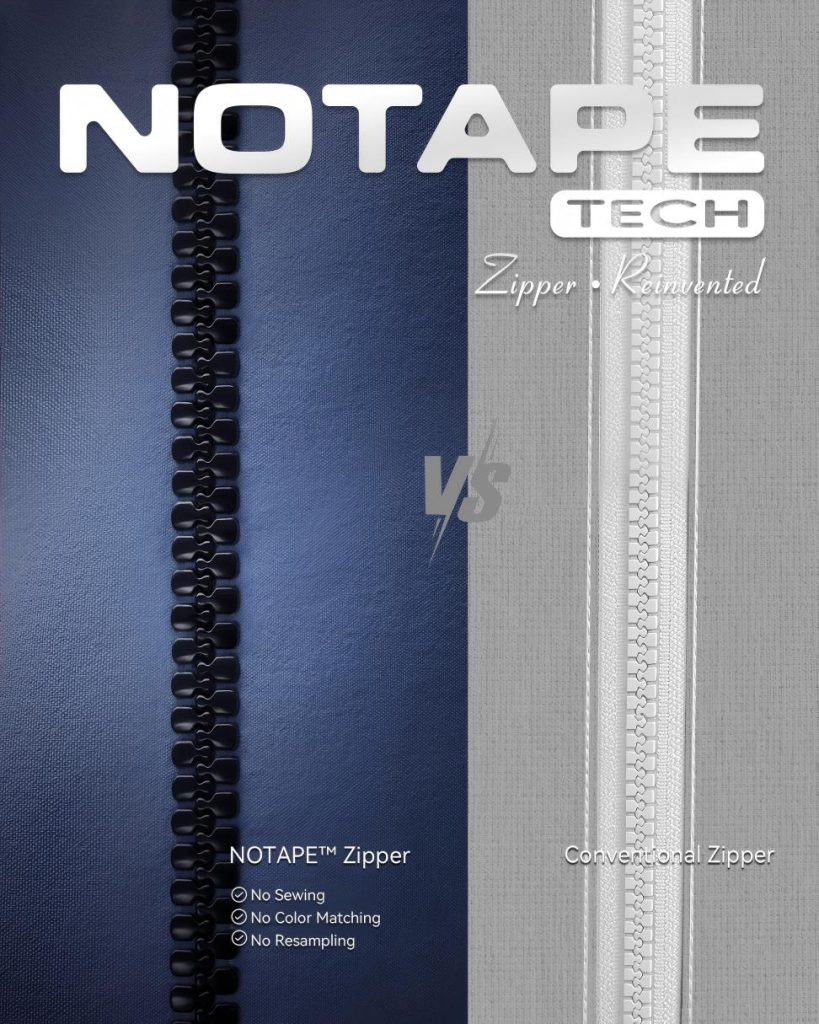
With a No Tape structure, the closure line appears more closely connected to the garment panel. This supports several design directions:
•Minimalist front openings
•Cleaner pocket constructions
•Reduced visual interruption
•Slimmer layered garments
•More consistent fabric-led color design
The result feels less like an accessory sewn onto the garment and more like a closure system developed as part of the garment itself.
A Softer, Thinner Hand Feel
Removing zipper tape also changes how the opening feels.
Zipper systems usually include a fabric component on either side of the chain. When incorporated into a garment, along with seam allowance and stitching, this can create a stiffness or bulkiness in the zipper area compared to the rest of the panel.
NOTAPE™ drastically alters traditional zipper construction by eliminating side strips and retaining only the zipper teeth, slider, puller, pin and box, and stoppers. The result is a zipper with a much smaller and more flexible opening.
This also holds true for thin, lightweight, and close-fitting garments including jackets, activewear, and sun-protective apparel. With these types of clothing, a small, localized increase in stiffness can alter the overall comfort and fit of the apparel.
Approximately 50% Lighter per Zipper
When creating lightweight clothing, the obvious focus is on the major components such as the shell, insulation, and lining. However, small hardware components also have a significant impact on the overall weight of the garment.
Using a #5 zipper with a length of 65 cm as an example:
| Zipper Type | Conventional Zipper | NOTAPE™ Zipper |
| Resin Zipper | Approximately 12–15 g | Approximately 6.66 g |
| Coil Zipper | Approximately 11–14 g | Approximately 6.5 g |
Depending on the conventional zipper used for comparison, a NOTAPE™ zipper can be approximately 50% lighter per zipper.
A few grams may appear modest when viewed as an isolated component. Across a lightweight jacket containing a front zipper and several pocket zippers, however, the combined reduction can become more meaningful. It also helps designers reduce weight without changing the garment’s primary fabric or intended function.
What Changes in Garment Development?
The absence of separate zipper tape can simplify several decisions across design and production.
There is no zipper tape inventory to coordinate, no separate tape color-matching cycle, and fewer tape-related handling requirements. For the No Tape, No Seam Resin Zipper, the conventional sewing pass used to attach zipper tape is also removed.
This supports:
•More direct coordination between zipper structure and garment fabric
•Fewer material layers around openings
•Cleaner line balancing for suitable production programs
•Reduced tape storage and color management
•More focused sampling around fabric compatibility and processing parameters
The technology still requires defined material sets, suitable fabrics, and controlled manufacturing conditions. It should therefore be evaluated as an engineered garment solution rather than a universal replacement for every zipper application.
A New Option, Not Simply a New Look
For designers, the value of a No Tape Zipper is not limited to novelty. It introduces another way to coordinate the closure with the garment’s weight, surface, hand feel, construction, and environmental targets.
Conventional zippers will continue to serve many apparel categories. At the same time, NOTAPE™ No Tape zipper solutions offer an alternative for projects where lighter construction, cleaner aesthetics, and reduced material use are important.
By questioning one long-established zipper layer, designers gain additional freedom to reconsider how a garment opening should look, feel, and perform.
FAQs
Q1: Why should I pay more for NOTAPE™?
Yes, we come at a premium — because true innovation is rare. NOTAPE™ is not available to every brand. By integrating our tapeless zipper technology, your products gain a level of exclusivity and uniqueness that sets them apart.
Q2: How are the zipper top stop and bottom stop handled?
The zipper structure is formed using patented equipment and specialized process treatments.
Q3: Are there requirements regarding fabric type or thickness when using NOTAPE™ zippers?
Currently, NOTAPE™ technology is more suitable for synthetic fibers such as nylon and polyester, as well as woven, knitted, low-elastic, or non-elastic fabrics. The applicability of other materials is still under development and testing.
Q4: If a NOTAPE™ zipper is damaged, can it be replaced or repaired? How is it repaired? Will it affect the garment?
Individual zipper teeth on plastic zippers can be repaired without affecting the garment.
Q5: How can NOTAPE™ zippers be purchased? Will they be available to general consumers or individual buyers?
At present, NOTAPE™ works exclusively with apparel designers and industry professionals.



Contact Us
In This Article
Related Posts
130 Years Later, Cars Were Reinvented by Electrification. What About the Zipper?
October 12, 2026
Waterproof Zipper without Coating Supplier | NOTAPE™ No Coating Zipper Technology
September 26, 2026
From No Tape to Water Resistance Without Coating: NOTAPE™ Rethinks the Zipper Through Its “Three-No” Design
September 14, 2026
NOTAPE™Returns to Intertextile Shanghai Apparel Fabrics with Groundbreaking NO TAPE, NO SEAM, NO COATING Zipper Innovation
August 06, 2026


