




Tape-Free Zipper Sustainability: Benefits, Evidence and Limitations

Related Posts
How Should Brands Evaluate Zipper Performance for High-End Outdoor Clothing?
November 17, 2026
Notape pitches lighter repairable zippers
November 16, 2026
130 Years Later, Cars Were Reinvented by Electrification. What About the Zipper?
October 12, 2026
Waterproof Zipper without Coating Supplier | NOTAPE™ No Coating Zipper Technology
September 26, 2026
Sustainable Zipper Technology: What Tape-Free Design Can and Cannot Claim
Sustainability is now a key part of apparel development. In this setting, every component is reviewed, including the zipper.
Let’s talk about how to start a sustainable zipper brand.
Why Honest Claims Matter
Big business, small business, medium-sized business- they don’t do anything out of the goodness of their hearts. They do things because the law forces them to do it.
Labels Exist Because the Law Requires Them
Do you think companies want to reveal the fiber content in their clothes? No. Most people wouldn’t know real silk if it burst into flames and glitter-bombed their face. If companies could get away with tricking people into thinking viscose rayon was silk and, you know, charging way more, they absolutely would, except there are laws in place that say you have to put the fiber content in there.
Even if you’re a tiny company selling 100 units a year, that’s still a lot more than your average person consumes in a year.
Customers notice when sustainability claims are vague or too strong. Honest claims build trust.
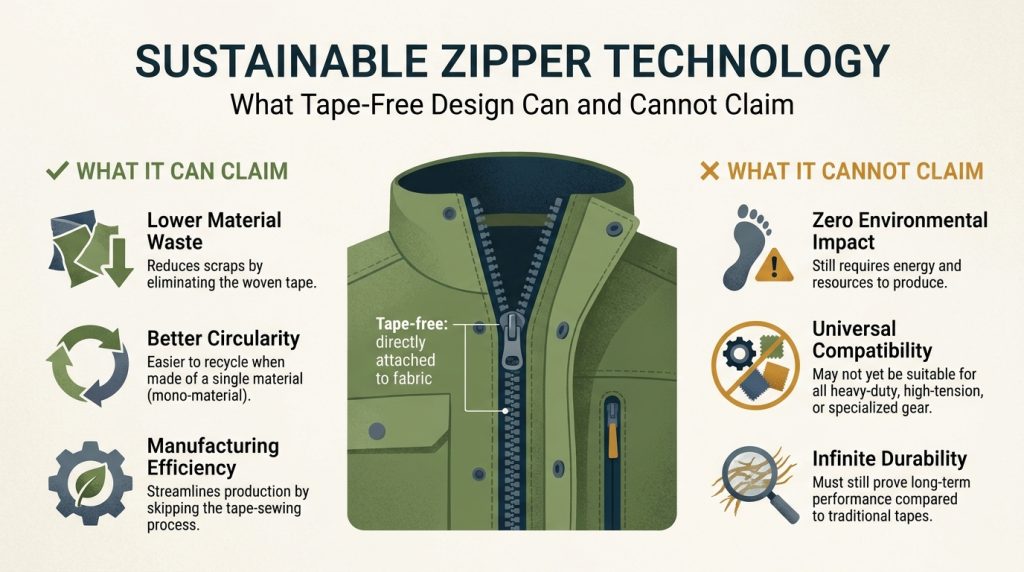
What Tape-Free Design Can Claim
A traditional zipper is built on textile tape. The teeth sit on two strips of tape. The tape is sewn into the garment.
With NOTAPE™, the zipper is formed as one with the fabric using patented equipment, rather than traditional sewing methods. The textile tape and textile side panels are removed.
Make it Really New
If you were gonna make something new, make something really new. Give me something special the world actually needs, otherwise what is the point?
Why would you start any kind of business that doesn’t have a strong ethos behind it? Why would you bother with something that won’t stand out amongst the competition?
Someone once asked me, if you have well-designed clothes, who could want anything more? Well-designed clothes are the bare minimum, the floor, the bare minimum of what you should be offering the world as a fashion designer. But on the flip side of that, people aren’t just gonna buy something purely because it’s sustainable. It has to be beautiful. It has to look good. It has to feel good. It has to make people feel good to wear it.
It’s Up to You and Not the Customer
So you’ve decided that you have a great idea and you’re gonna go for it, and you’re gonna make it sustainable. Here’s the first rule. Listen to me very carefully. The onus of sustainability cannot be on the customer. Again, the onus of sustainability, the responsibility of sustainability, cannot be on the customer. You have to make it sustainable before it gets into the hands of the customer. That means raw materials, labor, packaging, shipping.
Recyclable, able to recycle, it’s not a thing because people are bad at recycling. If you have to rely on your customers to do a specific thing to make your product sustainable, it’s not actually sustainable. Now if it’s recyclable on top of it being made from ocean trash, sewn up in ethical sewing factories, packaged in biodegradable materials, then we’re talking.
A NOTAPE™ zipper does not use textile tape. This removes a component from the zipper structure.
Make Less Stuff
Make less stuff, period. You know, fast fashion companies, they can lecture about all the sustainability initiatives until the cows come home, but they will never be truly sustainable until they greatly reduce just the sheer volume of stuff they put out into the world. And of course, you know, stop promoting the disposable fashion ethos that they encourage with their products.
Listen, make it hot, make it limited, make it sell out fast. You know what’s not hot? Making too much inventory and having a sad sale where you keep dropping prices in a desperate attempt to offload your inventory.
Make it Circular
Let’s talk about this term: circular economy. What does it even mean?
So normally the life cycle of a garment is like this. First, we make materials out of Mother Nature’s bounty: her plants, her animals, her fossil fuels, her water, right? And you design, and you sew, and you make it, and you sell it, and people wear the clothes anywhere from one to a hundred times, and then the clothes get tossed into a landfill. And if they’re made out of plastic like polyester, they will sit and sit until chickens evolve back into dinosaurs.
Extending the Life of the Garment
Now clothes within a circular economy go more like this. You make the garments out of not new raw materials, but things like recycled polyester or scrap.
People wear it in such a way that the active life of the garment is longer. They take really good care of their clothes. They mend it. They don’t dump it at the first sign of wear and tear, but you know, they pass them down if possible; they sell them; they donate them; they take them to clothing swaps- all kinds of things to extend the active wearing of the clothing.
If you have fast fashion in your closet, just keep it and wear it. Don’t throw it away and try to replace it. That’s the opposite of sustainable. Just keep wearing it until it falls apart.
Once the clothing is no longer wearable, then you find a thoughtful way to dispose of it. Essentially, the goal is to make and use less new stuff and dump less stuff into landfills. Build this into your business plan, build this into your brand values, and build this into your cash flow as circular as possible.
Durability and Repair
The damage rate for NOTAPE™ coil zippers is extremely low. A product that lasts is an important part of responsible design. NOTAPE™ coil zippers cannot be repaired.
Materials
Pro tip: If I were starting a fashion business right now, my first hire would be someone who is an ace at sourcing. Sustainable materials are a good place to start for many companies.
Recycled Materials
Recycled materials like recycled polyester. Polyester on its own is not recycled, so you know, you need something that’s specifically labeled as recycled materials. Although this is becoming less of a viable option because of harmful microfibers being released into the environment.
Ask for Proof
A side note: when you are speaking with vendors about recycled organic things, you need to ask your fabric vendor for certifications, you know, proof that they are what they say they are.
For wider claims, ask for supporting information.
Dead Stock and Scrap
What is dead stock? Dead stock is just rolls of fabric sitting around in a warehouse somewhere. They were made back in the day; nobody is using them, and so someone very cleverly decided, hey, we should use this perfectly serviceable fabric. Using stuff that’s already made and just sitting around is better than trying to make new fabrics out of more resources.
There are companies, listen, like big T-shirt companies, you know, they make really sloppy markers, and so after all the pattern pieces have been cut out of the yardage, there are like big scraps left over. There are companies who buy the scrap and, you know, weave them into new fabrics. They get stitched together like massive puzzles and create new patchwork fabrics. They use scrap to appliqué designs onto non-scrap fabrics, you know, all kinds of stuff. Get creative.
One company I know of is acquiring old billboards and power washing the fabric and then using the fabric to make different kinds of bags.
Ethical Labor
You can’t call yourself sustainable while using slave labor to produce your goods. This is not open for discussion. You can’t tell people you care about the earth and then turn around and not care about people. If a production facility quotes you a price that feels too good to be true, it probably is.
What Tape-Free Design Cannot Claim
A full sustainability view looks at more than one feature. Fabric, production, use, and end of life all matter. Broad sustainability claims should be supported by data.
From here, you can start your research, you know, get the help of a sustainability consultant, you know, all those good things, and you know, really sit down and think about a solid business plan.
Contact NOTAPE™ to explore tape-free zipper technology and the information you need for your collection.



Contact Us
In This Article
Related Posts
How Should Brands Evaluate Zipper Performance for High-End Outdoor Clothing?
November 17, 2026
Notape pitches lighter repairable zippers
November 16, 2026
130 Years Later, Cars Were Reinvented by Electrification. What About the Zipper?
October 12, 2026
Waterproof Zipper without Coating Supplier | NOTAPE™ No Coating Zipper Technology
September 26, 2026


