




Technical Zipper for Sportswear: Redefining Lightweight and Functional Apparel Construction
By hqt
09, 2026Related Posts
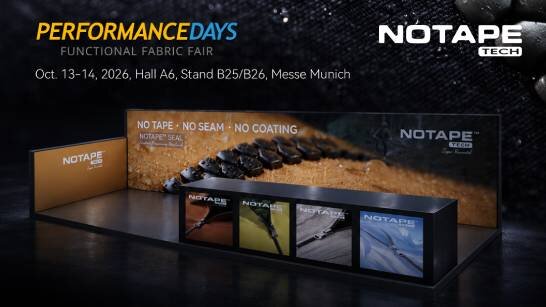
130 Years Later, Cars Were Reinvented by Electrification. What About the Zipper?
October 12, 2026
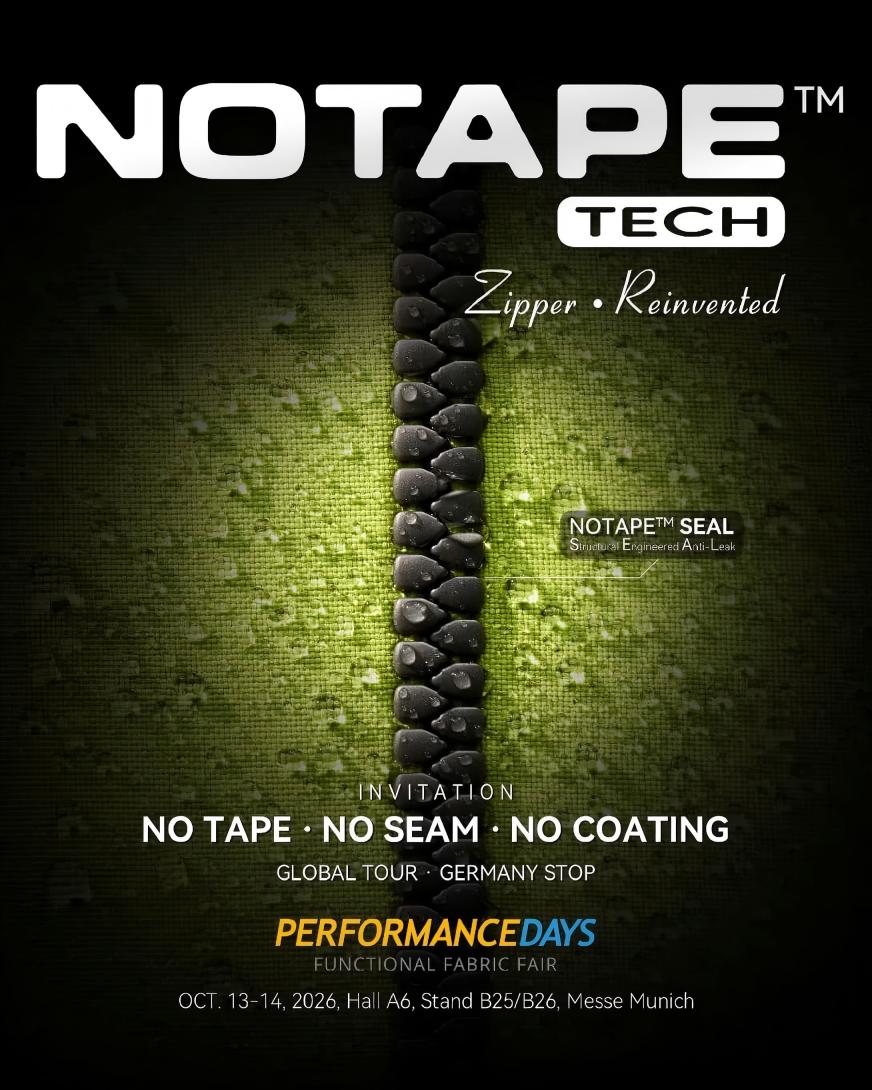
Waterproof Zipper without Coating Supplier | NOTAPE™ No Coating Zipper Technology
September 26, 2026

From No Tape to Water Resistance Without Coating: NOTAPE™ Rethinks the Zipper Through Its “Three-No” Design
September 14, 2026

NOTAPE™Returns to Intertextile Shanghai Apparel Fabrics with Groundbreaking NO TAPE, NO SEAM, NO COATING Zipper Innovation
August 06, 2026
The Zipper Is No Longer Just a Fastening Component
For more than a century, the zipper has followed a familiar construction logic: zipper teeth + fabric tape + sewing attachment. This structure has supported the global apparel industry for decades because it is reliable, easy to manufacture, and suitable for a wide range of clothing applications.
However, the development of modern sportswear has changed what brands expect from every component inside a garment.
Today’s performance apparel is designed around:
•Lightweight construction
•Better freedom of movement
•Cleaner visual appearance
•Reduced material complexity
•Improved integration between components
As fabrics become thinner, stretchier, and more technical, traditional zipper structures are facing new design challenges.
The question is no longer only:
“How do we attach a zipper to a garment?“
Instead, the industry is moving toward:
“How can a zipper become part of the garment structure?“
This shift is driving the evolution of Technical Zipper for Sportswear.
Why Traditional Zipper Structures Are Being Challenged
Traditional construction of zippers in sportswear requires additional layers of tape and multiple sewing processes. While the industry uses this method of construction, it poses challenges when attempting to make lightweight, high-performance apparel.
| Traditional Zipper Structure | Potential Challenge in Sportswear Design |
| Zipper tape on both sides | Additional material layers |
| Sewing attachment process | Extra construction steps |
| Multiple components | Increased manifold fabric pieces |
| Visible zipper edges | May disrupt a minimal design |
| Additional fabric layers | May increase bulkiness of garment |
For everyday wear, these issues may not be significant. However, for technical categories such as:
•Running jackets
•Cycling apparel
•Ski clothing
•Outdoor shells
•Training wear
Every structural detail can influence the final wearing experience.
A modern Technical Zipper for Sportswear needs to consider not only opening and closing functions, but also how the zipper interacts with the entire garment system.
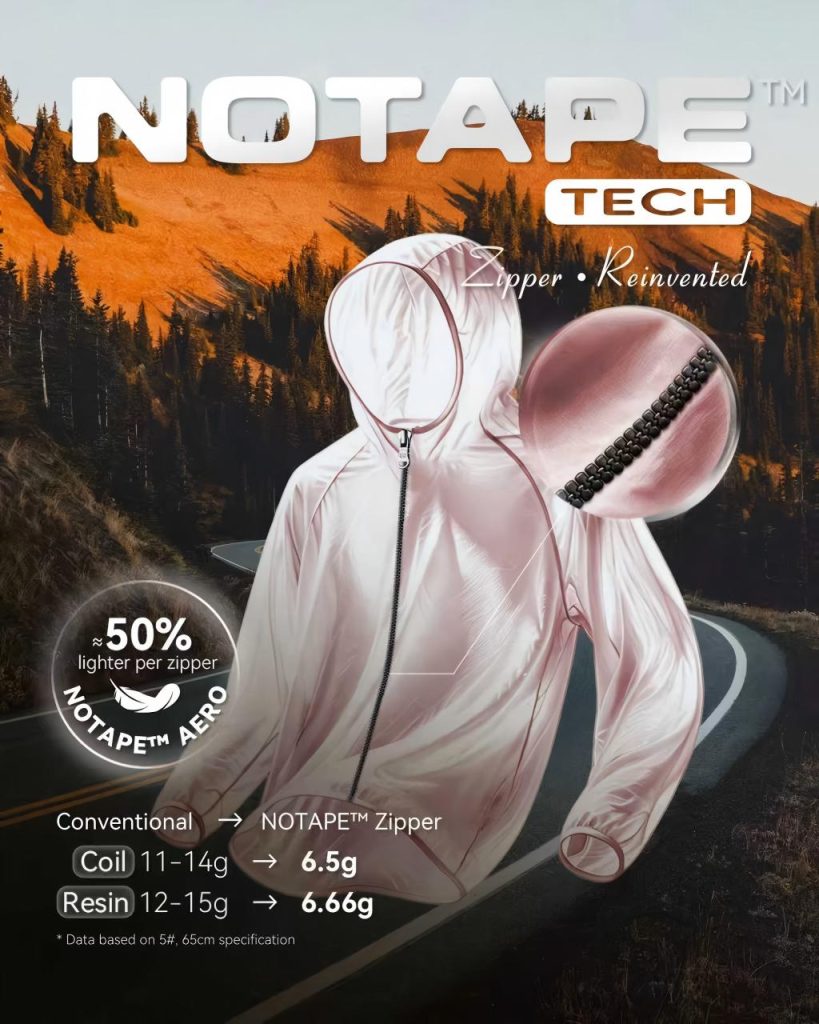
From Component Attachment to Structural Integration
The most significant development in the creation of sportswear zippers is new design thinking.
Traditional Thinking:
Zipper > Tape > Sewing > Fabric
Zippers are separate parts that are added to the garment.
New Design Thinking:
Zipper Structure > Fabric > Garment System
Zippers are designed elements of the construction of the garment.
This new way of thinking about sportswear design is necessary because performance-focused clothing needs to remove unneeded elements while keeping a high function and high durability.
A Technical Zipper for Sportswear is not a regular zipper with better colors or a stronger fastener. It is a new way of incorporating a fastening system into technical apparel.
No Tape Technology: Challenging a Known Architecture
One of the biggest leaps in zipper technology is to consider if a given design always requires the use of zipper tape.
NOTAPE™ takes this approach to think about zipper design without tape. It does so by removing the conventional zipper tape elements and simplifying the structure to create a system that is integrated into apparel in a more clean way.
Compared with traditional construction:
| Structure | Traditional Zipper | NOTAPE™ No Tape Structure |
| Main components | Chain + Tape + Fabric | Chain + Fabric Integration |
| Tape requirement | Required | Eliminated |
| Sewing dependency | Traditional tape sewing | Reduced structural complexity |
| Visual appearance | More layered | Cleaner and flatter |
The purpose of removing tape is not simply reducing one material component.
The deeper objective is exploring how zipper architecture can better match the needs of future apparel design.
Why Lightweight Design Is Driving Technical Zipper Innovation
Lightweight performance has become one of the most important directions in outdoor and activewear development.
A lightweight jacket, for example, is not created by changing only the fabric. Designers evaluate every component:
•Fabric weight
•Seam construction
•Pocket structure
•Hardware selection
•Zipper system
Although a zipper represents a small percentage of the total garment, multiple zipper applications across one product can influence overall construction.
A lightweight Technical Zipper for Sportswear helps brands consider:
| Design Goal | Zipper Contribution |
| Lower garment weight | Reduce unnecessary structural layers |
| Better mobility | Create flatter and more flexible construction |
| Minimal appearance | Support cleaner garment surfaces |
| Design freedom | Allow new construction possibilities |
This is why zipper technology is becoming increasingly connected with the future of performance apparel.
Beyond Weight: How Zipper Structure Influences Apparel Design
There’s more to making sportswear now than thinking about how it will perform. You have to consider the visual language as well.
Premium activewear is moving toward a minimalist design. It features:
•Fewer layers
•More remarkable shape
•Integrated components
•Simpler designs from a user perspective
Designers have to account for several details when using traditional zipper systems. These include:
•Tape color matching
•Sewing positions
•Thickness transitions
Designers can overcome these constraints with the use of a new generation of Technical Zipper for Sportswear.
The zipper can be used as:
•A functional element
•A structural piece
•A design element
Rather than just a closure.
NOTAPE™: Exploring the Future of Technical Zipper for Sportswear
NOTAPE™ focuses on developing zipper structures that respond to the changing needs of modern apparel design.
Its technology direction includes:
| NOTAPE™ Technology | Design Concept |
| No Tape Coil Zipper | Removing traditional tape dependency |
| No Tape, No Seam Resin Zipper | Simplifying zipper integration |
| NOTAPE™ SEAL Water-resistant Zipper | Exploring protection without traditional multi-layer construction |
Through these innovations, NOTAPE™ aims to provide new possibilities for:
•Sportswear
•Outdoor apparel
•Functional jackets
•Cycling clothing
•Lightweight performance garments
The focus is not only on producing a zipper, but on understanding how zipper structures can support future garment engineering.
The Future: Zippers as Part of Apparel Architecture
The next generation of sportswear innovation will not rely only on better fabrics.
Future performance apparel will be shaped by the combination of:
•Advanced materials
•Smarter construction
•Integrated components
•Structural innovation
The evolution from “sewing a zipper” to “designing a structure” represents a broader change in apparel manufacturing.
A Technical Zipper for Sportswear is becoming more than a fastening solution. It is becoming part of how garments achieve lightweight performance, cleaner aesthetics, and improved user experience.
NOTAPE™ continues exploring new zipper possibilities through No Tape, No Seam, and structural integration technologies, helping apparel brands and manufacturers rethink how zipper systems can support next-generation sportswear design.
For more information about NOTAPE™ technology solutions and the future of Technical Zipper for Sportswear, visit HERE.
FAQs
Q1: What kind of brand is NOTAPE™?
NOTAPE™ was founded in Hong Kong and is a technology-driven brand serving the global market, with a focus on innovative zipper technologies.
Q2: How is NOTAPE™ zipper installed onto fabric? Can it be installed by home sewing machines, or does it require special equipment? Is it glued on?
NOTAPE™ is a global first, featuring proprietary patented technologies for no tape coil zippers and no tape, no seam resin zippers. The zipper is formed as one with the fabric using patented equipment, rather than traditional sewing methods.
Q3: How are the zipper top stop and bottom stop handled?
The zipper structure is formed using patented equipment and specialized process treatments.
Q4: What types of garments can NOTAPE™ zippers be used for? Can they be used for bags, hats, or cases?
NOTAPE™ currently focuses on the high-end apparel segment, primarily covering down jackets, windbreakers, lightweight jackets, and business-formal garments.
If future application directions are updated, we will inform our partners in a timely manner and share relevant technical and application information accordingly.
Q5: Does every garment using a NOTAPE™ zipper require customization?
Good question.
Not every piece requires customization, but each zipper style must undergo preliminary validation testing before production.



Contact Us
In This Article
Related Posts
130 Years Later, Cars Were Reinvented by Electrification. What About the Zipper?
October 12, 2026
Waterproof Zipper without Coating Supplier | NOTAPE™ No Coating Zipper Technology
September 26, 2026
From No Tape to Water Resistance Without Coating: NOTAPE™ Rethinks the Zipper Through Its “Three-No” Design
September 14, 2026
NOTAPE™Returns to Intertextile Shanghai Apparel Fabrics with Groundbreaking NO TAPE, NO SEAM, NO COATING Zipper Innovation
August 06, 2026


