




Zipper for Sportswear Manufacturer for Seamless Performance Apparel
By hqt
10, 2026Related Posts
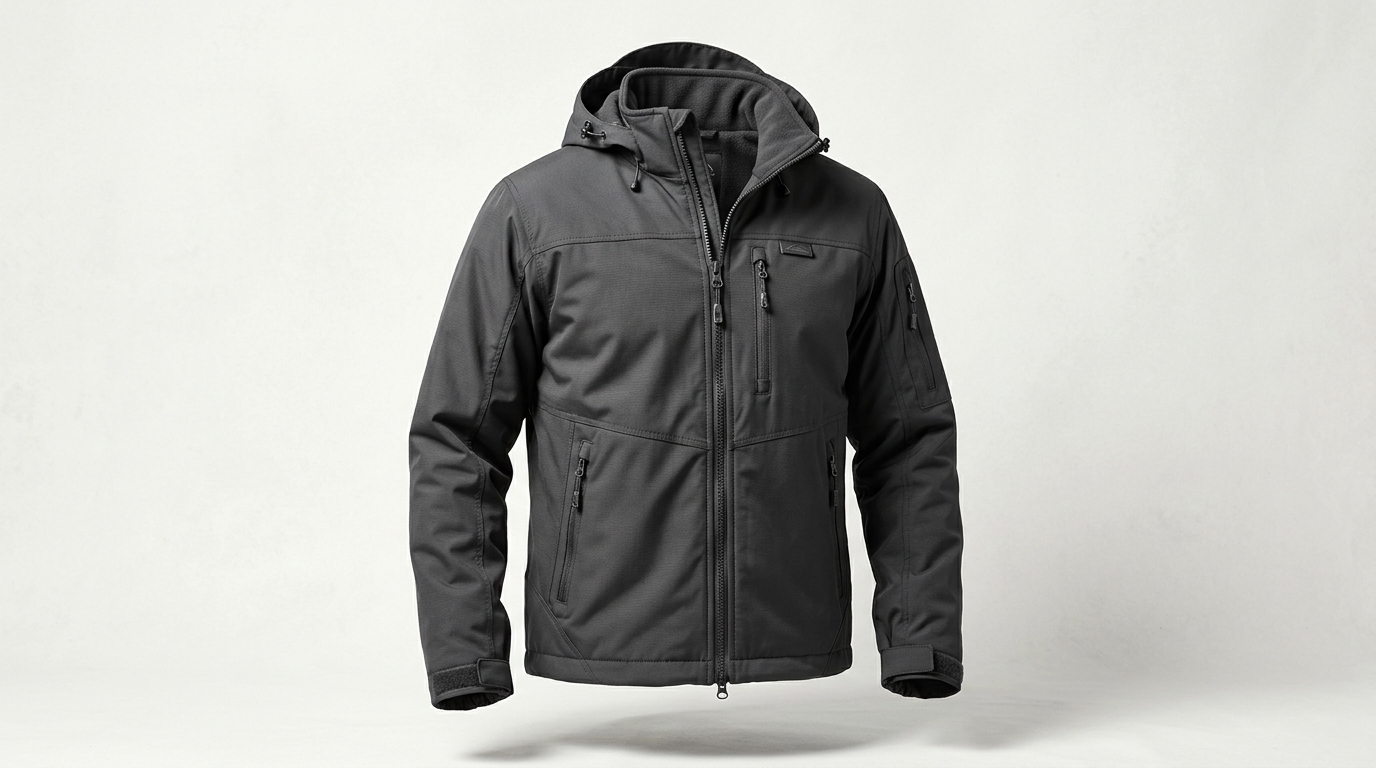
How Should Brands Evaluate Zipper Performance for High-End Outdoor Clothing?
November 17, 2026
Notape pitches lighter repairable zippers
November 16, 2026
130 Years Later, Cars Were Reinvented by Electrification. What About the Zipper?
October 12, 2026
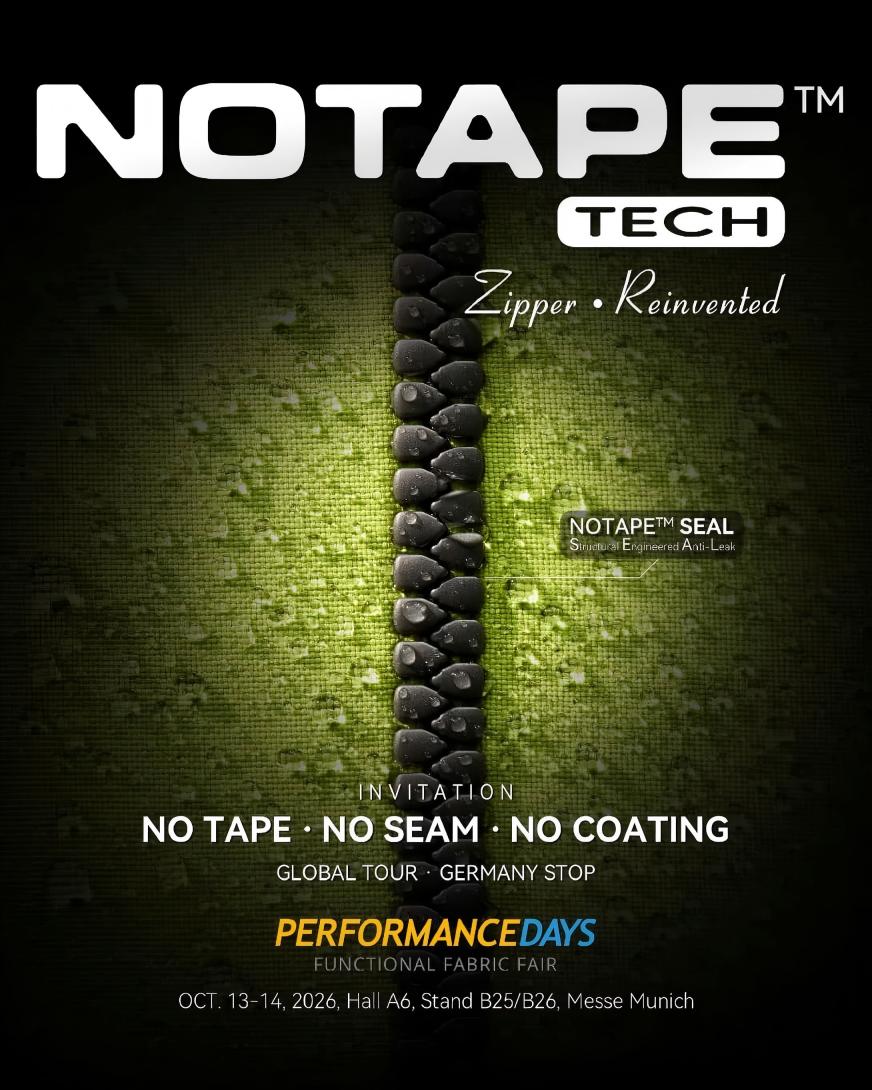
Waterproof Zipper without Coating Supplier | NOTAPE™ No Coating Zipper Technology
September 26, 2026
A lightweight running jacket may use carefully selected low-GSM fabric, minimal reinforcement and compact trims, yet the zipper area can still contain several overlapping layers: zipper teeth, textile tape, stitching, seam allowance and garment fabric.
This creates an important design question for any Zipper for Sportswear Manufacturer: if performance apparel is becoming lighter and less bulky, should the zipper remain a conventional multilayer component?
For sportswear developers, seamless and minimal construction is increasingly less about appearance and more about controlling weight, stiffness, thickness and the mechanical relationship between the closure and fabric.
Why Is Sportswear Moving Toward Minimal Construction?
Performance garments need to move with the body. This becomes more difficult when rigid or thick components are placed onto lightweight, flexible fabrics.
Traditional zipper construction commonly follows this structure:
Zipper Elements + Textile Tape + Stitching + Garment Fabric
Each layer serves a purpose, but the combined structure can create additional thickness around the closure. This is particularly noticeable in cycling apparel, running jackets, lightweight shells and close-fitting sportswear.
Minimal construction asks a different engineering question: can unnecessary intermediate layers be removed while maintaining reliable closure performance?
A Zipper for Sportswear Manufacturer therefore needs to consider the complete garment system rather than evaluating the zipper as an isolated accessory.
Where Does Zipper Bulk Come From?
The thickness of a sportswear zipper is not determined only by the size of its teeth.
A conventional zipper normally requires textile tape to hold the zipper elements. That tape is then sewn to the garment, producing several material interfaces.
| Construction Factor | Conventional Structure | Minimal Structure Direction |
| Textile zipper tape | Required | May be eliminated |
| Garment attachment | Tape positioned and sewn | More direct integration |
| Material layers | Multiple overlapping layers | Fewer structural layers |
| Local thickness | Influenced by tape and seam allowance | Reduced intermediate material |
| Fabric interaction | Zipper added as a separate component | Closure considered with fabric |
On thin sportswear fabrics, differences in thickness and stiffness can contribute to raised zipper lines, puckering or local distortion.
This is why choosing a Zipper for Sportswear Manufacturer requires more than selecting a chain size.
Does “Seamless“ Mean No Sewing Anywhere?
No.
In sportswear, “seamless” can describe several different construction methods. A seamless knitted garment, bonded construction and a zipper without a traditional tape-sewing line are not the same technology.
For zipper engineering, the term should be defined precisely.
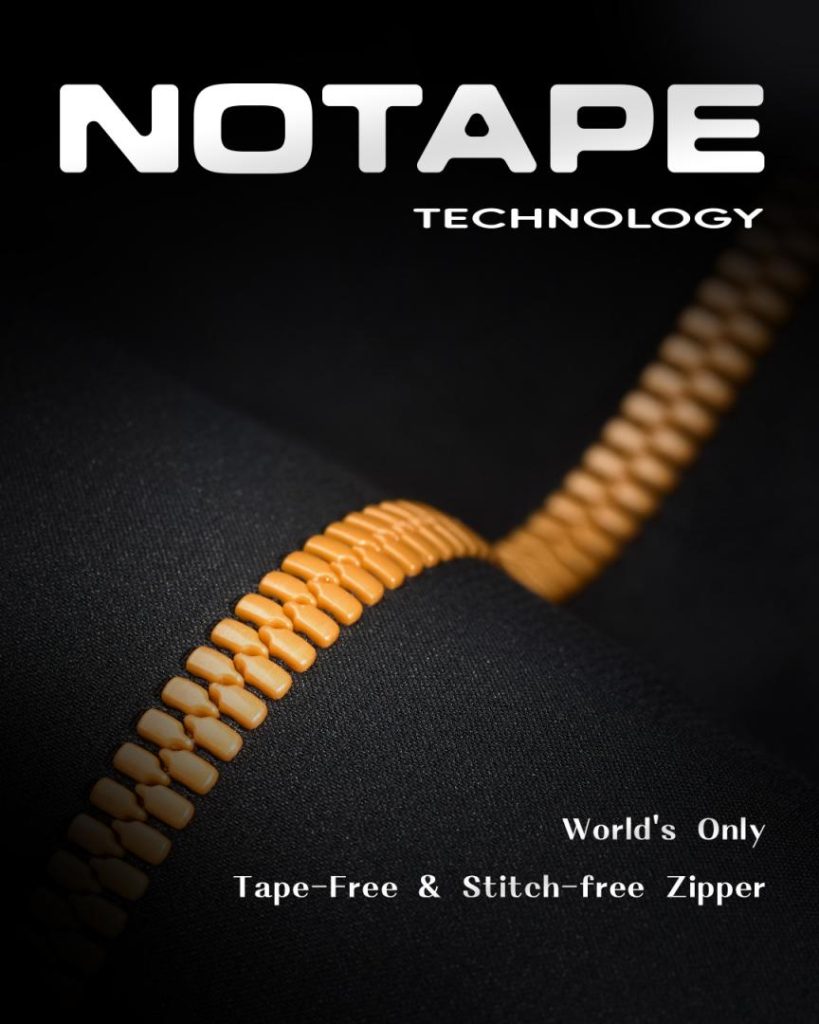
NOTAPE™ provides a useful example. Its No Tape approach removes conventional textile zipper tape. Its No Tape Coil Zipper still uses an appropriate garment construction process, while its No Tape, No Seam Resin Zipper removes both traditional zipper tape and the separate seam normally used to sew that tape onto the garment.
Therefore, No Seam does not mean that an entire sportswear garment contains no stitching. It refers specifically to how the zipper structure connects with the garment.
How Can Minimal Zipper Construction Affect Sportswear?
Lower Structural Weight
Lightweight design is not simply about making every component thinner. Another approach is removing material that is no longer structurally necessary.
By eliminating conventional textile tape, a zipper can contain fewer material layers. NOTAPE™ uses this principle in its No Tape zipper technology rather than relying only on thinner versions of conventional tape-based structures.
The actual weight benefit, however, should always be evaluated according to zipper size, length and construction.
Less Local Bulk
Tape, stitching and seam allowances create thickness around a closure.
Reducing these intermediate layers can produce a flatter transition between zipper and fabric—an important consideration for fitted cycling garments, running apparel and lightweight jackets.
Better Control of Flexibility
The key issue is stiffness mismatch.
If a highly flexible fabric stretches or bends while the zipper area remains comparatively rigid, forces can concentrate along the zipper edge. Possible results include puckering, distortion or restricted fabric movement.
A capable Zipper for Sportswear Manufacturer should therefore evaluate zipper flexibility together with fabric behavior.
Minimal Construction Does Not Fit Every Fabric Automatically
Removing zipper tape does not eliminate the need for compatibility testing.
Before selecting a zipper structure, developers should consider the following:
•Fabric Thickness: Zippers function differently on thick fabrics than on thin fabrics.
•Elasticity: High-stretch fabrics present challenges with zipper structure function.
•Surface Construction: The way a zipper is evaluated changes based on if a fabric is woven, knitted, coated or laminated.
•Garment Geometry: Center-front applications that are straight present less of a challenge than applications that are curved.
•End Use: The mechanical requirements of running apparel, cycling apparel, and shells are not the same.
NOTAPE™ also recommends evaluating factors such as fabric thickness, elasticity, coating, surface structure and garment construction before production.
This system-level evaluation is especially important when choosing a Zipper for Sportswear Manufacturer for a new apparel platform.
What Should Be Tested Before Mass Production?
A sample that looks flat on a prototype does not automatically prove long-term reliability.
Sportswear teams should verify both zipper performance and the zipper-fabric interface.
| Test | What It Helps Evaluate |
| Repeated cycling | Stability after repeated opening and closing |
| Lateral loading | Resistance to transverse forces |
| Slider operation | Changes in opening force or movement |
| Washing | Structural stability after garment care |
| Abrasion | Wear around exposed surfaces |
| Fabric-zipped interface | Puckering, deformation or separation |
| Finished-garment testing | Performance under realistic construction conditions |
Component data should therefore be combined with finished-garment testing.
For buyers evaluating a Zipper for Sportswear Manufacturer, useful questions include: What tests are available? Which fabrics have been evaluated? How is sample-to-production consistency controlled? What installation process is required?
Tape-Free vs Conventional Zipper Construction
A conventional zipper is not automatically unsuitable for sportswear, and a tape-free zipper is not automatically the correct choice for every garment.
The decision depends on fabric, durability targets, production methods and product design.
Traditional zipper construction offers a mature attachment method across many garment categories. Minimal structures take a different approach by questioning whether the separate tape layer is necessary for a particular application.
NOTAPE™ develops this second route. Its technology focuses on eliminating traditional zipper tape and integrating the closure more directly with garment construction. For applicable resin zipper structures, the conventional tape-sewing line can also be removed.
How Should Buyers Evaluate a Zipper for Sportswear Manufacturer?
A practical purchasing sequence is:
Fabric Compatibility → Zipper Structure → Mechanical Testing → Garment Testing → Manufacturing Process → Production Consistency → Quality Control
This prevents zipper sourcing from becoming a specification-only decision.
The strongest solution is not necessarily the zipper with the fewest components. It is the structure that meets the garment’s actual requirements with no unnecessary layers.
For sportswear teams developing lighter, flatter or more integrated closures, NOTAPE™ offers a different engineering route based on its No Tape technology. Brands and manufacturers can explore the technology at NOTAPE™ and evaluate how it works with their own fabrics, garment structures and production requirements before moving toward mass production.
Q1: Is NOTAPE™ a copy or imitation?
No. NOTAPE™ is the world’s first to develop tape-free zipper solutions and holds exclusive patented technologies for both no tape coil zippers and no tape, no seam resin zippers.
Q2: How are the zipper top stop and bottom stop handled?
The zipper structure is formed using patented equipment and specialized process treatments.
Q3: What types of garments can NOTAPE™ zippers be used for? Can they be used for bags, hats, or cases?
NOTAPE™ currently focuses on the high-end apparel segment, primarily covering down jackets, windbreakers, lightweight jackets, and business-formal garments.
If future application directions are updated, we will inform our partners in a timely manner and share relevant technical and application information accordingly.
Q4: Are NOTAPE™ zippers water-resistant in rainy or heavy rain conditions?
Yes, NOTAPE provides a range of water protection solutions tailored to different garment applications and performance requirements. Depending on the end-use scenario, customers can choose from water-repellent solutions to higher-level water-resistant solutions.
Q5: What makes NOTAPE zippers uniquely different?
NOTAPE come at a premium — because true innovation is rare. NOTAPE™ is not available to every brand. By integrating our tapeless zipper technology, your products gain a level of exclusivity and uniqueness that sets them apart.



Contact Us
In This Article
Related Posts
How Should Brands Evaluate Zipper Performance for High-End Outdoor Clothing?
November 17, 2026
Notape pitches lighter repairable zippers
November 16, 2026
130 Years Later, Cars Were Reinvented by Electrification. What About the Zipper?
October 12, 2026
Waterproof Zipper without Coating Supplier | NOTAPE™ No Coating Zipper Technology
September 26, 2026


