




High Performance Waterproof Zipper Without Coating: How Structural Water Resistance Works
By hqt
10, 2026Related Posts
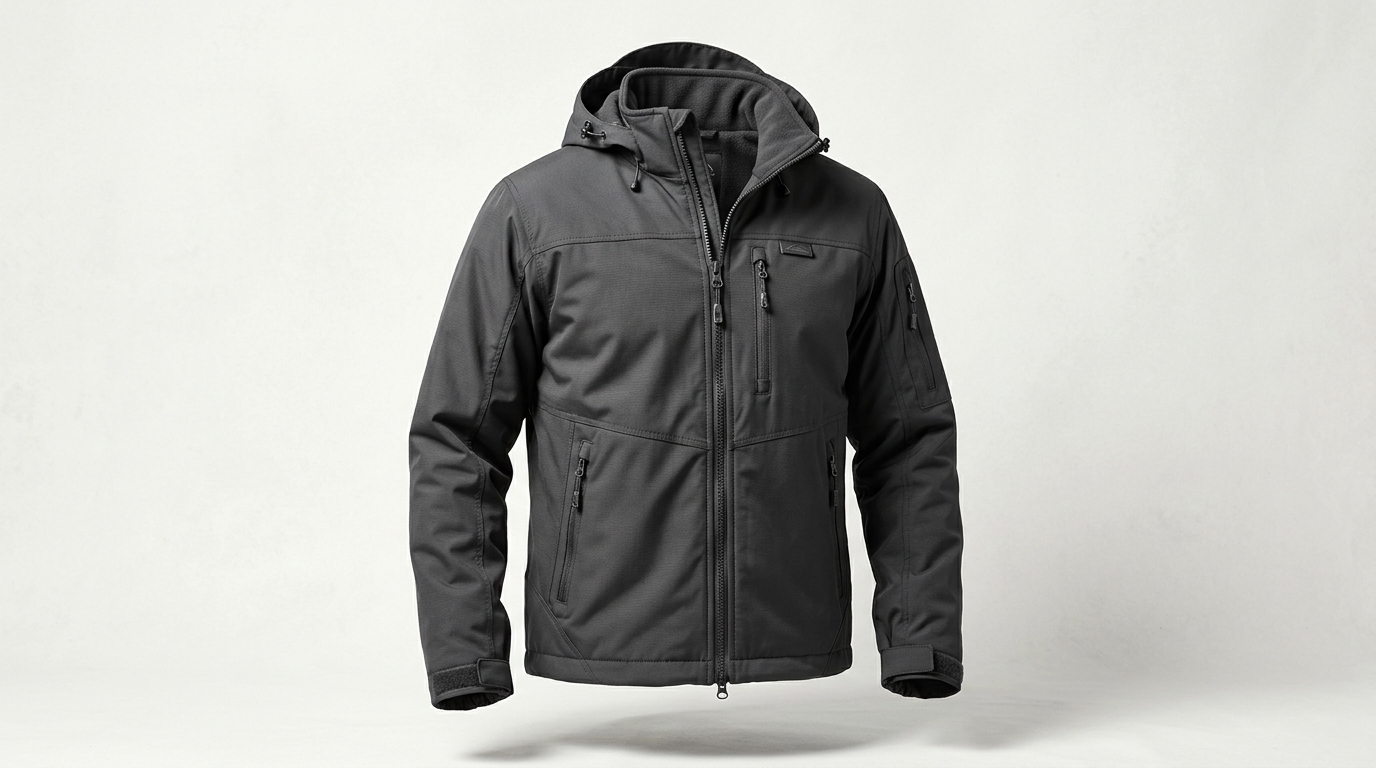
How Should Brands Evaluate Zipper Performance for High-End Outdoor Clothing?
November 17, 2026
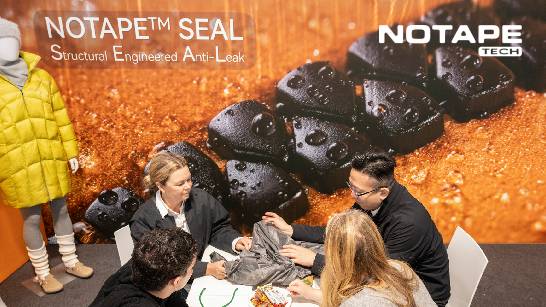
Notape pitches lighter repairable zippers
November 16, 2026
130 Years Later, Cars Were Reinvented by Electrification. What About the Zipper?
October 12, 2026
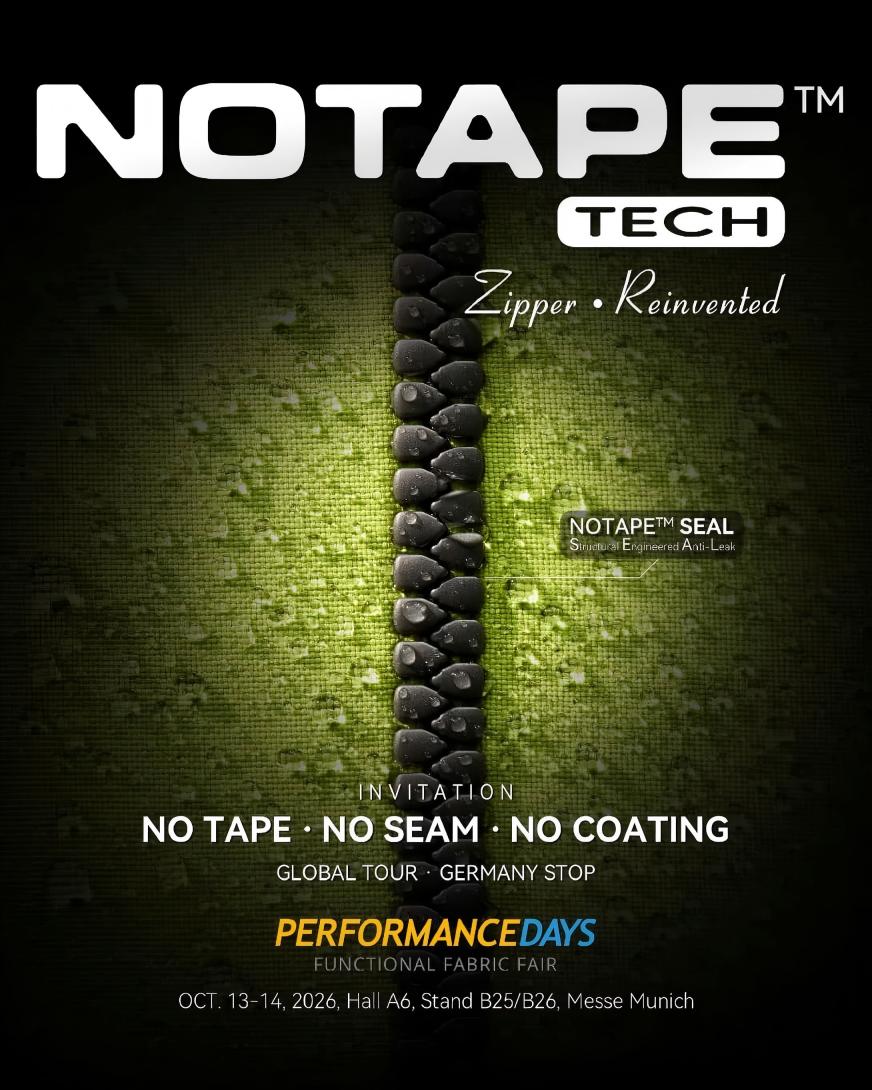
Waterproof Zipper without Coating Supplier | NOTAPE™ No Coating Zipper Technology
September 26, 2026
Most water-resistant zipper designs follow a familiar formula: zipper teeth are mounted on textile tape, the tape receives a film or coating, and the complete zipper is sewn into the garment. This raises an important engineering question: can a High Performance Waterproof Zipper control water penetration without depending on a surface coating?
The answer is possible—but simply removing the coating is not enough. The water barrier must be redesigned at the structural level.
How Does a Conventional High Performance Waterproof Zipper Resist Water?
A conventional water-resistant zipper can be simplified as:
Teeth → Textile Tape → Film/Coating → Sewing → Garment Fabric
Each element has a specific function.
•Zipper teeth are responsible for mechanical closure.
•Textile tape attaches the teeth and interconnects them to the body of the garment.
•A film or coating protects the tape from being saturated and penetration of water through the surface of the tape.
•Sewing connects the zipper to the garment.
How the closure interacts with the garment construction determines how the whole closure functions during real world use.
This means the water resistance of a High Performance Waterproof Zipper does not come from one material alone.
Potential water-entry paths may include the tooth interface, textile tape, sewing holes, slider area, zipper ends and the connection between the zipper and garment fabric.
Why Can Coating Become a Durability Variable?
A coating provides a useful surface barrier, but it also becomes another functional layer that must remain intact.
During garment use, a zipper may experience:
•Repeated bending and folding;
•Abrasion against fabric or equipment;
•Washing and drying;
•Repeated slider movement;
•Contamination from dirt or oils;
•Local stress around the closure.
These conditions do not mean every coated zipper will fail. However, coating condition becomes one variable in long-term water resistance.
The engineering question therefore changes from:
“How water-resistant is the coating?”
to:
“How many possible water paths exist in the complete zipper system, and how are they controlled?”
That distinction is important when selecting a High Performance Waterproof Zipper for technical apparel.
What Is Structural Water Resistance?
Structural water resistance attempts to control water through physical geometry and component integration rather than relying primarily on an added surface layer.
A simplified design principle is:
Structural Geometry + Physical Barrier + Fabric Integration
Instead of adding another waterproof layer, the zipper construction itself is designed to interrupt or restrict possible water paths.
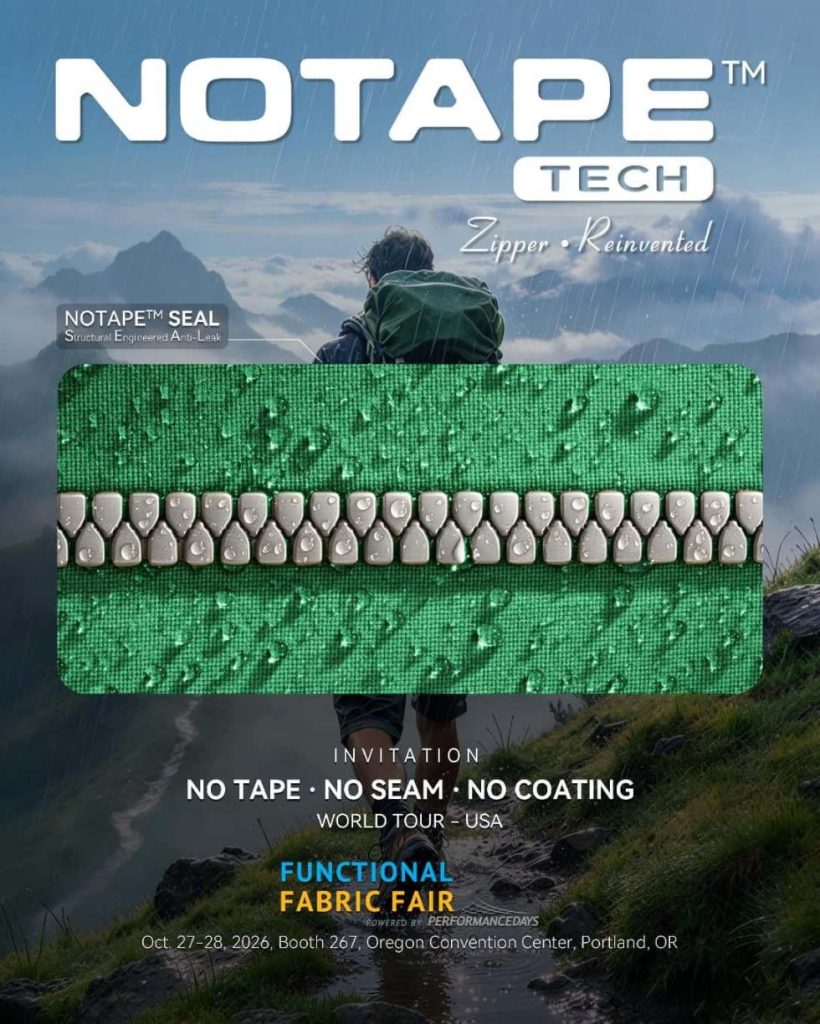
NOTAPE™ applies this principle in its SEAL technology, meaning Structural Engineered Anti-Leak. Its published design concept is based on No Tape, No Seam and No Coating, with the zipper structure integrated directly with compatible garment fabric.
Structural Geometry
The engagement and positioning of the zipper elements affect the size and direction of possible gaps.
More precise structural control can reduce direct pathways through the closure, although final performance still depends on the complete garment system.
Physical Partition
A structural barrier does not necessarily make water disappear from the zipper surface. Instead, it changes how easily water can travel through the closure.
This is fundamentally different from relying on a coated textile surface.
Direct Fabric Integration
Conventional construction typically follows:
Teeth → Tape → Sewing → Garment
A tape-free structural approach can instead move toward:
Teeth → Engineered Connection → Garment Fabric
NOTAPE™ describes its SEAL construction as eliminating conventional textile zipper tape and the traditional sewing line used to attach that tape. “No Seam” therefore does not mean that the entire garment contains no seams.
Coated vs Structural High Performance Waterproof Zipper
| Decision Factor | Conventional Coated Design | Structural Design |
| Main water barrier | Film/coating plus construction | Engineered physical structure |
| Textile zipper tape | Usually required | Can be eliminated |
| Tape-sewing holes | Normally present | Can be removed from zipper attachment |
| Coating dependency | Higher | Reduced or eliminated |
| Important durability variables | Coating, tape and structure | Geometry, connection and fabric |
| Garment compatibility | Important | Critical |
| Final verification | Finished garment testing recommended | Finished garment testing recommended |
The structural option should not automatically be described as “better.”
A High Performance Waterproof Zipper must be evaluated according to the actual fabric, garment construction, weather exposure and required durability.
Does Fewer Layers Automatically Mean Better Water Resistance?
No.
Removing tape, sewing or coating may reduce several interfaces, but fewer components alone do not guarantee higher water resistance.
Final performance still depends on:
•Zipper geometry;
•Fabric thickness;
•Fabric elasticity;
•Surface construction;
•Laminate structure;
•Slider and end design;
•Attachment accuracy;
•Manufacturing consistency.
This is especially important with a structural High Performance Waterproof Zipper, because the fabric becomes part of the functional system.
NOTAPE™ specifically notes that fabric material and thickness need to be evaluated, and recommends testing uncertain fabrics before application.
How Does Fabric Affect the Zipper System?
A zipper should not be tested as an isolated component only.
Consider a stretch shell fabric. When stretched, local geometry around the zipper connection may change. A thicker laminated fabric may behave differently because of its bending stiffness. A softer lightweight fabric may place different loads on the attachment area.
The practical relationship is:
Zipper Performance = Zipper Structure + Fabric + Installation + Garment Construction
For this reason, developers selecting a High Performance Waterproof Zipper should evaluate the zipper using the actual production fabric whenever possible.
How Should Buyers Verify a High Performance Waterproof Zipper?
Buyers should look for evidence around multiple conditions instead of just asking “Is this zipper waterproof?”.
Initial water resistance:
How does the zipper perform in a specified test method?
Post-washing performance:
Does the water-resistant function change after repeated care of the garment?
Abrasion and Flexing:
What is the effect on the closure function after repeated use and bending?
Opening and Closing Cycles:
Does the slider change the tooth engagement?
Finished-garment testing:
How does the zipper perform after it has been integrated into the completed garment?
Production consistency:
How consistent can the supplier be in producing the same test structure?
These questions are more useful than relying on the word “waterproof” alone.
Choosing Between Coated and Structural Designs
A coated High Performance Waterproof Zipper remains a valid solution for many applications. Structural water resistance represents a different engineering route rather than a universal replacement.
The purchasing decision should follow a clear sequence:
Identify the water-entry problem → Understand the barrier mechanism → Compare structural options → Verify fabric compatibility → Test garment integration → Evaluate durability → Review supplier evidence.
For apparel teams exploring a High Performance Waterproof Zipper that reduces reliance on conventional zipper tape, tape-sewing lines and surface coatings, NOTAPE™ SEAL provides a useful example of how water resistance can be approached through structural engineering rather than simply adding another protective layer.
Developers can explore the No Tape · No Seam · No Coating concept and discuss fabric compatibility or application testing directly with NOTAPE™.
Q1: What kind of brand is NOTAPE™?
NOTAPE™ was founded in Hong Kong and is a technology-driven brand serving the global market, with a focus on innovative zipper technologies.
Q2: Does NOTAPE™ SEAL provide the same level of water protection as conventional waterproof zippers? How waterproof is it?
NOTAPE™ is the world’s first No tape, No seam,No coating zipper, so there is currently no dedicated testing standard for this type of zipper. As a result, its performance is assessed using the same industry test methods applied to conventional water-resistant zippers.
Independent testing by ITS and SGS confirms that the NOTAPE™ SEAL series meets the water-resistant performance requirements of internationally recognized European, American, and Chinese industry standards.
Q3: Are there detailed specifications for NOTAPE™ zipper styles, colors, sizes, and customization options?
We provide dedicated color cards and profiles.If you have further questions, our team can assist you directly.
Q4: Does every garment using a NOTAPE™ zipper require customization?
Good question.
Not every piece requires customization, but each zipper style must undergo preliminary validation testing before production.
Q5: Does NOTAPE offer different levels of water protection?
Yes. NOTAPE provides a range of water protection solutions tailored to different garment applications and performance requirements. Depending on the end-use scenario, customers can choose from water-repellent solutions to higher-level



Contact Us
In This Article
Related Posts
How Should Brands Evaluate Zipper Performance for High-End Outdoor Clothing?
November 17, 2026
Notape pitches lighter repairable zippers
November 16, 2026
130 Years Later, Cars Were Reinvented by Electrification. What About the Zipper?
October 12, 2026
Waterproof Zipper without Coating Supplier | NOTAPE™ No Coating Zipper Technology
September 26, 2026


