




NOTAPE™ Adhesive-Free Zippers: Making Sustainable Fashion Quantifiable
By NOTAPE
04, 2026Related Posts
130 Years Later, Cars Were Reinvented by Electrification. What About the Zipper?
October 12, 2026
Waterproof Zipper without Coating Supplier | NOTAPE™ No Coating Zipper Technology
September 26, 2026
From No Tape to Water Resistance Without Coating: NOTAPE™ Rethinks the Zipper Through Its “Three-No” Design
September 14, 2026

NOTAPE™Returns to Intertextile Shanghai Apparel Fabrics with Groundbreaking NO TAPE, NO SEAM, NO COATING Zipper Innovation
August 06, 2026
Fashion has discussed sustainability for years.
But for many buyers and brands, one question remains: Can it be measured?
That is exactly why NOTAPE™ tape-free zippers are attracting attention.
For a long time, zippers were treated as a fixed part of garment construction. They worked, so few people asked whether the structure itself could be improved. But fashion has changed. Brands now want lighter products, cleaner lines, fewer production steps, and stronger environmental data.
At the same time, the industry is under growing pressure to move from broad sustainability language to solutions that create measurable impact across design, sourcing, and manufacturing. That wider shift is now shaping decisions across the apparel value chain.
The Fashion Pact points to the need for solutions that deliver measurable results, while the Ellen MacArthur Foundation has long argued that fashion must design out waste and pollution from the start.
Why “Less Is More” Now Means More Than Styling
“Less is more” used to be a design phrase.
Today, it is also becoming a production strategy.
Across fashion, minimalism is no longer only about appearance. It is also about structure. Brands are looking for ways to remove unnecessary layers, reduce material complexity, and make products easier to produce and easier to explain. In that context, subtractive design is becoming more relevant. Instead of adding more parts to improve performance, the smarter move is often to remove one part that has quietly been creating friction all along.
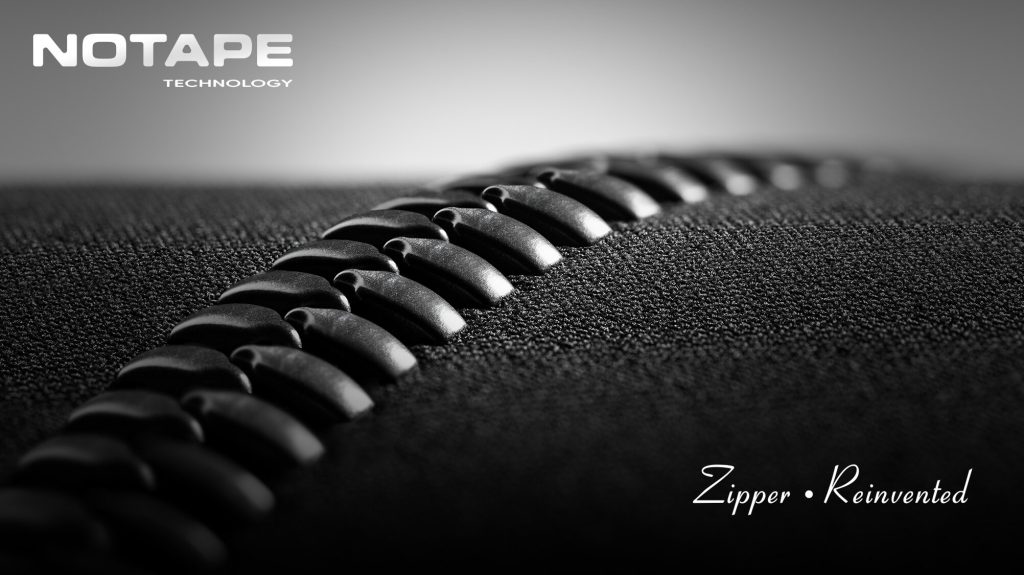
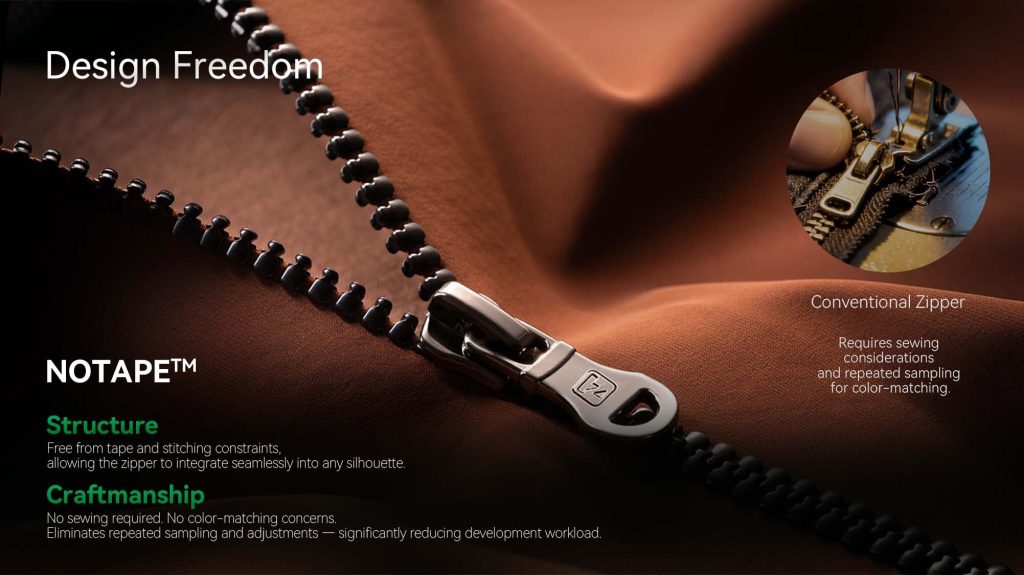
That is where the tape-free zipper stands out. Rather than relying on the traditional fabric tape on both sides of the zipper, the teeth are attached directly to the garment fabric. This changes the zipper from a separate sewn-on component into something that integrates more directly with the garment itself.
The result is a fastening system that feels lighter, looks cleaner, and simplifies several downstream processes. Red Dot describes NOTAPE™ as a rethink of a familiar product that removes the usual textile side panels and helps avoid bulging or wrinkling on lightweight garments. NOTAPE™ reinvented the zipper.
A Stronger Fit for Today’s Fashion Direction
This matters because fashion is moving toward three linked priorities:
• Refined, seamless appearance
• Lightweight construction
• Lower-impact production
Those priorities are no longer limited to premium fashion. They are now relevant in sportswear, leisurewear, swimwear, lightweight jackets, and technical outerwear. In all of these categories, designers want materials to drape better and sit flatter. Product teams want fewer variables in production. Sustainability teams want fewer resource-intensive steps.
A tape-free structure supports all three.
Without the bulk of zipper tape, the front line of the garment looks slimmer and more continuous. On lightweight fabrics, that can mean less visible distortion and a more fluid silhouette. Red Dot’s jury specifically highlighted the structure’s ability to preserve the flowing properties of lightweight textiles, while also reducing overall weight.
Design Value and Sustainability Value No Longer Need to Compete
One reason sustainable components often struggle is simple:
They may improve environmental performance, but they create design or production trade-offs.
NOTAPE™ Tape-free zippers push in the opposite direction.
From a design perspective, they offer:
• A more seamless look
• Less visual interruption
• A softer feel against the skin
• Better drape in lightweight garments
• Less bulk at seams, cuffs, hems, and collars
From a manufacturing perspective, they can also eliminate several pain points linked to traditional zipper tape, including tape dyeing, color matching, and some sewing-related complexity. Red Dot notes that the tape-free approach eliminates the need for color matching and offers a cost-effective application solution, while also reducing weight by more than 25% for NOTAPE™ II.
That is the bigger story here.
Design beauty and environmental responsibility do not have to pull in different directions. In the right component system, they can strengthen each other.
What Makes the Environmental Story More Credible
The fashion market no longer responds well to vague claims.
“Eco-friendly” on its own is not enough.
Buyers, sourcing teams, and ESG managers increasingly want hard numbers they can trace back to a process change. That is why the strongest argument for tape-free zippers is not just that they remove tape. It is that removing tape also removes some of the most resource-heavy steps tied to that tape.
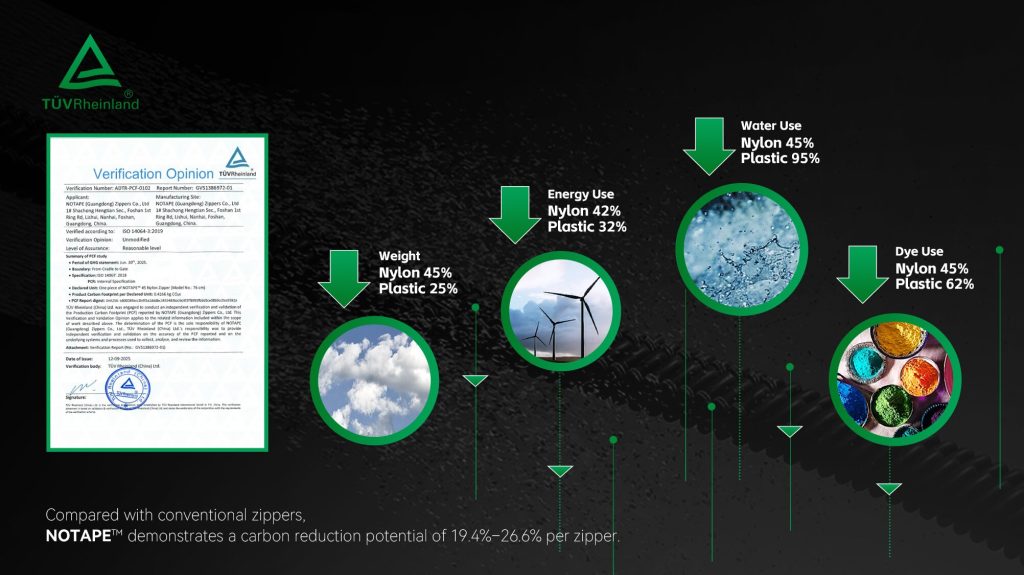
By removing the tape, the entire associated process chain — weaving, dyeing, setting, transport, and stitching — is either reduced or eliminated.
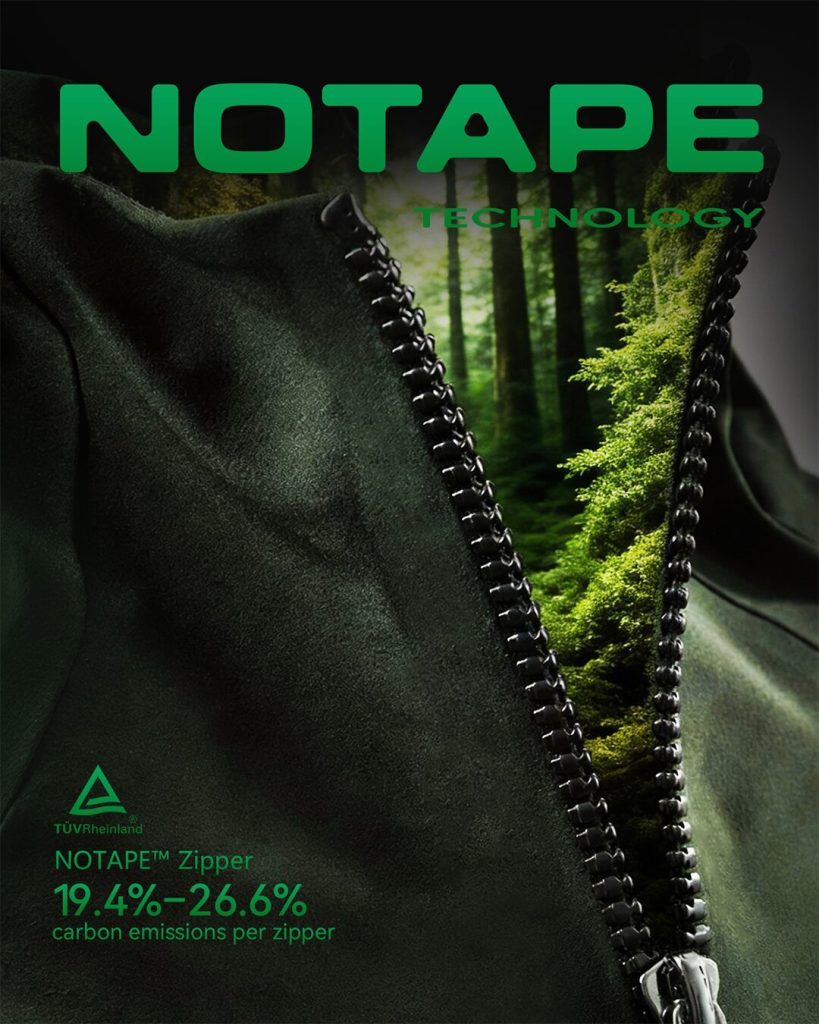
Compared with conventional taped zippers, NOTAPE’s system can cut weight, water use, energy use, and chemical inputs dramatically in certain process stages, with some reductions described as reaching up to 95% depending on the metric and comparison scenario. The carbon emissions per zipper are reduced by roughly 19% to 26%, with carbon-reduction results described as certified and traceable through TÜV Germany.
That distinction matters.
The opportunity is not only lower impact in theory.
It is the ability to take a small component and turn it into a measurable improvement that can feed into supplier discussions, lifecycle modeling, and ESG reporting.
Why This Matters to Buyers and Brands
For overseas buyers, merchants, and brand teams, a zipper is never just a zipper.
It affects cost, consistency, appearance, and sell-through.
A tape-free construction can create practical value in several ways:
• Less process complexity: no tape dyeing and less color-matching pressure
• Cleaner sourcing logic: fewer material variables to coordinate
• Better consistency: fewer issues linked to tape wrinkling or mismatch
• Lower component weight: especially useful in lightweight apparel
• Improved product story: easier to communicate measurable sustainability in a concrete way
This is why the idea is bigger than one fastening part. It introduces a cleaner production logic for sustainable fashion. Instead of adding another “green” layer, it removes a traditional layer that may no longer serve the needs of modern apparel development.
That aligns closely with the circular-design direction advocated by the Ellen MacArthur Foundation, which focuses on designing out waste and pollution at the product level rather than trying to fix inefficiency later in the chain.
A Small Component With Industry-Level Implications
The zipper category has existed for more than a century.
That long history made it easy to assume there was little left to improve.
But mature categories often hide the best structural opportunities.
Red Dot described NOTAPE as an “astonishing evolution” of a product that few expected to change, and highlighted its potential to open new applications in garment design. That kind of recognition matters because it signals a wider market truth: even small components can create meaningful shifts when they improve design, production, and sustainability at the same time.
For brands, that means a tape-free zipper is not only a styling detail.
It can become part of a broader strategy:
• Cleaner product development
• Lighter and more refined garments
• Lower-impact manufacturing logic
• Measurable environmental storytelling
• Stronger alignment between design teams and sustainability teams
The Real Question Going Forward
The real question is no longer whether fashion wants sustainability.
It clearly does.
The real question is which solutions are measurable, scalable, and useful across real product lines.
NOTAPE™ Tape-free zippers stand out because they answer more than one problem at once. They improve appearance. They reduce bulk. They simplify parts of production. And most importantly, they help turn sustainability from a promise into something closer to a number.
In a market full of broad claims, that may be the most valuable shift of all.



Contact Us
In This Article
Related Posts
130 Years Later, Cars Were Reinvented by Electrification. What About the Zipper?
October 12, 2026
Waterproof Zipper without Coating Supplier | NOTAPE™ No Coating Zipper Technology
September 26, 2026
From No Tape to Water Resistance Without Coating: NOTAPE™ Rethinks the Zipper Through Its “Three-No” Design
September 14, 2026
NOTAPE™Returns to Intertextile Shanghai Apparel Fabrics with Groundbreaking NO TAPE, NO SEAM, NO COATING Zipper Innovation
August 06, 2026


