




Global Awards and Patents: How NOTAPE™ Tape-Free Zippers Redefine the Standard for Apparel Trims
By NOTAPE
04, 2026Related Posts
130 Years Later, Cars Were Reinvented by Electrification. What About the Zipper?
October 12, 2026
Waterproof Zipper without Coating Supplier | NOTAPE™ No Coating Zipper Technology
September 26, 2026
From No Tape to Water Resistance Without Coating: NOTAPE™ Rethinks the Zipper Through Its “Three-No” Design
September 14, 2026

NOTAPE™Returns to Intertextile Shanghai Apparel Fabrics with Groundbreaking NO TAPE, NO SEAM, NO COATING Zipper Innovation
August 06, 2026
In apparel trims, real innovation usually moves slowly. Buyers have worked with the same zipper logic for decades: tape, teeth, stitching, bulk, and the usual design compromises.
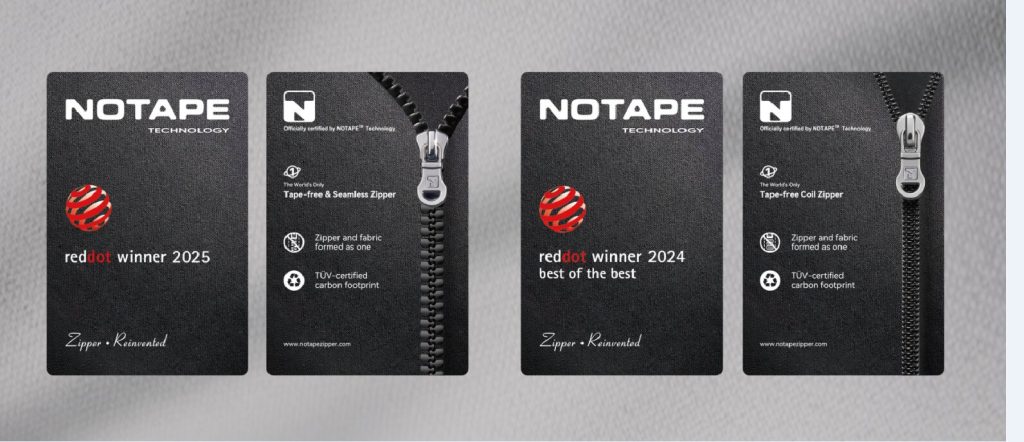
That is why NOTAPE™ has drawn unusual attention. NOTAPE™ reinvented the zipper. Its tape-free zipper has been recognized by Red Dot, including a 2024 “Best of the Best” for the nylon version, while the plastic version later also received Red Dot recognition.
Red Dot’s own project pages describe the concept as a rethink of a product many assumed would never really change.
But this story is not really about awards alone.
It is about what those awards signal to the market: the trims industry is no longer judged only by production scale, delivery speed, or price stability.
More brands now want trims that can support lighter construction, cleaner garment lines, and measurable sustainability results at the same time.
In that context, a zipper is no longer just a small component. It becomes part of the product language, the manufacturing logic, and the brand story.
Why the Trims Industry Was Ready for A Shift
For years, the global trims market was shaped by mature supply chains and a small number of dominant legacy players. That brought stability, but it also meant many product categories changed only a little from one decade to the next. In many cases, buyers were offered better consistency, lower cost, or faster output, but not a truly different structure.
The pressure on apparel brands has changed that.
Today, brands are dealing with several demands at once:
• Cleaner silhouettes
• Fewer visible construction lines
• Lighter overall garments
• Less waste in production
• Stronger sustainability claims backed by data
That mix has created room for a different kind of trims innovation. Instead of asking how to produce the same zipper more efficiently, the market is starting to ask a bigger question: can the zipper itself be redesigned?
NOTAPE™ answers that question with a clear yes.
What Makes NOTAPE™ Tape-Free Different
Traditional zippers rely on textile tape as the base structure. That tape defines the profile, adds material, shapes the seam, and often leaves visible stitch lines. Designers have learned to work around those limitations, but that does not mean the limitations disappeared.
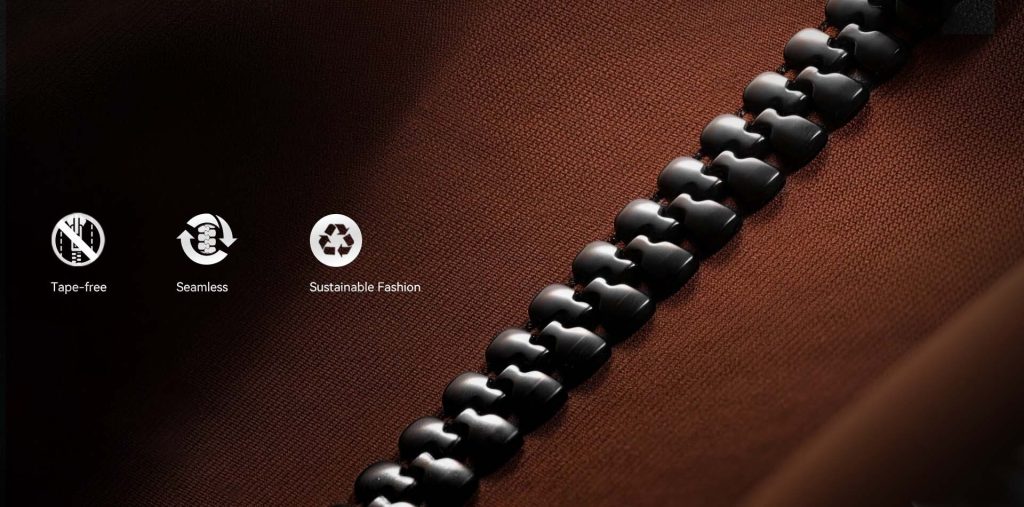
NOTAPE™ removes the tape entirely, allowing the zipper teeth to integrate directly with the garment fabric. According to Red Dot’s description, this eliminates the usual textile side panels and helps avoid the bulges or wrinkling that can happen in lightweight garments.
For brands and product teams, that structural change creates practical value:
• A flatter and cleaner visual finish
• Fewer bulky borders around the closure
• Less interference with drape and silhouette
• Fewer exposed stitch lines
• A more integrated look between zipper and garment
This matters because many apparel brands are trying to escape design sameness. When every brand uses similar materials, similar seams, and similar trim structures, products begin to look interchangeable. A tape-free zipper gives designers another way to create distinction without forcing dramatic changes in the full garment architecture.
Why Global Awards Matter More Than Marketing Claims
In a traditional category like zippers, the market often reacts cautiously to anything new. Buyers may like the idea, but still ask the same practical questions:
• Will it scale?
• Will it hold up?
• Will factories accept it?
• Will brands trust it?
That is where international recognition changes the conversation.
Red Dot positions itself as a global design competition that evaluates products across many categories, and its 2024 award coverage notes that “Best of the Best” is reserved for the highest distinction.
When a tape-free zipper wins at that level, the message is bigger than visual styling. It tells buyers, designers, and sourcing teams that the concept has been reviewed as a serious product innovation, not just as a niche design experiment.
This kind of recognition helps in three ways.
• First, it gives the product independent credibility.
• Second, it reduces market hesitation around a new trim concept.
• Third, it speeds up internal discussions inside brands, especially when design, development, and sourcing teams need a common reason to test something unfamiliar.
In other words, awards do not replace performance proof, but they do help open the door.

Patents Turn Novelty Into a Competitive Asset
Awards create attention. Patents create protection.
That combination is especially important in trims, where many small product improvements are easy to imitate once the market sees demand. A tape-free zipper backed by global patents carries more strategic value because it is not simply a visual variation. It is a protected structural rethink.
For brands, that matters for two reasons.
One is confidence. If a supplier has invested in patent-backed innovation, buyers are more likely to view the product as a serious long-term platform rather than a short-term concept.
The other is differentiation. In a market full of familiar trims, patented construction can help brands build products that feel less generic and less easily copied.
That is also why the NOTAPE™ story stands out. It is not trying to win attention with styling language alone. It combines design recognition with intellectual property, which is a much stronger signal for global expansion.
The Value Goes Beyond Looks
Minimalism is one reason tape-free zippers attract attention, but it is not the only one.
The better story is that subtraction can create both design value and manufacturing value.
By removing tape, the zipper also removes related process steps. Based on company-released and TÜV-verified figures reported publicly, the carbon footprint was reduced by 19.4% for nylon and 26.6% for plastic compared with traditional tape-based zippers.
For global buyers, those numbers matter because the apparel industry is moving away from vague sustainability language. More brands now want measurable reduction points they can discuss internally and across the supply chain.
A structural change that reduces process complexity is easier to explain than a broad claim with no clear operational impact.
The benefit is also commercial.
Less structural complexity can mean:
• Fewer materials to manage
• Fewer process variables
• Cleaner integration into finished products
• Stronger product storytelling at retail and brand level
That is why tape-free reinvention is not only a design conversation. It is also a sourcing, development, and sustainability conversation.
What This Means for Brands
For brands, NOTAPE™ offers something many trims suppliers do not: a new product language.
Instead of choosing between traditional zip formats that mostly differ in surface finish or minor functional details, brands can use a trim that changes both the visual result and the engineering logic of the garment.
That can be valuable in categories where product sameness has become a real problem, especially in fashion, outdoor wear, lightweight jackets, technical apparel, and premium lifestyle products.
It also creates a better discussion point with end customers.
Consumers may not always study zipper construction closely, but they do notice smoother silhouettes, cleaner fronts, lighter feel, and better design continuity.
When a trim supports those outcomes, it stops being a hidden component and starts contributing to product value in a visible way.
What This Means for the Industry
For the trims industry, the bigger meaning is clear: mature categories are still open to reinvention.
That may be the most important takeaway of all. A zipper has existed for well over a century, yet Red Dot’s own description of NOTAPE shows that even this category can still be meaningfully rethought.
That raises the benchmark for the wider market.
• It encourages suppliers to move beyond routine upgrades.
• It pushes the industry toward more efficient structures.
• It gives brands new expectations for what trims can deliver.
And it proves that innovation in apparel does not always have to start with fabric. Sometimes it starts with the smallest component on the garment.
Winning Awards Is Only the Starting Point
NOTAPE™ has already done something rare in trims: it turned a familiar product into a fresh category conversation. International awards have given it visibility.
Patent protection has given it a stronger foundation. The tape-free construction opens up a new path for brands seeking sharper differentiation, more refined design, and sustainability results they can actually point to.
That is why this is not simply a story about prize-winning design.
It is a sign that the trims sector can still evolve in meaningful ways.
And for global buyers, merchants, and apparel brands, that may be the real opportunity: not just to source a different zipper, but to rethink what a zipper can add to product value, brand identity, and future-ready apparel development.



Contact Us
In This Article
Related Posts
130 Years Later, Cars Were Reinvented by Electrification. What About the Zipper?
October 12, 2026
Waterproof Zipper without Coating Supplier | NOTAPE™ No Coating Zipper Technology
September 26, 2026
From No Tape to Water Resistance Without Coating: NOTAPE™ Rethinks the Zipper Through Its “Three-No” Design
September 14, 2026
NOTAPE™Returns to Intertextile Shanghai Apparel Fabrics with Groundbreaking NO TAPE, NO SEAM, NO COATING Zipper Innovation
August 06, 2026


