




“Subtraction Fashion”: How Tape-Free Zippers Drive a Sustainable Future Through Minimalist Structure
By NOTAPE
04, 2026Related Posts
130 Years Later, Cars Were Reinvented by Electrification. What About the Zipper?
October 12, 2026
Waterproof Zipper without Coating Supplier | NOTAPE™ No Coating Zipper Technology
September 26, 2026
From No Tape to Water Resistance Without Coating: NOTAPE™ Rethinks the Zipper Through Its “Three-No” Design
September 14, 2026
NOTAPE™Returns to Intertextile Shanghai Apparel Fabrics with Groundbreaking NO TAPE, NO SEAM, NO COATING Zipper Innovation
August 06, 2026
In fashion, sustainability is often discussed in broad terms: lower carbon, cleaner supply chains, better materials, less waste. But sometimes, real change starts with something much smaller.
A zipper, for example.
For decades, the basic zipper structure has stayed almost the same. Fabric tape on both sides. Extra dyeing. Extra sewing. Extra material. Extra steps. It has long been accepted as standard industry practice. But as fashion brands face growing pressure to cut waste and reduce impact across the supply chain, even these “small” components are being looked at more closely.
That is where NOTAPE™ stands out.
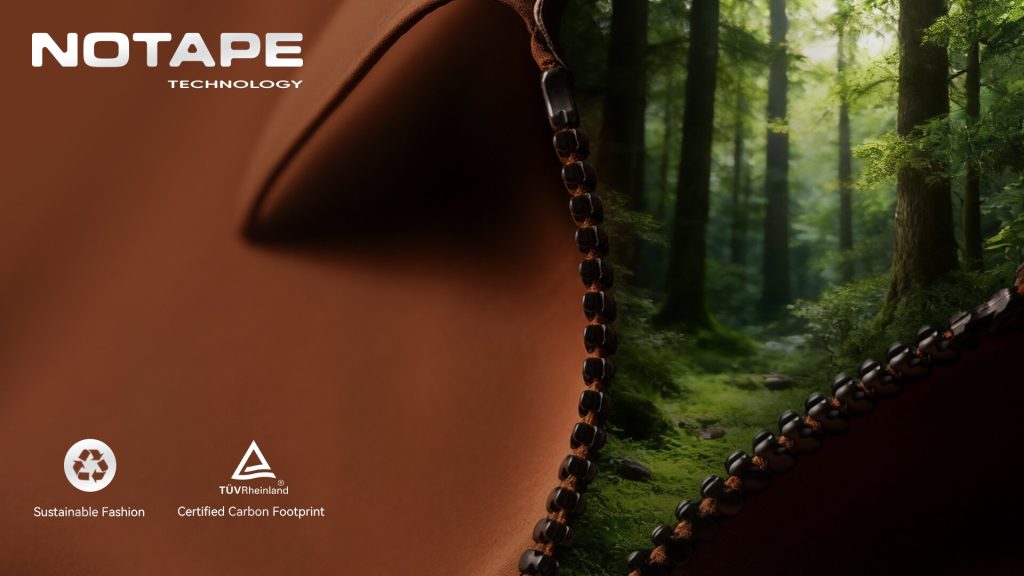
By removing the traditional zipper tape, NOTAPE™ offers a fundamentally different way to build a zipper. The idea is simple, but the effect is bigger than it first appears: less material, fewer production steps, lower resource use, and a cleaner structure overall. In a time when the industry is moving away from surface-level sustainability and toward measurable change, this kind of structural simplification feels especially relevant.
Why the Fashion Industry Is Starting to Rethink Small Components
The environmental pressure on the apparel industry is no secret. Water consumption, chemical use, dyeing pollution, carbon emissions, and production waste are still major concerns across the global supply chain. In recent years, brands have become more careful not only about fabrics, but also about trims, accessories, packaging, and every step behind the final product.
That shift is especially clear among global and premium fashion brands. Today, sustainability is no longer just about choosing a recycled fabric or launching a green capsule collection. More buyers want to know how a product is built, how many resources it consumes, and where unnecessary impact can be reduced.
This is why traditional zipper tape has become worth reexamining.
On a standard zipper, the tape may seem like a small detail. In reality, it brings its own chain of processes: weaving, dyeing, color matching, sewing, and quality control. Every extra process means more material use, more water demand, more chemicals, and more room for production errors.
So the question becomes very direct: if one of those stages can be removed entirely, why keep it?
What Makes a NOTAPE™ Tape-Free Zipper Different
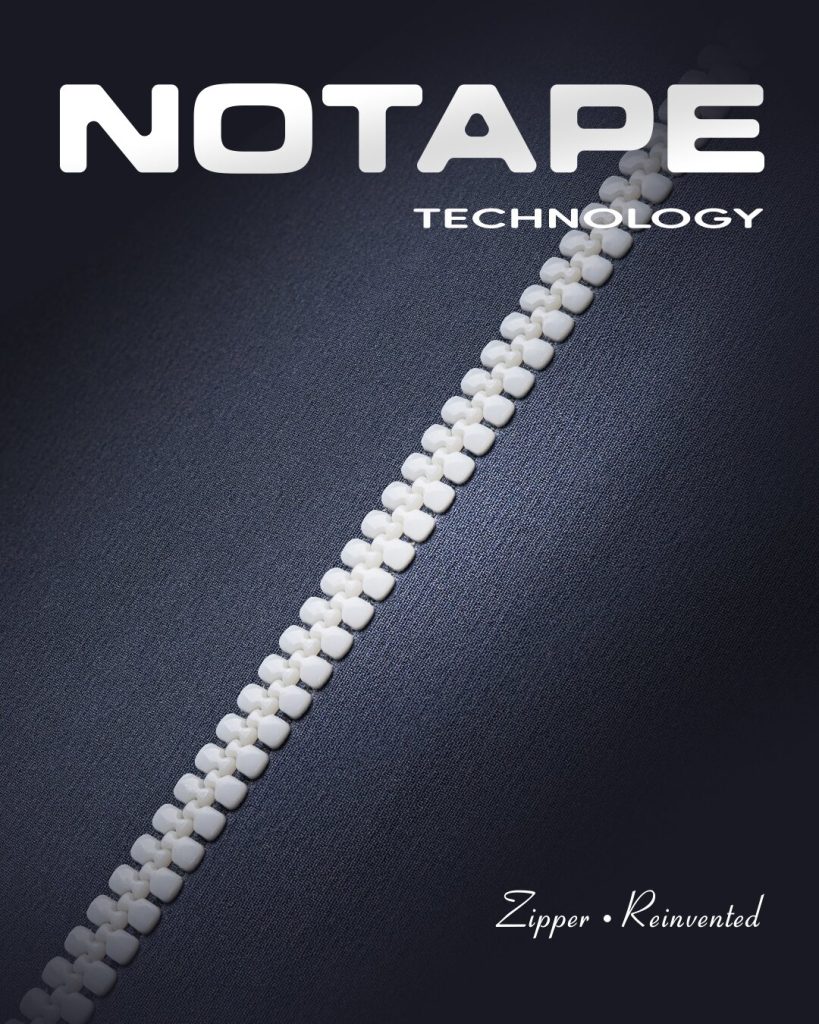
NOTAPE™ eliminates the fabric tape entirely, changing the zipper’s fundamental structure. Instead of attaching zipper teeth to a separate tape, the teeth are attached directly to the garment fabric.
That changes the logic of the zipper itself.
Without the traditional tape, the closure becomes more integrated with the fabric surface. The result is a construction that feels lighter, looks cleaner, and creates less bulk around the seam. It also removes the need for tape dyeing and reduces the hassle of tape color matching, which is often a hidden pain point in apparel development.
By removing the tape, the entire associated process chain — weaving, dyeing, setting, transport, and stitching — is either reduced or eliminated. This is not incremental improvement — it is systemic simplification at the source.
From a design point of view, that opens up new possibilities. The garment line can look slimmer. The drape can feel softer. The zipper no longer interrupts the look of the fabric in the same heavy way.
From a manufacturing point of view, the value is just as practical. Fewer components mean fewer variables. Fewer variables often mean fewer delays, fewer defects, and easier planning on the production line.
Why “Less” Can Mean More Sustainability
A lot of sustainability work in fashion focuses on improving existing systems. But sometimes the smarter move is to simplify the system itself.
That is the real logic behind tape-free construction.
Once the traditional tape is removed, an entire high-pollution stage can be reduced from the source. There is less fabric consumption. Less dye use. Less water demand. Less energy input. Less chemical processing. In this way, the zipper becomes simpler as a product and cleaner as a manufacturing solution.
That is why the concept feels especially relevant today. More brands are moving past high-level sustainability language and focusing instead on measurable reductions across the full supply chain. It is no longer enough to look sustainable on the surface. Brands increasingly need product-level improvements that can be explained clearly to sourcing teams, retail partners, and even end consumers.
A tape-free zipper speaks that language well because the change is structural, not cosmetic.
The Environmental Value Is Easier to See When the Numbers Are Clear
One reason NOTAPE™ attracts attention is that its environmental value is not described only in general terms.
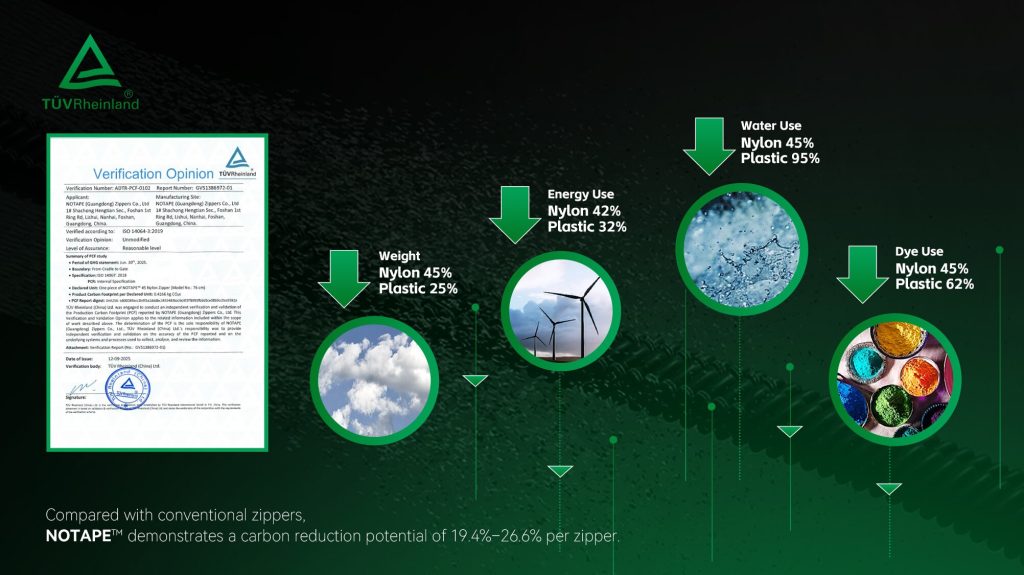
Compared with traditional taped zippers, each NOTAPE™ zipper can reduce carbon emissions by 19.4% to 26.6%. These figures are TÜV-certified, which gives brands more confidence when using the data in sustainability communication and reporting.
Beyond carbon, the tape-free structure can also reduce weight, water consumption, energy use, and chemical inputs by up to 95%.
That kind of improvement matters even more when production scales up.
For example, using 10,000 NOTAPE™ zippers can reduce about 1,617 kg of carbon emissions. That is roughly equal to planting around 90 fir trees, based on the estimate that one fir tree absorbs about 18 kg of CO₂ per year.
For one garment, the difference may seem small. For a full collection, a seasonal order, or a long-term supply program, the impact becomes much easier to recognize.
And that is often how real sustainability progress works in fashion. It is not always one huge breakthrough. Sometimes it is the result of repeated, practical improvements in the parts that brands use every day.
What Brands, Buyers, and Factories Can Gain From This Shift
The strength of tape-free design is that it does not only support sustainability goals. It also creates practical value for the people making, sourcing, and selling the garment.
For brands, it offers a more modern and minimalist product language. Clean structure has become more important in categories such as technical outerwear, lightweight fashion, sportswear, and performance apparel. A zipper with less bulk and better integration naturally fits that direction.
For buyers and sourcing teams, it can help simplify trim management. Without traditional tape, there is less pressure around dye lots, color consistency, and tape-related inventory complexity.
For factories, fewer steps can mean smoother workflows. Less tape handling, fewer sewing complications, and fewer alignment issues can all support better efficiency on the line.
For the end product, the benefit is also easy to understand: lighter construction, cleaner appearance, smoother wear experience.
That is why NOTAPE™ tape-free zippers are not only a sustainability story. They are also a product upgrade story.
A New Kind of Fashion Innovation
Fashion innovation is often associated with new fabrics, smart finishes, or advanced technologies. But sometimes innovation comes from removing something that no longer needs to be there.
That is what makes NOTAPE™ interesting.
It does not try to add complexity. It reduces it.
It does not position sustainability as an extra layer placed on top of an old structure. It starts by changing the structure itself.
In that sense, “Subtraction Fashion” feels like the right phrase. The future of sustainable fashion may not depend only on what the industry adds next. It may also depend on what the industry is finally ready to take away.
A tape-free zipper may look like a small detail, but it points to a bigger idea: better products can come from simpler systems.
And for brands looking for sustainability that is easier to measure, easier to explain, and easier to build into real production, that idea may arrive at exactly the right time.



Contact Us
In This Article
Related Posts
130 Years Later, Cars Were Reinvented by Electrification. What About the Zipper?
October 12, 2026
Waterproof Zipper without Coating Supplier | NOTAPE™ No Coating Zipper Technology
September 26, 2026
From No Tape to Water Resistance Without Coating: NOTAPE™ Rethinks the Zipper Through Its “Three-No” Design
September 14, 2026
NOTAPE™Returns to Intertextile Shanghai Apparel Fabrics with Groundbreaking NO TAPE, NO SEAM, NO COATING Zipper Innovation
August 06, 2026


