




How Light Can a Garment Be? Lightweight Zipper Tech Reduces Weight Gram by Gram
By hqt
08, 2026Related Posts
130 Years Later, Cars Were Reinvented by Electrification. What About the Zipper?
October 12, 2026
Waterproof Zipper without Coating Supplier | NOTAPE™ No Coating Zipper Technology
September 26, 2026
From No Tape to Water Resistance Without Coating: NOTAPE™ Rethinks the Zipper Through Its “Three-No” Design
September 14, 2026

NOTAPE™Returns to Intertextile Shanghai Apparel Fabrics with Groundbreaking NO TAPE, NO SEAM, NO COATING Zipper Innovation
August 06, 2026
How light can a garment be?
For lightweight apparel, the answer is rarely found in one major breakthrough. Designers usually reduce weight gram by gram—from fabrics, linings, reinforcement panels, seams, pockets, cords, buttons, and other garment components.
The zipper is easy to overlook. Yet on a lightweight jacket, a 65 cm front zipper may extend through almost the entire garment. Its weight is concentrated along the center front, where the zipper teeth, textile tape, sewing allowance, slider, and opening components come together.
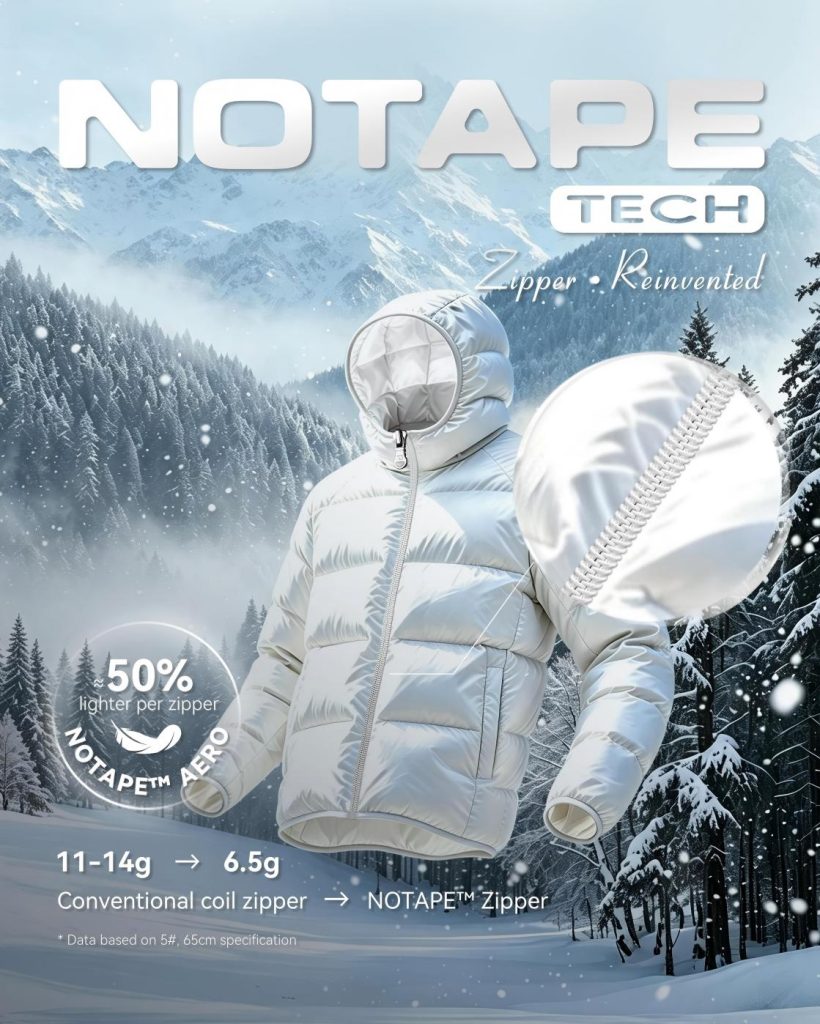
This is where the NOTAPE™ AERO No Tape Lightweight Zipper introduces a different approach: instead of making the traditional zipper tape slightly thinner, it removes the separate tape from the zipper structure.
Why Does a Traditional Zipper Need Tape?
The structure of the modern zipper can be traced to Gideon Sundback’s early 20th-century fastener designs. His improved system used two rows of interlocking elements and a slider to bring them together. The design was patented in the 1910s and established the basic operating principle still associated with modern zippers.
Although zipper materials, sliders, teeth, surface treatments, and manufacturing accuracy have continued to evolve, the conventional apparel zipper usually retains one familiar arrangement:
Zipper elements + textile tape + garment fabric
The textile tape acts as the carrier for the zipper elements. During garment production, the two tape sides are positioned along the fabric panels and sewn into place. Contemporary zipper patents and product documentation still commonly describe zipper teeth or elements as being arranged on or secured to zipper tape.
This structure is practical and well established, but it also introduces additional textile material and overlapping layers.
For heavyweight garments, the extra grams may have little influence. For skin jackets, sun-protective clothing, cycling apparel, lightweight sportswear, and compact outdoor garments, however, every component contributes to the final weight.
NOTAPE™ AERO Removes a Structural Layer
The NOTAPE™ AERO No Tape structure simplifies the closure area to:
Zipper elements + garment fabric
Instead of attaching the zipper elements to a separate textile tape and then sewing that tape onto the garment, the zipper structure works directly with the garment panel.
This difference is the primary source of its weight reduction.
It is not simply achieved by using a smaller slider, shortening the zipper, or changing the puller. The reduction comes from reconsidering one of the zipper’s basic structural layers.
| Structural Comparison | Conventional Zipper | NOTAPE™ AERO |
| Zipper elements | Required | Required |
| Slider and puller | Required | Required |
| Stops or opening components | Required | Required |
| Separate textile tape | Required | Removed |
| Garment fabric | Required | Required |
| Main lightweight principle | Optimize existing components | Remove the separate tape layer |
How Much Weight Can One Zipper Save?
To make the comparison more meaningful, NOTAPE™ measured conventional and No Tape Zippers using the same commonly used specification:
•Zipper size: #5
•Zipper length: 65 cm
•Comparison focus: complete zipper weight
The results show a clear difference.
| Zipper Category | Traditional Zipper | NOTAPE™ No Tape Zipper | Approximate Weight Saved |
| Coil Zipper | 11–14 g | 6.5 g | 4.5–7.5 g |
| Resin Zipper | 12–15 g | 6.66 g | 5.34–8.34 g |
The above data are based on #5, 65 cm zipper measurement standards. Actual zipper weight may vary according to length, slider, puller, opening components, fabric, and product configuration.
Based on these measurements, one NOTAPE™ AERO Lightweight Zipper can be approximately 50% lighter than a corresponding traditional zipper.
For the Coil Zipper comparison, the measured reduction is approximately 41%–54%. For the Resin Zipper comparison, it is approximately 45%–56%. Therefore, “approximately 50% lighter per zipper” provides a practical summary rather than an absolute value for every specification.
Why Do Five or Eight Grams Matter?
Five grams may appear insignificant when viewed on a specification sheet. In lightweight apparel development, however, the relevant question is not whether one component saves hundreds of grams. It is whether each component supports the same weight target.
Consider a lightweight jacket development program:
| Component Decision | Possible Lightweight Direction |
| Main fabric | Lower fabric weight per square metre |
| Pocket construction | Fewer layers or simplified pocket bags |
| Seam design | Reduced overlap in selected areas |
| Adjusters and cords | Smaller, application-appropriate hardware |
| Zipper | No Tape Lightweight Zipper |
| Reinforcement | Applied only where structurally necessary |
When several such decisions are combined, a reduction of several grams from the front zipper becomes part of a larger lightweight system.
The location also matters. A full-length zipper runs vertically along the front of the garment. Reducing material in this area can help limit local bulk and create a cleaner transition between the left and right fabric panels.
Make Every Gram Count with NOTAPE™ AERO
Lightweight apparel begins with smarter component choices.
For outdoor, sportswear, cycling, sun-protective, hardshell, ski, and lightweight casual apparel, this reduction can support cleaner construction and more ambitious weight targets.
Explore NOTAPE™ AERO for your next lightweight garment program and turn a familiar closure component into a practical opportunity for weight optimization.
FAQs
Q1: Do you have third-party test reports?
Yes. Test reports from ITS, SGS, and other accredited third-party laboratories are available upon request.
Q2: Are customized element designs and colors available?
Yes. NOTAPE™ provides exclusive element designs and a dedicated color card for selection. Please refer to our sample book for available options.
Q3: Are there any specific requirements for the waterproof fabric?
Yes. We have certain requirements regarding the fabric material and thickness. Please refer to the relevant guidelines for detailed specifications. For any uncertain applications, we recommend sending the fabric samples to us for testing.
Q4: Are there detailed specifications for NOTAPE™ zipper styles, colors, sizes, and customization options?
We provide dedicated color cards and profiles. If you have further questions, our team can assist you directly.
Q5: Can we view videos or technical materials showing the zipper manufacturing process?
Depending on the stage of cooperation and mutual evaluation between parties, and as sample testing and customized development progress, certain process-related technical materials may be gradually shared with clients.



Contact Us
In This Article
Related Posts
130 Years Later, Cars Were Reinvented by Electrification. What About the Zipper?
October 12, 2026
Waterproof Zipper without Coating Supplier | NOTAPE™ No Coating Zipper Technology
September 26, 2026
From No Tape to Water Resistance Without Coating: NOTAPE™ Rethinks the Zipper Through Its “Three-No” Design
September 14, 2026
NOTAPE™Returns to Intertextile Shanghai Apparel Fabrics with Groundbreaking NO TAPE, NO SEAM, NO COATING Zipper Innovation
August 06, 2026


