




No Traditional Tape: No Tape Coil Zipper Redefines Lightweight Garment Design
By hqt
08, 2026Related Posts
130 Years Later, Cars Were Reinvented by Electrification. What About the Zipper?
October 12, 2026
Waterproof Zipper without Coating Supplier | NOTAPE™ No Coating Zipper Technology
September 26, 2026
From No Tape to Water Resistance Without Coating: NOTAPE™ Rethinks the Zipper Through Its “Three-No” Design
September 14, 2026

NOTAPE™Returns to Intertextile Shanghai Apparel Fabrics with Groundbreaking NO TAPE, NO SEAM, NO COATING Zipper Innovation
August 06, 2026
For over a hundred years, the core design of the zipper has not been altered.
Zipper components are bonded to dual fabric strips. The strips are then stitched to the fabric pieces of the garment to form a dependable mechanism to open and close the system. This design has been thoroughly embraced within the apparel manufacturing process and has progressively established itself as a standard within the industry.
For designers and manufacturers, the zipper tape has often been considered as an inseparable component of the product.
But does a Coil Zipper always need traditional textile tape?
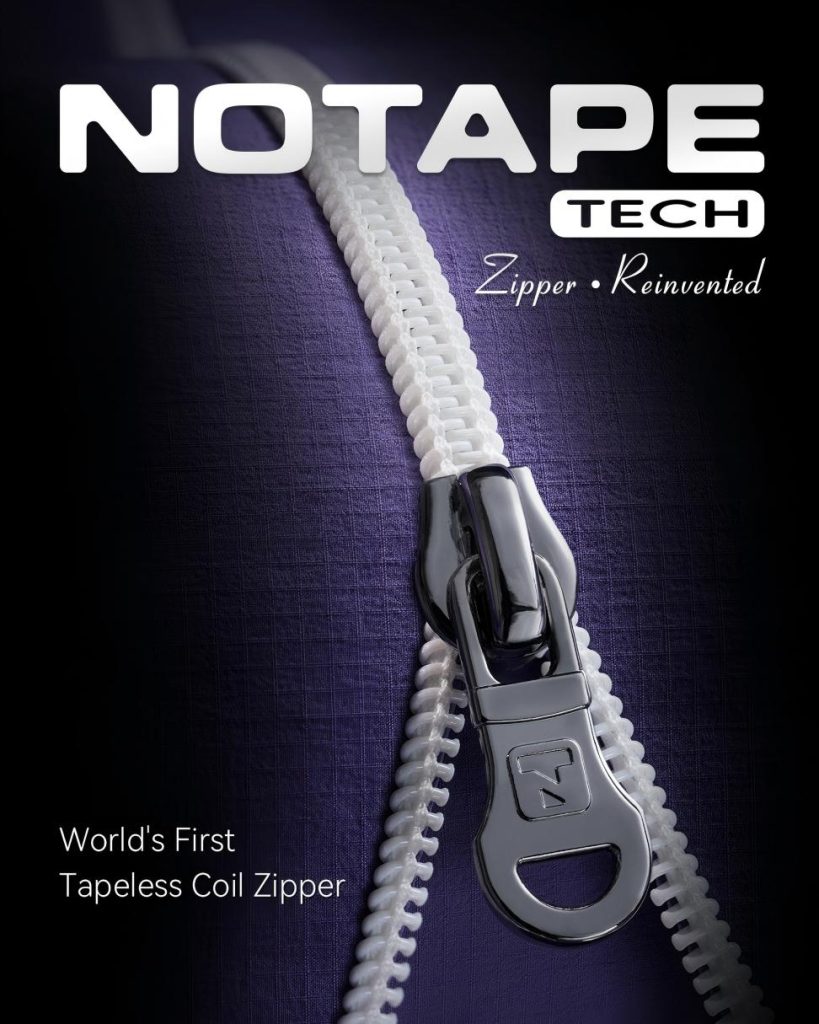
This question led NOTAPE™ to reconsider the structure of one of the most familiar components in apparel. After years of testing, adjustment and technical development, NOTAPE™ introduced The World’s First No Tape Coil Zipper—an Innovative Zipper designed to reduce unnecessary structure and support lightweight garment development.
Why Traditional Coil Zippers Have Textile Tape
A conventional Coil Zipper generally consists of zipper coils, textile tapes, a slider, a puller, top and bottom stops, and other functional components.
The textile tape has various functions you may recognize:
•It serves as the means of carrying the zipper coil.
•It provides a sewing space for the attachment of the zipper to the garment.
•It aids in the alignment for the duration of the production process.
•It provides a stable connection of the zipper to the fabric panels.
This structure is mature, practical and widely understood. However, the additional textile tape also increases the zipper’s weight, thickness and visible width.
In conventional apparel, these differences may appear small. In lightweight outdoor clothing, cycling apparel, skin jackets or sun-protective clothing, however, even a few grams can influence garment weight, flexibility, drape and wearing comfort.
Removing the Tape, Not the Zipper Function
NOTAPE™ approached lightweighting through structural simplification.
Instead of attaching the coil to a separate textile tape, the No Tape Coil Zipper is engineered to work directly with the garment fabric. The zipper still performs its familiar opening and closing function, while the traditional tape layer is removed.
This is not simply a thinner version of an existing zipper. It represents a different structural approach to zipper integration.
NOTAPE™ retains the essential functional components required by the closure, while reducing material that does not directly contribute to opening and closing.
The result is a Technology Zipper that can appear less like an additional strip sewn onto the garment and more like an integrated closure line.
Nearly 50% Lighter in a Common #5 Specification
The difference becomes clearer when the zipper is measured rather than simply observed.
Using a commonly applied #5 Coil Zipper with a length of 65 cm as an example:
| Zipper Structure | Approximate Weight |
| Conventional #5, 65 cm Coil Zipper | 11–14 g |
| NOTAPE™ #5, 65 cm No Tape Coil Zipper | Approximately 6.5 g |
| Approximate Weight Reduction | Nearly 50% |
Actual weight may vary according to slider configuration, end components, garment fabric and project specifications. However, the comparison shows how removing textile tape can substantially reduce the weight of a single apparel component.
A conventional zipper weighing 11–14 g may not seem heavy when considered independently. Yet lightweight garment engineering is usually achieved through the accumulation of many small reductions.
Fabric weight, seam construction, trims, labels, cords, fasteners and zippers all contribute to the final result. Reducing several grams from the zipper therefore supports the wider lightweight design strategy of the garment.
What Does a Lighter Zipper Change?
The value of the NOTAPE™ No Tape Coil Zipper is not limited to the number shown on a scale.
Less Localized Weight
Traditional zipper tape adds material along the entire closure line. Removing it reduces weight in an area that can otherwise feel relatively rigid or heavy, particularly on longer front openings.
Thinner Garment Construction
A conventional zipper combines garment fabric, zipper tape and sewing layers. A No Tape structure reduces this material build-up and can help create a flatter, cleaner closure area.
Greater Freedom for Lightweight Design
Designers often select low-denier fabrics and simplified garment structures to reduce weight. A conventional zipper may remain one of the heavier trims in an otherwise lightweight product.
The NOTAPE™ Lightweight Zipper allows the closure component to follow the same lightweight direction as the fabric and garment pattern.
Cleaner Visual Integration
Without the visible textile tape, the zipper can integrate more directly with the fabric panel. This supports contemporary apparel designs that favor clean lines, reduced visual interruption and a more technical appearance.
Small Component, Meaningful Structural Change
The zipper is only one part of a garment, but it runs through some of its most visible and functional areas. On jackets, it may extend from the hem to the collar. On pockets and ventilation openings, it directly affects both appearance and handling.
NOTAPE™ does not change the purpose of the zipper. It changes how that purpose is achieved.
By removing the traditional textile tape, The World’s First No Tape Coil Zipper reduces the weight of a commonly used #5, 65 cm zipper from approximately 11–14 g to around 6.5 g—a reduction approaching 50%.
For outdoor, sportswear, casualwear, cycling apparel, skin jackets, sun-protective clothing, hardshell jackets and ski apparel, this structural reduction creates another practical path toward lighter and thinner garment design.
The traditional zipper established a dependable standard for more than a century. The NOTAPE™ No Tape Coil Zipper does not reject that history. It builds on the zipper’s familiar function while reconsidering one long-standing assumption: that every Coil Zipper must have tape.
FAQs
Q1: Does removing the zipper tape affect performance?
No. NOTAPE™ no tape zippers are engineered to deliver the same—or even better—physical performance as conventional zippers, meeting or exceeding the requirements of major international standards, including European (EN), American, and Chinese (GB) standards.
Q2: Are there detailed specifications for NOTAPE™ zipper styles, colors, sizes, and customization options?
We provide dedicated color cards and profiles. If you have further questions, our team can assist you directly.
Q3: What types of garments can NOTAPE™ zippers be used for? Can they be used for bags, hats, or cases?
NOTAPE™ currently focuses on the high-end apparel segment, primarily covering down jackets, windbreakers, lightweight jackets, and business-formal garments.
If future application directions are updated, we will inform our partners in a timely manner and share relevant technical and application information accordingly.
Q4: Does every garment using a NOTAPE™ zipper require customization?
Good question.
Not every piece requires customization, but each zipper style must undergo preliminary validation testing before production.



Contact Us
In This Article
Related Posts
130 Years Later, Cars Were Reinvented by Electrification. What About the Zipper?
October 12, 2026
Waterproof Zipper without Coating Supplier | NOTAPE™ No Coating Zipper Technology
September 26, 2026
From No Tape to Water Resistance Without Coating: NOTAPE™ Rethinks the Zipper Through Its “Three-No” Design
September 14, 2026
NOTAPE™Returns to Intertextile Shanghai Apparel Fabrics with Groundbreaking NO TAPE, NO SEAM, NO COATING Zipper Innovation
August 06, 2026


