




When a Zipper No Longer Needs a Tape: What Does the No Tape Zipper Change?
By hqt
08, 2026Related Posts
130 Years Later, Cars Were Reinvented by Electrification. What About the Zipper?
October 12, 2026
Waterproof Zipper without Coating Supplier | NOTAPE™ No Coating Zipper Technology
September 26, 2026

From No Tape to Water Resistance Without Coating: NOTAPE™ Rethinks the Zipper Through Its “Three-No” Design
September 14, 2026

NOTAPE™Returns to Intertextile Shanghai Apparel Fabrics with Groundbreaking NO TAPE, NO SEAM, NO COATING Zipper Innovation
August 06, 2026
For around 130 years, the basic structure of the zipper has remained largely familiar. Zipper teeth are attached to a textile tape, and the tape is then sewn onto the garment fabric.
This construction works, but it also creates a question that is increasingly relevant to apparel designers and sustainability teams:
Does a zipper still need a separate textile tape layer?
NOTAPE™ approaches the zipper from a structural perspective. Instead of treating tape as an unavoidable part of the closure, the NOTAPE™ No Tape Zipper removes this intermediate layer and integrates the zipper structure more directly with the garment fabric.
The change may appear small, but it affects material composition, component weight and the environmental footprint associated with zipper production.
From Three Layers to Two
The clearest difference between a traditional zipper and a NOTAPE™ zipper is the number of structural layers.
| Zipper Structure | Main Layers | Construction Logic |
| Traditional zipper | Teeth + textile tape + garment fabric | Teeth are carried by the tape, which is then connected to the garment |
| NOTAPE™ No Tape Zipper | Teeth + garment fabric | The zipper structure is integrated directly with the garment fabric |
A traditional zipper therefore creates a three-layer combination around the closure area. The tape acts as an additional carrier between the zipper teeth and the garment.
NOTAPE™ reduces this arrangement to two layers: the teeth and the garment fabric.
This structural simplification is important because every additional layer requires material, processing, transportation and inventory management. Textile tape must be manufactured, dyed or colour-matched, stored and handled before it becomes part of the finished garment.
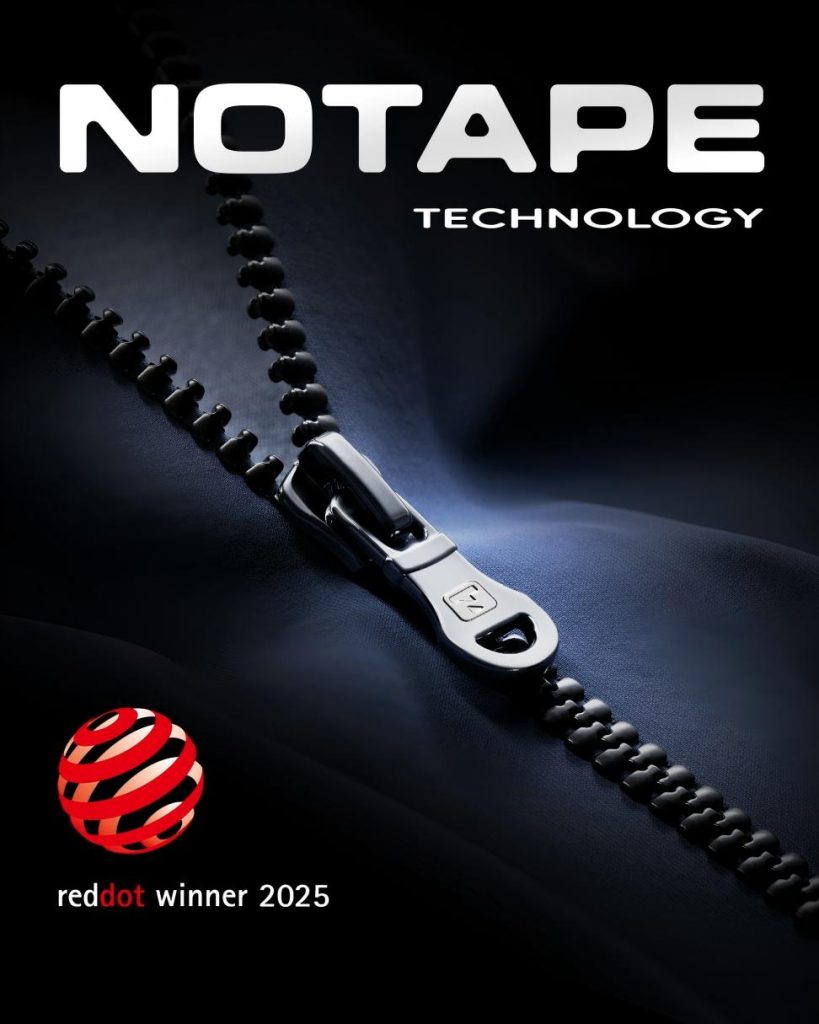
By removing the separate tape layer, a No Tape Zipper reduces the amount of material required for each closure. It can also create a thinner and visually cleaner connection between the zipper and the surrounding fabric.
The value is not simply that one component has been removed. The more important point is that the zipper has been reconsidered as part of the garment structure rather than as a separate accessory sewn onto it.
Why One Removed Layer Matters at Scale
A single strip of zipper tape may not appear to represent a large quantity of material. However, apparel production is based on volume.
When one garment component is repeated across tens of thousands or millions of products, even a small material reduction can become significant. Removing the tape layer may reduce textile consumption, production inputs and waste associated with zipper manufacturing.
NOTAPE™ environmental data indicate measurable reductions compared with corresponding traditional zipper structures.
| Environmental Indicator | No Tape Resin Zipper |
| Water consumption reduction | Up to 95% |
| Energy consumption reduction | 32% – 42% |
| Chemical usage reduction | 45% – 62% |
| Component weight reduction | 25% – 45% |
| TÜV-certified carbon-footprint reduction | 19.4% – 26.6% |
The specific result depends on the zipper type and comparison conditions. The highest reported reduction is a 95% decrease in water consumption for the Resin Zipper.
TÜV-certified carbon-footprint data also show reductions ranging from 19.4% to 26.6%. These figures help translate a structural change into environmental information that product teams, sourcing departments and apparel brands can evaluate more clearly.
Rather than relying only on general terms such as “eco-friendly,” brands can refer to defined indicators, including water consumption, energy use, chemical input and carbon footprint.
Approximately Half the Weight per Zipper
Removing the tape layer also changes the weight of the zipper.
For a #5 zipper with a length of 65 cm, the comparison is as follows:
| #5 Zipper, 65 cm | Traditional Zipper | NOTAPE™ No Tape Zipper |
| Resin Zipper | 12–15 g | 6.66 g |
| Coil Zipper | 11–14 g | 6.5 g |
Based on these figures, the NOTAPE™ zipper can be approximately 41% to 56% lighter, depending on the conventional zipper used for comparison. In practical brand communication, this can reasonably be described as around 50% lighter per zipper.
A reduction of five or seven grams may appear limited when viewed as an individual component. In lightweight apparel, however, product development often depends on the accumulation of many small weight reductions.
Designers are able to adjust weights of garments through the manipulation of materials and techniques. Designers may insert, remove, or replace elements, such as materials of structure, finishings, or seams. It’s possible to reduce the weight of a zip without the need to remove it completely, or replace it with another means of fastening.
At production scale, the difference becomes more visible. For every 10,000 zippers, a reduction of approximately six grams per unit represents around 60 kilograms less component weight entering the supply chain.
Structural Efficiency as Part of Brand Image
Today, brand image is shaped not only by logos, colours and campaigns. It is also influenced by how a product is constructed.
A zipper that changes from three layers to two can support a clear product story:
•Less material through the removal of textile tape
•Lower zipper weight through structural simplification
•Reduced water, energy and chemical consumption
•TÜV-certified carbon-footprint reductions
•A cleaner relationship between the zipper and garment fabric
This gives apparel brands an opportunity to connect visual minimalism with measurable material efficiency.
A Small Structural Change with Wider Implications
Traditional zippers combine teeth, tape and fabric. NOTAPE™ reduces the structure to teeth and fabric.
That single-layer reduction provides the basis for the product’s lightweight and environmental characteristics. It helps explain why a NOTAPE™ zipper can weigh around half as much as a corresponding traditional zipper and why reductions in water, energy, chemicals and carbon footprint can be measured.
For apparel brands, the approach is not about presenting one zipper as the answer to every sustainability challenge. It is about showing how reconsidering a familiar component can support more efficient material use.
Sometimes, product innovation does not require adding more. It begins by asking what may no longer be necessary.
FAQs
Q1: What does NOTAPE mean?
NOTAPE” means eliminating the traditional fabric tapes of the zipper, allowing the zipper to integrate directly with the fabric structure.
Q2: Can we view videos or technical materials showing the zipper manufacturing process?
Depending on the stage of cooperation and mutual evaluation between parties, and as sample testing and customized development progress, certain process-related technical materials may be gradually shared with clients.
Q3: Does every garment using a NOTAPE™ zipper require customization?
Good question.
Not every piece requires customization, but each zipper style must undergo preliminary validation testing before production.
Q4: Can NOTAPE™ coil zippers be repaired?
No. Coil zippers cannot be repaired.
However, the damage rate for nylon zippers is extremely low.
Q5: How can NOTAPE™ zippers be purchased? Will they be available to general consumers or individual buyers?
At present, NOTAPE™ works exclusively with apparel designers and industry professionals.



Contact Us
In This Article
Related Posts
130 Years Later, Cars Were Reinvented by Electrification. What About the Zipper?
October 12, 2026
Waterproof Zipper without Coating Supplier | NOTAPE™ No Coating Zipper Technology
September 26, 2026
From No Tape to Water Resistance Without Coating: NOTAPE™ Rethinks the Zipper Through Its “Three-No” Design
September 14, 2026
NOTAPE™Returns to Intertextile Shanghai Apparel Fabrics with Groundbreaking NO TAPE, NO SEAM, NO COATING Zipper Innovation
August 06, 2026


