




Lightweight Performance Zipper: Reducing Apparel Weight with No Tape Structure
By hqt
09, 2026Related Posts
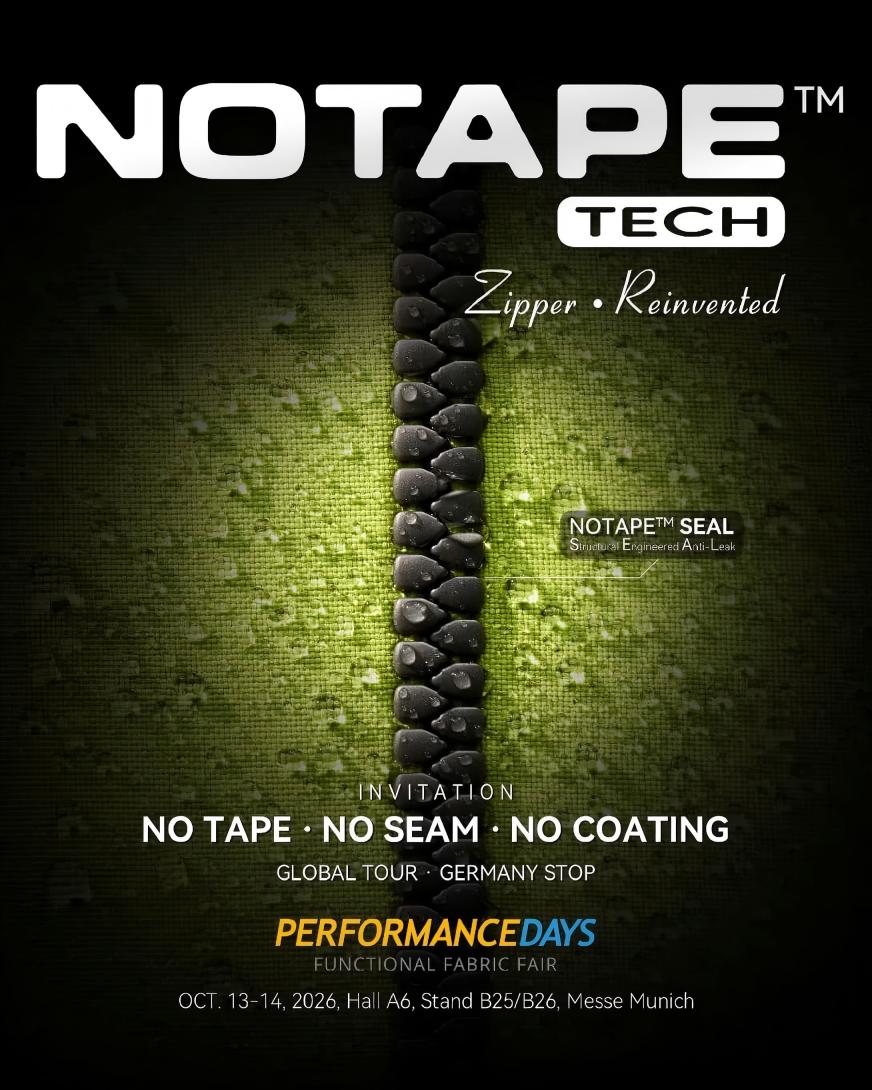
Waterproof Zipper without Coating Supplier | NOTAPE™ No Coating Zipper Technology
September 26, 2026
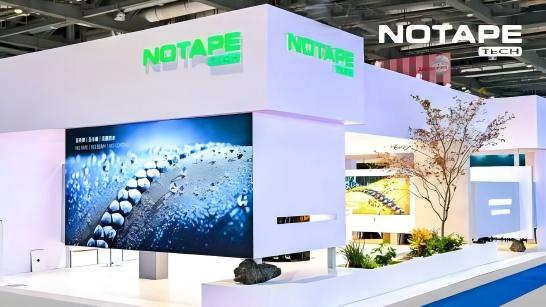
From No Tape to Water Resistance Without Coating: NOTAPE™ Rethinks the Zipper Through Its “Three-No” Design
September 14, 2026

NOTAPE™Returns to Intertextile Shanghai Apparel Fabrics with Groundbreaking NO TAPE, NO SEAM, NO COATING Zipper Innovation
August 06, 2026

Eco Zippers 2.0: How NOTAPE™ Tape-less Seamless Zipper Technology Redefines Sustainable Closures
June 15, 2026
A New Direction in Apparel Innovation
A lightweight outdoor jacket designed for a mountain trip.
A cycling jacket created for long-distance riding.
A ski shell built for movement in cold environments.
Apparel brands are facing the same design challenge with each of the following scenarios:
How can a garment be lightweight while still having the performance that users have come to expect?
In 2026, the major trend in outdoor and functional apparel was lightweight design. In order to gain a competitive advantage, manufacturers were trying to make ultra-lightweight hiking jackets, cycling apparel, and other types of outerwear that could be packed down, as well as other products, even lighter, while accepting a greater trade-off for each of the features of protection, durability, and comfort.
According to research, the lightweight outdoor apparel market was expected to have a strong CAGR in the next few years and was expected to reach about USD $13.7 billion by 2033 from USD $8.9 billion in 2024.
With this market shift, apparel brands have had to rethink the trade-offs for every element of a garment. Of course, the trade-offs for fabrics and insulation systems are most prominent, but what about zippers? A Lightweight Performance Zipper is a part of this larger transformation of apparel to be lighter and more efficient.
This focus on lightweight clothing has impacted the outdoor apparel market as well. Brands are focusing on creating apparel that is adaptable for any outdoor activity as well as for everyday use.
When considering lightweight apparel, most people focus on fabrics and insulation. But every part of a garment, including zippers, contributes to the weight of the garment.
For this reason, the Lightweight Performance Zipper has been an important part of recent apparel design.
Why Lightweight Performance Zipper Matters in Performance Apparel
A zipper can make up only a small part of the total weight of a garment, but it is very functional.
For technical apparel, a zipper must fulfill a number of needs:
| Requirement | Design Consideration |
| Lightweight | Use as little structural materials as possible |
| Durability | Have reliable opening and closing |
| Comfort | Reduce bulk and stiffness |
| Appearance | Provide a more aesthetically pleasing garment |
Making a zipper thinner or lighter is not the main focus of a Lightweight Performance Zipper.
The main question is:
How can the zipper structure be improved without compromising performance?
Why Companies are Reconsidering Every Single Design Choice
Brands in the outdoor and sportswear industries have focused on lightweight solutions in a variety of areas including:
Fabrics
•Lightweight nylon and polyester shells
•Waterproof materials with reduced layer thickness
Insulation
•Packable down jackets
•Lightweight synthetic insulation
•Thermal systems with low bulk
Construction
•Minimal seams
•Garment structures with simplified designs
•Integrated functional elements
As fabric technologies improve, the greater the importance of smaller design choices.
A zipper with unnecessary materials can limit the lightweight potential of the entire garment.
This is where Lightweight Performance Zipper provides another engineering approach.
Comparing Traditional Zippers and Lightweight Performance Zippers
Traditional zippers have used textile tape for over a hundred years.
A typical design consists of:
•Teeth
•Slider
•Puller
•Textile tape
•Sewing attachment
The tape helps affix the zipper to the garment, but it also adds additional weight and complexity to the manufacturing process.
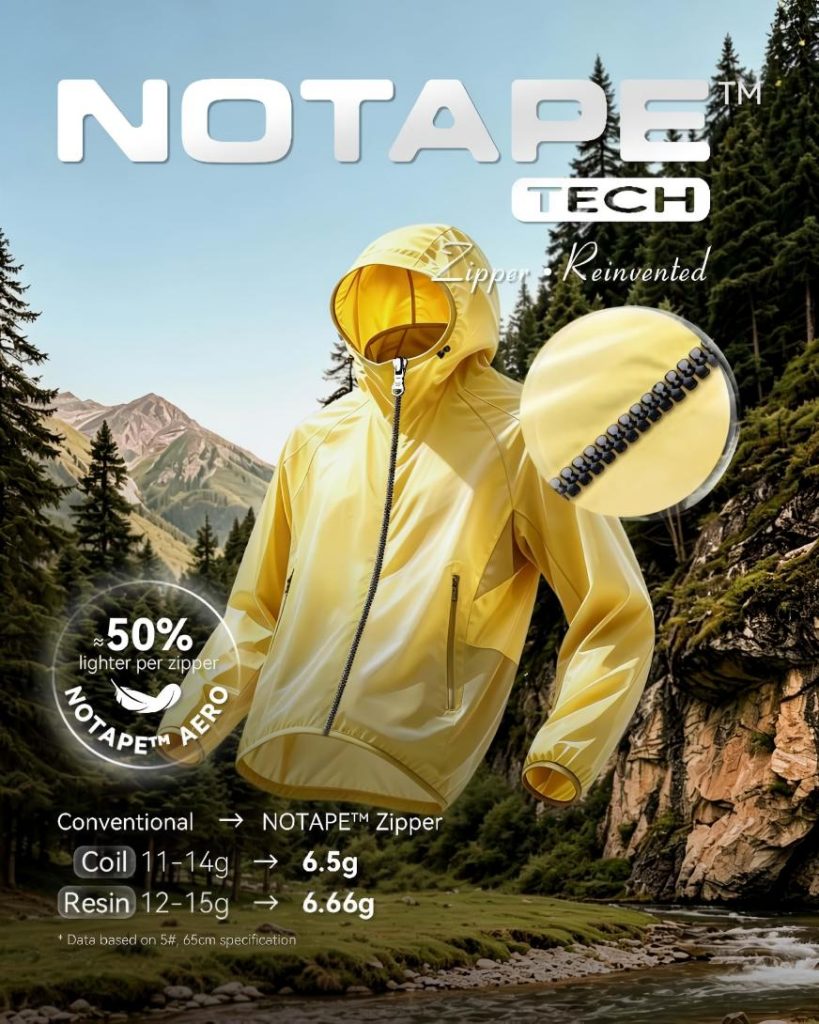
A standard #5 zipper, 65cm in length, has approximate weights of:
| Zipper Type | Approximate Weight |
| Traditional Resin Zipper | 12-15g |
| NOTAPE™ No Tape, No Seam Resin Zipper | 6.66g |
| Traditional Coil Zipper | 11-14g |
| NOTAPE™ No Tape Coil Zipper | 6.5g |
Manufacturers of high-volume garments stand to benefit greatly from weigh optimization of components. Reduction in component weights results in lighter garments.
Lightweight Performance Zippers: The Importance of Structural Efficiency
At NOTAPE™, we set out to question what has been accepted as true for many years:
Is it always necessary to incorporate a tape structure in the design of all zippers?
Because of our focus on research and development, NOTAPE™ was the first to bring to the market a No Tape structure that drastically improved the way zipper components interfaced with adjacent structures in apparel.
We strive to retain the following core functions of a zipper:
•Teeth
•Slider
•Puller
•Pin and box
•Stoppers
While removing extraneous components.
This provides the following benefits for lightweight apparel development:
1. Component Weight is Further Reduced
By reducing additional textile tape structures, the zipper becomes lighter and better suited for lightweight garment systems.
2. Improved Design Language
A more integrated structure of a zipper lends itself to the modern minimalist designs of outdoor and sportswear.
3. More Efficient Manufacturing Considerations
No Tape solutions eliminate or reduce the following compared to conventional zipper processes:
•Making and managing inventory of colored tapes
•Color matching
•Additional sewing of tapes
Lightweight Design Does Not Mean Compromising Performance
One of the major concerns during the development of a lightweight product is the potential trade-off against product performance.
In the case of professional apparel, weight reduction is the result of a deliberate engineering approach.
A Lightweight Performance Zipper must be able to accommodate the following:
| Performance Area | Importance |
| Repeated Usage | Hundreds of cycles of opening and closing in its lifetime |
| Structural Stability | Zipper engagement |
| Fabric Compatibility | Adjacency to a variety of apparel construction materials |
| Long-Term Performance | Consumers expect a consistent experience |
At NOTAPE™, lightweight design is focused on reducing the overall-system weight while still maintaining the essential functions required by performance apparel.
NOTAPE™ Lightweight Performance Zipper Applications
The demand for lightweight apparel continues across multiple categories:
•Outdoor jackets
•Sportswear
•Cycling apparel
•Sun-protective clothing
•Hardshell jackets
•Ski apparel
For these products, reducing zipper weight can support:
•Easier movement
•Reduced garment bulk
•Better packing efficiency
•More comfortable long-term wear
The Future of Lightweight Performance Zipper Development
The next stage of apparel innovation is moving from simply adding new materials toward optimizing every structural detail.
A Lightweight Performance Zipper embodies this evolution.
Brands creating advanced outdoor and performance apparel can use lightweight zipper technology to improve zipper structure, eliminate excess materials, and facilitate better integration of zippers into clothing, thus providing an alternative route to constructing better designed garments.
We are investigating the potential of No Tape zipper solutions to create apparel that is lighter, more efficient, and better designed at NOTAPE™.
Learn more about NOTAPE™ Lightweight Performance Zipper solutions. → HERE
FAQs
Q1: What kind of brand is NOTAPE™?
NOTAPE™ was founded in Hong Kong and is a technology-driven brand serving the global market, with a focus on innovative zipper technologies.
Q2: How is NOTAPE™ zipper installed onto fabric? Can it be installed by home sewing machines, or does it require special equipment? Is it glued on?
NOTAPE™ is a global first, featuring proprietary patented technologies for no tape coil zippers and no tape, no seam resin zippers. The zipper is formed as one with the fabric using patented equipment, rather than traditional sewing methods.
Q3: Are there detailed specifications for NOTAPE™ zipper styles, colors, sizes, and customization options?
We provide dedicated color cards and profiles. If you have further questions, our team can assist you directly.
Q4: Are there requirements regarding fabric type or thickness when using NOTAPE™ zippers?
Currently, NOTAPE™ technology is more suitable for synthetic fibers such as nylon and polyester, as well as woven, knitted, low-elastic, or non-elastic fabrics. The applicability of other materials is still under development and testing.
Q5: If a NOTAPE™ zipper is damaged, can it be replaced or repaired? How is it repaired? Will it affect the garment?
Individual zipper teeth on plastic zippers can be repaired without affecting the garment.



Contact Us
Related Posts
Waterproof Zipper without Coating Supplier | NOTAPE™ No Coating Zipper Technology
September 26, 2026
From No Tape to Water Resistance Without Coating: NOTAPE™ Rethinks the Zipper Through Its “Three-No” Design
September 14, 2026
NOTAPE™Returns to Intertextile Shanghai Apparel Fabrics with Groundbreaking NO TAPE, NO SEAM, NO COATING Zipper Innovation
August 06, 2026
Eco Zippers 2.0: How NOTAPE™ Tape-less Seamless Zipper Technology Redefines Sustainable Closures
June 15, 2026


