




After 130 Years, the Zipper Faces Its First True “Subtraction Revolution”
By NOTAPE
04, 2026Related Posts

130 Years Later, Cars Were Reinvented by Electrification. What About the Zipper?
October 12, 2026
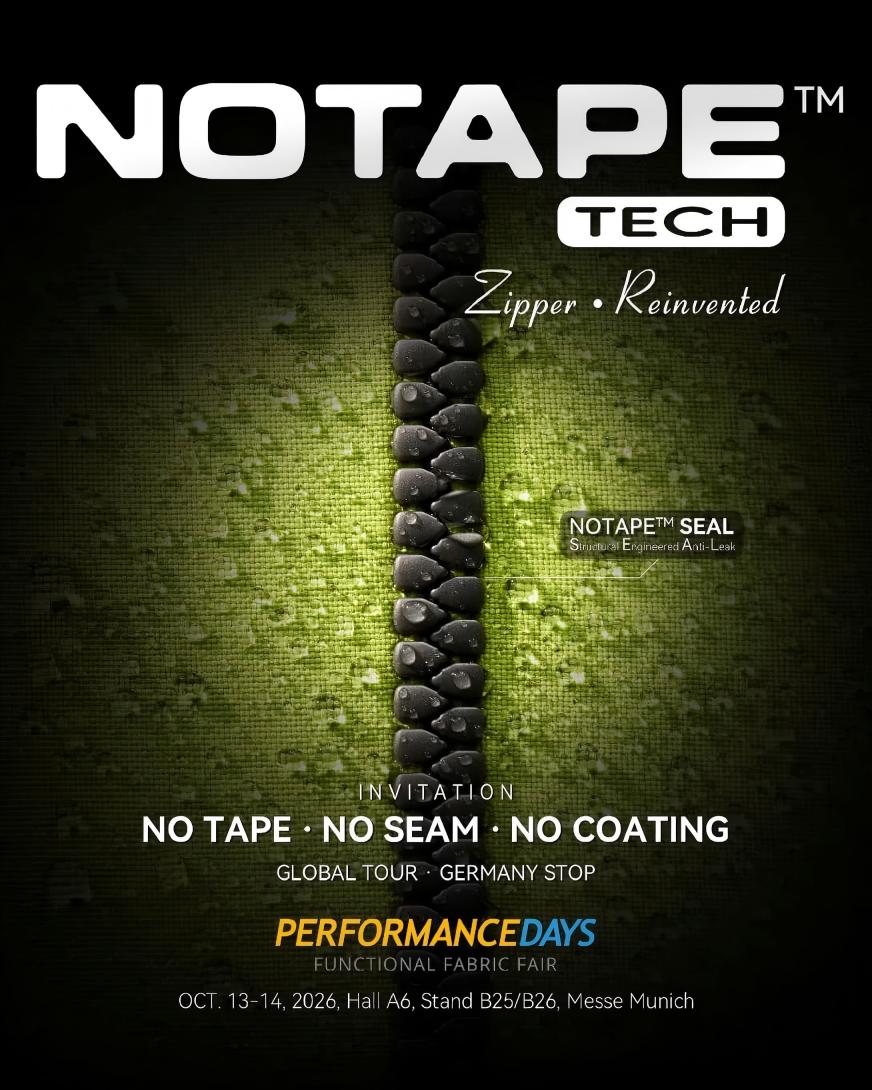
Waterproof Zipper without Coating Supplier | NOTAPE™ No Coating Zipper Technology
September 26, 2026

From No Tape to Water Resistance Without Coating: NOTAPE™ Rethinks the Zipper Through Its “Three-No” Design
September 14, 2026

NOTAPE™Returns to Intertextile Shanghai Apparel Fabrics with Groundbreaking NO TAPE, NO SEAM, NO COATING Zipper Innovation
August 06, 2026
For more than a century, the zipper has been treated as a finished idea. It worked, brands accepted it, and the industry kept moving. But fashion has changed faster than the zipper itself. Today, designers want cleaner lines. Factories want fewer variables. Sustainability teams want structures that are easier to simplify, trace, and rethink.
That is why a mature category does not mean a closed category. In fact, it may be exactly where the next real breakthrough begins. The zipper’s earliest commercial roots go back to the 1890s, which makes today’s structural rethink especially notable.
A Category Considered “Mature” Too Early: The Zipper
In apparel, few components feel more familiar than the zipper. It is small, standardized, and deeply embedded in product development. Because of that, many people assume there is little left to improve.
That assumption no longer fits the market.
Modern apparel development is under pressure from several directions at once. Brands are being asked to create lighter products, cleaner silhouettes, faster sampling cycles, and more credible sustainability strategies. At the same time, the wider fashion industry is being pushed toward circular design thinking, longer product use, and better material recovery systems. These shifts are not only changing fabrics and trims. They are forcing the industry to recheck the basic structures it once took for granted.
So the real question is no longer whether the zipper is an old category.
The real question is whether an old category was ever examined closely enough.
The “Tape” Structure: A Default Assumption Becoming a Hidden Constraint
Traditional zippers are built around textile tape. For years, that structure felt normal enough that few people stopped to question it. The tape was simply part of the product.
But under current industry demands, that old default starts to look less neutral.
Tape adds material layers. Tape needs dyeing and color matching. Tape also creates extra steps in sourcing, sewing, and quality control. On the product side, it can add visual bulk and reduce the clean finish designers want, especially in lightweight outerwear, swimwear, and performance garments. On the manufacturing side, it introduces one more component that has to be aligned, managed, and repeated consistently across runs.
This is why many of fashion’s efficiency problems are not only about materials or labor. Sometimes they begin with an inherited structure that no one has challenged for decades.
And once that structure is challenged, a different path becomes possible.
NOTAPE™ Zipper: Reinventing the Zipper by Rewriting Its Structure Through Subtraction
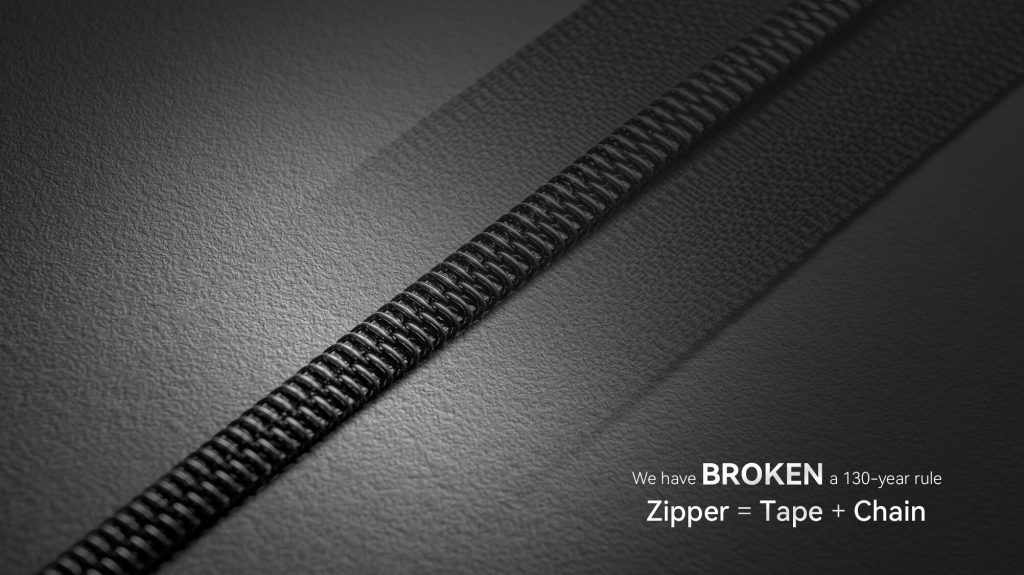
NOTAPE™ starts with a very simple move: it removes the textile tape.
Instead of relying on the conventional tape-based build, the teeth are attached directly to the garment fabric. That changes the zipper from an attached component into something that behaves more like an integrated part of the textile surface. The result is a slimmer construction, a cleaner visual line, and fewer process layers between design intent and finished product.
What makes this important is not only performance.
It is the design logic behind it.
In mature industries, incremental upgrades are common. A little stronger. A little smoother. A little cheaper. But structural reinvention is rare. That is exactly why NOTAPE™ stands out. Even Red Dot’s official project page describes it as a surprising evolution of a product that almost nobody expected to change, and notes that it rethinks the zip fastener by removing the textile side sections entirely.
That idea matters because subtraction is often harder than addition.
Adding features is easy. Removing a long-standing part of the structure, while keeping the product practical and scalable, is where real innovation starts to show.
From Design to Industry: Why Tape-Free Zippers Matter
For Designers and Brands
The first gain is design freedom.
Without tape bulk, the zipper line becomes cleaner and more refined. That helps garments drape better and look less interrupted at the front opening, cuff, collar, or hem. In categories where visual lightness matters, that difference is not small. It changes how the garment sits, how it moves, and how polished it feels.
This Tape-free approach also reduces the usual compromises around matching trims to fabric aesthetics. Designers do not have to work around an extra visible layer in the same way. The zipper can feel more native to the garment rather than added onto it.

For Factories and Supply Chains
The second gain is operational simplicity.
No tape means no tape dyeing. No separate tape color matching. Fewer sewing steps. Fewer chances for misalignment, curling, or tape-related defects. It also means less SKU noise when brands are managing multiple seasonal colors and short production cycles.
That is where the value becomes practical for overseas buyers and sourcing teams. A component that removes variables can help stabilize planning, reduce avoidable rework, and support faster changeovers on real production lines.
In other words, this is not only a designer story. It is also a manufacturing story.

For Sustainable Fashion
The third gain is structural.
The Ellen MacArthur Foundation continues to emphasize that fashion’s future depends on circular design, longer product use, and systems that make materials easier to recover and keep in circulation. In that context, reducing unnecessary complexity is not a side issue. It is part of the bigger solution.
That is why tape-free zipper design deserves attention.
Less material is not automatically a circular system by itself. But reducing layers, eliminating tape dyeing, and simplifying construction can create better conditions for lower process intensity and more straightforward end-of-life thinking. That is often where structural innovation has a longer impact than a single material switch alone.

Why This “Subtraction Revolution” Feels Bigger Than One Product
What makes NOTAPE™ interesting is not only the zipper itself.
It is what the zipper represents.
For years, fashion innovation has often focused on new fabrics, new finishes, or new processes. Those are still important. But this shift points in another direction: questioning whether the component architecture itself still makes sense.
That mindset can travel.
Once brands start rethinking an old fastening structure, they may also begin rethinking other inherited parts of garment construction that were accepted too easily. Where are the hidden layers? Where are the unnecessary steps? Which “standard” parts are actually slowing design, production, or recycling?
This is why the zipper story matters beyond trims.
It shows that even a product category with more than 130 years of history can still open the door to structural innovation. And when that innovation removes complexity instead of adding it, the effect can be wider than expected.
China May Be the Right Place for This Shift to Accelerate
China remains one of the world’s most concentrated centers for apparel manufacturing, sourcing, trim development, and supply chain execution. That makes it a strong environment for structural ideas to move from concept to commercial scale.
A change like this does not gain traction only because it looks new. It gains traction when designers can test it, factories can run it, and brands can measure what it changes across product, process, and sourcing.
That is why China matters in this discussion.
It offers the density, speed, and manufacturing context needed to turn a structural rethink into something the market can actually use.

Final Thought
The zipper was never supposed to be the headline.
It was supposed to be the settled part.
Yet that is exactly why this moment feels important. When a familiar component is stripped back to its essentials and rebuilt with a different logic, the industry is reminded of something valuable: mature categories are not finished categories.
Sometimes the next real leap does not come from adding more.
Sometimes it begins by removing what no longer needs to be there.
And after more than 130 years, that may be the zipper’s most interesting future yet.



Contact Us
In This Article
Related Posts
130 Years Later, Cars Were Reinvented by Electrification. What About the Zipper?
October 12, 2026
Waterproof Zipper without Coating Supplier | NOTAPE™ No Coating Zipper Technology
September 26, 2026
From No Tape to Water Resistance Without Coating: NOTAPE™ Rethinks the Zipper Through Its “Three-No” Design
September 14, 2026
NOTAPE™Returns to Intertextile Shanghai Apparel Fabrics with Groundbreaking NO TAPE, NO SEAM, NO COATING Zipper Innovation
August 06, 2026


